By Emilia Wellesley · Published May 5, 2026 · Updated May 13, 2026
Last reviewed: May 5, 2026.
How Celebrities and Influencers Reshape Mystical Practices Today
Celebrities and online influencers exert outsized pull on contemporary mystical practice, transforming once-marginal traditions into mass-market lifestyle goods. Through public rituals, branded oracle decks, viral astrology updates, and curated wellness photography, famous figures import esoteric vocabulary into daily speech and reshape who feels permitted to practice what their grandparents called superstition.
A scholar of older mysteries learns to recognize, almost by instinct, the moment a private craft turns public. It happens at festivals, in court ceremonies, in printed almanacs sold at fairs. The current moment, mediated by smartphones and search results, is a recognizable variation on a long pattern. The new wrinkle is the speed and scale: a single Instagram caption from an A-list actress can spike retailer searches for selenite by a measurable margin within hours, according to retail analytics tracked by trade publications such as Circana, formerly NPD Group.
This guide reads the celebrity-and-influencer effect on mystical practices as a historian reads a court inventory: as evidence of who held the cultural keys, what the broader public absorbed, and what was quietly lost in translation. It connects the present scene to the broader landscape of mystical and occult practices rather than treating it as a fresh invention.
The Patronage Pattern: From Royal Courts to Ring Lights
Famous people promoting esoteric practice is not new. Queen Elizabeth I retained the mathematician and Hermeticist John Dee (1527-1608) as an unofficial astrologer; Catherine de Medici (1519-1589) consulted the apothecary-prophet Nostradamus, born Michel de Nostredame, for horoscopes of her sons. The function then was the same as the function now: a high-status patron lends credibility to a contested practice, and the practice ripples outward into the lay public through almanacs, ballads, or in the modern case, sponsored posts.
The Algorithmic Court
The sixteenth-century court has been replaced, in part, by a network of platforms whose recommendation algorithms determine which voices a follower meets next. The 2023 Pew Research Center survey on Americans and the supernatural reported that roughly thirty percent of U.S. adults consult horoscopes or astrology at least sometimes, with women under thirty notably overrepresented [1]. The figure has moved upward over the last decade in step with the rise of astrology-focused mobile apps such as Co-Star, founded in 2017, and The Pattern, founded in 2017 and acquired by Open in 2023.
What the Patron Provides
A celebrity patron supplies three things at once: visibility, narrative legitimacy, and a defensible identity for the follower who picks up the practice. Each piece matters. Visibility breaks the practice out of small specialist networks. Narrative legitimacy gives the follower a script for explaining the practice to skeptical friends. Defensible identity, in the language of sociologist Erving Goffman (1922-1982), allows the practitioner to wear the role without social cost.
What the Influencer Effect Has Actually Changed
The effect on mystical practice is not uniform. Some traditions amplify; others mutate; a few erode under the pressure of constant simplification for short-form video. Reading the changes case by case avoids the easy temptation to either celebrate or dismiss the whole shift.
Amplification: Tarot, Astrology, and Crystals
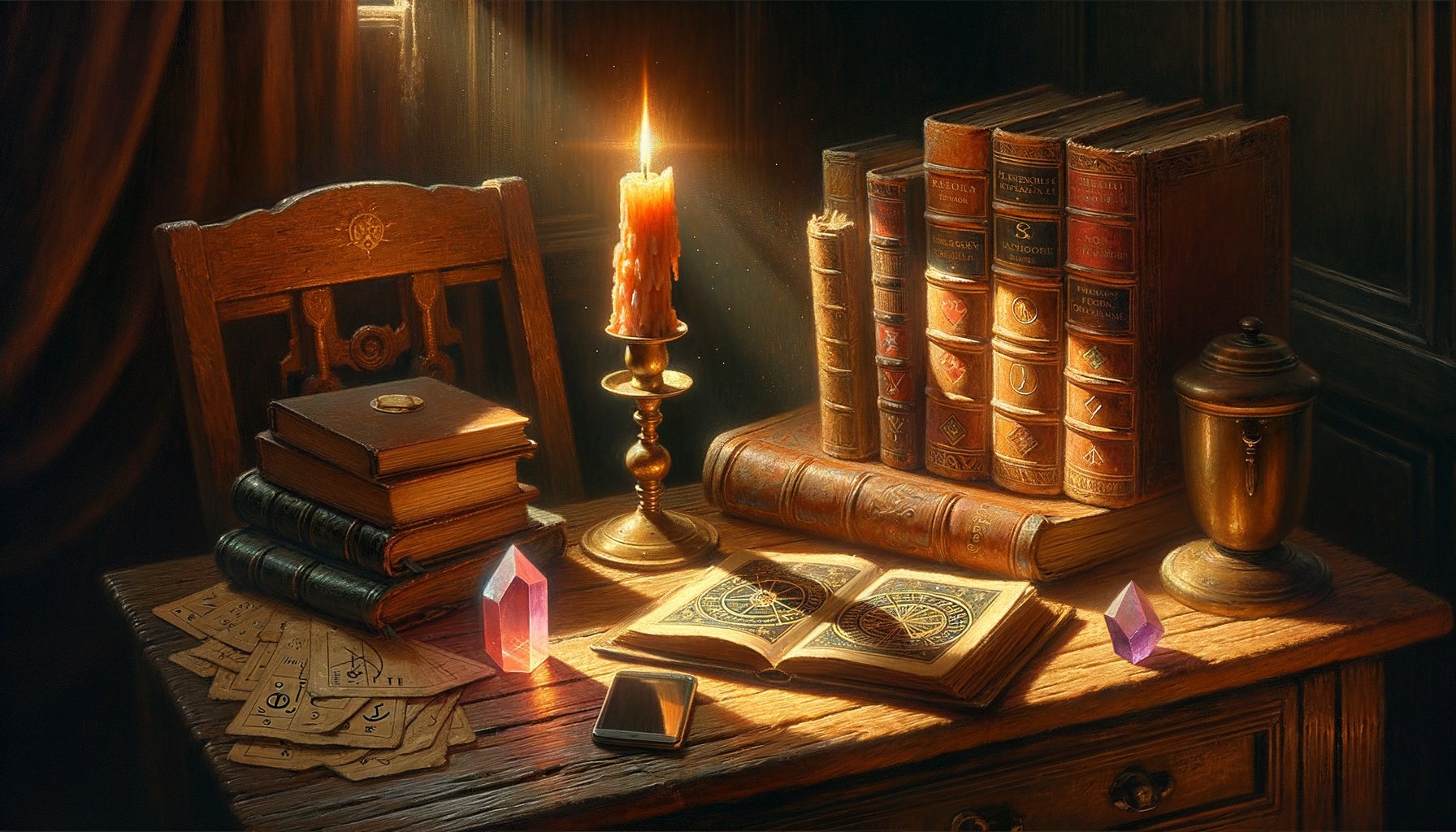
Tarot decks are now sold in mainstream bookstores, and the British market for tarot reading services was valued at roughly £85 million in 2023 by the trade body Mintel. The crystal market is broader still: industry reports place the global wellness-crystal segment between one and two billion U.S. dollars annually as of 2024, growing on the back of celebrity endorsements from Adele, Bella Hadid, and Victoria Beckham [2]. Astrology, helped by the late Susan Miller’s Astrology Zone column begun online in 1995 and by the rise of Co-Star’s daily push notifications, has moved from horoscope-page novelty to a daily check-in for millions.
Mutation: Witchcraft and Shadow Work
Witchcraft on TikTok, often tagged as #WitchTok, gathered tens of billions of views by the end of 2023 [3]. The platform has reshaped what beginners encounter first: cleansing rituals using sage, sigils drawn in journals, and “shadow work” prompts borrowed loosely from the writings of Carl Jung (1875-1961). The mutation is twofold. Indigenous white sage, native to California chaparral and sacred to several First Nations communities, has been pulled into wholesale demand that conservationists at United Plant Savers warn is unsustainable. Meanwhile, Jungian shadow work, originally a long analytic process, is compressed into thirty-second prompt cards.
Erosion: Lineage and Initiation
Some traditions resist compression. Initiatory orders such as the Ordo Templi Orientis or living African Diasporic religions like Lucumí depend on lineage, oral instruction, and sustained relationship with a teacher. Influencer culture, optimized for the parasocial moment, can hollow out the apprenticeship layer without replacing it. Anthropologist T. M. Luhrmann, in her 1989 ethnography Persuasions of the Witch’s Craft and her later work at Stanford, has argued that real magical training rewires perception over months and years; a feed cannot do that work, however earnestly it tries.
Named Figures Who Moved the Needle
The contemporary surge has identifiable architects. A short list of named figures, drawn from media and retail data of the last fifteen years, illustrates how the effect propagates from a single endorsement to a measurable shift in practice.
- Gwyneth Paltrow: The actress’s lifestyle company Goop, founded in 2008, mainstreamed crystal sets, energy work, and “psychic vampire repellent” through editorial coverage and a Netflix series in 2020. Goop is repeatedly cited in academic work on contemporary spirituality as an industry pivot point [4].
- Adele: The singer disclosed her use of crystals during her 2016 world tour, including a missing “favourite black crystal” that figured in interviews. Retail spikes followed each public mention.
- Bella Hadid: The model has discussed astrology and crystals in Vogue profiles, contributing to the visibility of zodiac-keyed jewelry lines.
- Susan Miller: Astrologer and founder of Astrology Zone in 1995; her monthly forecasts are routinely cited as the gateway for a generation of online astrology readers.
- Chani Nicholas: Astrologer whose 2020 book You Were Born for This reached the New York Times bestseller list and whose CHANI app, launched in 2020, illustrates the modern fusion of astrology and venture capital.
- Banu Guler: Co-founder of Co-Star, the astrology app that combined NASA ephemeris data with AI-generated daily push notifications and reached over thirty million downloads by 2024.
Why It Works: A Sociological Reading
A sober explanation does not require either belief or contempt. Three forces converge: a vacuum left by declining institutional religion, a craving for personal narrative, and the structural incentives of attention economies.
The Disenchantment That Re-enchants
Sociologist Max Weber (1864-1920) described modernity as a process of disenchantment, the steady draining of magic from public life. What sociologists from Robert Bellah to Linda Woodhead have observed is that disenchantment leaves a residue. The 2022 Pew survey reported a sustained rise in Americans identifying as “spiritual but not religious,” now around twenty-two percent of adults [1]. Mystical practices fill the gap that organized religion vacates without imposing the institutional commitments many find off-putting.
Personal Narrative and Self-Care
Astrology and tarot perform narrative work. They give a person a vocabulary for talking about an unsettled week, a difficult relationship, or a creative slump. The historian Mircea Eliade (1907-1986) called this kind of structured meaning-making the human appetite for “sacred time,” set apart from the ordinary calendar. The influencer who delivers a Mercury retrograde explainer is, in this older frame, a calendrical priest.
Attention Economy Mechanics
Platforms reward content that produces strong feeling: surprise, recognition, mild fear, mild hope. Mystical content delivers all four reliably. A creator who posts daily horoscopes, weekly tarot pulls, and monthly crystal recommendations builds the kind of consistent return-watcher base that platform algorithms favor. The financial incentive aligns with the mystical content.
Tensions and Costs
The democratization of esoteric practice has real benefits and real costs. Naming both keeps the picture honest.
Cultural Appropriation and Sourcing Ethics
The smudge stick, the dreamcatcher, the chakra chart, and the Yoruba-derived bead pattern are all routinely lifted from their living source communities and sold without context, royalty, or consent. Indigenous-led organizations such as the Native American Rights Fund and scholar Ramsey Sprague have written extensively on the harms of casual appropriation. A scholar of older mysteries notes the recurring pattern: the Renaissance treated medieval Jewish Kabbalah the same way; the practice has consequences worth naming.
Mining and Labor
The crystal supply chain is rarely transparent. A 2019 investigation by The Guardian documented the use of child labor in Madagascar’s mica and rose-quartz mining, much of it bound for European and North American wellness markets. Influencer endorsements that ignore provenance shift moral cost downstream onto invisible workers.
Misinformation and Pseudoscience
Wellness-mysticism crossover sometimes carries genuine harm: jade eggs, bogus detox protocols, and crystal cancer-cure claims have all been the subject of regulatory action. The U.S. Federal Trade Commission settled a complaint against Goop in 2018 for unsubstantiated health claims about jade eggs, requiring a $145,000 refund program. Influencer culture without editorial guardrails will keep producing such cases.
How to Read the Trend Without Being Carried by It
A historian’s habit transfers usefully to the modern reader: name the source, name the chain of transmission, name what is missing. Treat any influencer’s mystical claim the way one would treat a sixteenth-century broadsheet. Ask who profits from the story, what older tradition it draws on, and what would distinguish a credible reconstruction from a marketable one.
A few practical habits help. Read at least one primary source per practice taken seriously: a printed tarot manual older than 1980, a translated astrology text, an academic ethnography of a living tradition. Notice when a creator cannot name a teacher, a lineage, or a citation. Keep a separate budget for material objects so the wallet does not run the spiritual life. Hold open the question of whether a given practice is for you, the way an archivist holds open the question of a contested attribution.
What Survives After the Trend Cools
Trends always cool. The question worth asking is what gets left behind in the cooler weather. Some of the current wave will recede the way the 1970s’ interest in Carlos Castaneda receded after his sources were challenged. Some will sediment into ordinary life: tarot may settle into the role that bookstore astrology held for a generation before it, a mild and useful piece of vocabulary. Some traditions will be quietly damaged where lineage was broken or sacred plants overharvested. Future scholars will read this period the way historians now read Victorian spiritualism: as a real movement of millions, with named figures, real losses, and a few practices that endured because they were taught with care.
Frequently Asked Questions
Are celebrities really driving the rise of mystical practices?
Celebrity endorsements are a measurable accelerant rather than the original cause. The underlying shift toward “spiritual but not religious” identification predates social media, but named figures such as Gwyneth Paltrow, Adele, and Bella Hadid have produced documentable retail and search-volume spikes around specific practices.
Is using crystals or tarot considered cultural appropriation?
It depends on which tradition is being drawn from and how. European tarot has no living indigenous source community to harm. Practices like white-sage smudging, Yoruba-derived bead work, and chakra systems carry sourcing obligations because they belong to living communities that have spoken about misuse. Sourcing and crediting matter more than the abstract question.
What does a Pew survey say about belief in astrology?
The 2023 Pew Research Center survey reported that roughly thirty percent of U.S. adults consult horoscopes or astrology at least occasionally, with notably higher engagement among women under thirty. Belief in actual influence is lower than engagement, suggesting many users treat astrology as narrative rather than literal causation.
Why do crystals appear in so many influencer photos?
Crystals are visually dense, color-rich, and inexpensive at the small-stone end. They photograph well in natural light, fit a wellness aesthetic, and link to a long-standing folk-medical vocabulary that audiences recognize. The combination makes them ideal content props, separate from any claim about their efficacy.
What is WitchTok and how big is it?
WitchTok is the informal name for witchcraft-themed content on TikTok, gathered under hashtags such as #WitchTok and #BabyWitch. By the end of 2023, the combined hashtag views exceeded forty billion. The community is loose, internally diverse, and a frequent first entry point for younger practitioners.
Has the FTC ever acted against a celebrity wellness brand?
Yes. In 2018, Goop, the lifestyle company founded by Gwyneth Paltrow, settled with a coalition of California prosecutors over unsubstantiated health claims about its jade eggs and an essential-oils blend, agreeing to refunds totaling $145,000. The case is widely cited in regulatory discussions of celebrity wellness marketing.
How does the current moment compare to historical celebrity occultism?
It rhymes with several earlier periods. Elizabethan court patronage of astrology, the Victorian fashion for spiritualism among figures like Arthur Conan Doyle, and the 1960s celebrity interest in figures like Maharishi Mahesh Yogi all show the same pattern: high-status endorsement accelerates a practice into the mainstream. The platform changes; the dynamic does not.
What is the most reliable way to start studying mystical practice seriously?
Begin with a primary source older than the current trend cycle and a serious academic ethnography of the tradition that interests you. T. M. Luhrmann’s Persuasions of the Witch’s Craft (1989) is a model of careful reading. The Stanford Encyclopedia of Philosophy entries on Hermeticism and Western esotericism provide reliable orientation. Verify any teacher’s claim of lineage before paying for advanced material.