

Drafted with AI assistance from the sources listed; images are AI-generated illustrations. How EsoVitae is made
Encephalitis lethargica, the so-called sleeping sickness, swept across at least 64 countries between 1916 and 1928, infected an estimated one million people, killed roughly half of them, and then — without an identified pathogen, without an isolated antibody, without a vaccine — receded into clinical rarity by 1930 and never returned at epidemic scale [1][2].
What Encephalitis Lethargica Actually Was
Von Economo’s 1917 Case Series
In April 1917, Austrian neurologist Constantin von Economo presented thirteen patients at the Vienna Psychiatric and Neurological Society and named a new disease entity: encephalitis lethargica, an inflammatory brain syndrome marked by profound sleep disturbance, oculomotor palsies, and movement abnormalities that could last weeks before either killing the patient or releasing them into a permanently altered neurological state [1][3]. The pandemic that followed sits, for the curious lay reader, alongside the small set of historically documented disease outbreaks that defied contemporary medical explanation — see the work catalogued by our related coverage for parallel cases in our archive.
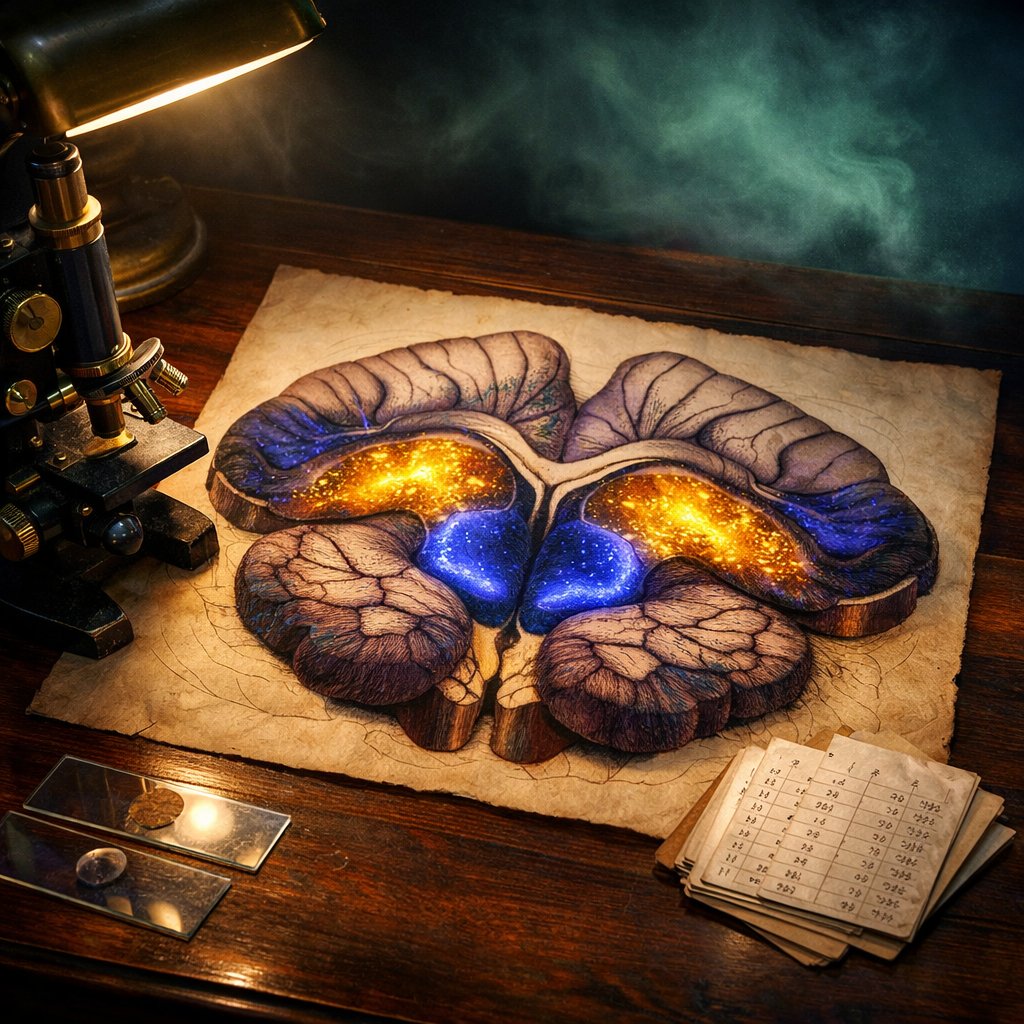
Von Economo’s case series, published as Encephalitis Lethargica: Its Sequelae and Treatment (1917, later expanded in 1929), described three clinical forms that the field still recognizes a century later. The somnolent-ophthalmoplegic form produced the iconic sleeping patient with paralyzed eye muscles; some patients slept for weeks, woke to take fluid, and slid back under. The hyperkinetic form produced chorea, myoclonus, restlessness, and mania, with patients sometimes awake for days at a stretch. The amyostatic-akinetic form produced rigidity and immobility resembling Parkinson’s disease — sometimes within weeks of the acute infection, sometimes after a latency of fifteen or twenty years [1][4]. Constantin von Economo located the lesions in a specific anatomical band running from the periaqueductal gray through the hypothalamus and midbrain, a localization that anticipated the modern neuroscience of sleep regulation by several decades; his hand-drawn schematic of an inverted sleep-wake center sits, with very little revision, at the front of contemporary neurology textbooks [3].
The Clinical Phenomenology
The clinical phenomenology was uncanny enough that the disease was sometimes mistaken for hysteria, malingering, or postpartum psychosis. Patients exhibited oculogyric crises — sudden upward deviation of the eyes that could last hours — alongside fragmented sleep architecture, palilalia, mutism, and a flattening of expression that survivors and their families described as a kind of internal exile rather than absence [1][3][4]. Recorded testimony from interwar London asylums describes patients aware of their surroundings but unable to initiate any voluntary act, a state Sacks would later call the “ontological earthquake” of post-encephalitic Parkinsonism [9].
The Pandemic Numbers and the 1918 Flu Question
Between the winter of 1916-17 and roughly 1928, encephalitis lethargica produced approximately one million cases worldwide, with case-fatality rates reported between 20% and 40% in the acute phase and a cumulative mortality near 500,000 across the pandemic decade [2][5]. The Encephalitis Lethargica Information Network compiled regional surveillance data from the United Kingdom, the United States, France, Germany, and Australia; case counts in London alone exceeded 5,000 between 1918 and 1925 [5][6].
Did the 1918 Influenza Cause It?
The temporal overlap with the 1918 influenza pandemic is the first hypothesis any reader notices and the first one the literature ruled out. Von Economo’s initial Vienna cases predated the H1N1 wave by approximately eighteen months [1]. Sherman McCall and colleagues at the Armed Forces Institute of Pathology performed RT-PCR on archival brain tissue from six encephalitis lethargica patients in 2001 and found no influenza RNA above background [7]. John Oxford’s group at Queen Mary, University of London replicated the negative finding in 2005 using different probes against a wider archival cohort [8]. Two independent molecular searches, two negative results: the influenza-cause hypothesis is on life support, though a few authors still argue for an indirect immunological link in which the influenza pandemic produced cytokine conditions that primed a separate trigger.
A subtler problem with the influenza hypothesis is geographic. Encephalitis lethargica’s attack rate was highest in Romania, Austria-Hungary, and parts of northern France — regions where the H1N1 mortality, while real, was not exceptional — and comparatively low in Australia and New Zealand, where the influenza pandemic struck hardest. If a flu virus caused encephalitis lethargica, the regional distributions should track; they do not, by a wide margin [2][5][6].
The Awakenings Survivors and L-DOPA
In the summer of 1969, neurologist Oliver Sacks administered the experimental dopamine precursor L-DOPA to a cohort of post-encephalitic Parkinsonism patients at Beth Abraham Hospital in the Bronx, some of whom had been catatonic or near-catatonic for more than forty years [9]. The temporary recoveries — patients walking, speaking, recognizing relatives — and their subsequent decompensations became the substance of his 1973 book Awakenings, the basis for the 1990 Penny Marshall film [9][10].
What the experiment measured: L-DOPA, by replacing the dopamine that a damaged substantia nigra could no longer produce, can transiently restore movement in patients with severe striatal dopamine depletion. Beth Abraham’s post-encephalitic cohort showed the same neurochemical signature as classical Parkinson’s disease — degeneration of the substantia nigra pars compacta — even though the original insult had been an acute viral-feeling illness decades earlier [4][9]. Sacks’s clinical observations matched what postmortem pathologists had been reporting since the 1920s: encephalitis lethargica preferentially damaged dopaminergic midbrain nuclei, which is why its late sequelae looked like Parkinson’s disease and responded, briefly, to the same therapy [4].
The Search for a Cause: From Virus Hunts to Autoimmunity
A century of pathogen hunting has produced negative results across an unusually wide front. The load-bearing fact: no specific virus, bacterium, or prion has been definitively isolated from encephalitis lethargica brain tissue using modern molecular techniques [7][8][11]. The candidates that have been formally tested and excluded include influenza A H1N1, herpes simplex types 1 and 2, varicella-zoster, Epstein-Barr virus, enteroviruses including poliovirus and coxsackievirus, and the 1918-era diplostreptococcus von Economo himself entertained [7][8].
The Streptococcal Hypothesis
In 2001, Russell Dale and colleagues at Great Ormond Street Hospital published a series of twenty children with a contemporary encephalitis lethargica-like syndrome and reported elevated anti-basal-ganglia antibodies in 95% of cases, alongside recent or prior Streptococcus pyogenes infection in a substantial subset [12]. The mechanism Dale proposed — molecular mimicry between streptococcal cell-wall epitopes and neuronal surface antigens in the basal ganglia — borrowed directly from the established pathophysiology of Sydenham’s chorea and PANDAS, where the same pathogen drives autoimmune movement disorders [12][13].
Andrew Lees at the National Hospital for Neurology and Neurosurgery in London extended this work in 2003 and 2010, arguing that historical encephalitis lethargica was most plausibly a post-streptococcal autoimmune encephalitis rather than a primary viral infection [13][14]. The hypothesis explains several features the viral models could not: the regional variation in attack rate (matching the geography of group A strep), the seasonal clustering in late winter, the predilection for basal ganglia damage that produced the post-encephalitic Parkinsonism, and the family clustering documented in the 1920s British and American case registers [13][14]. Reduced to its evidence, the streptococcal reframing borrows the established Sydenham’s chorea pathway — well-characterized since the 1950s — and asks whether a particularly antigenic streptococcal lineage between roughly 1915 and 1925 happened to display an M-protein variant whose epitopes cross-reacted with midbrain dopaminergic neurons.
Modern Antibody-Mediated Encephalitides
Where the consensus and the evidence diverge: the streptococcal hypothesis remains the leading historical reconstruction, but it is not closed. Since 2007, neurologists have characterized a family of antibody-mediated brain inflammations — most famously anti-NMDA receptor encephalitis, described by Josep Dalmau at the University of Pennsylvania in 2007, and Hashimoto’s encephalopathy, recognized since 1966 — that produce some of the same clinical features as encephalitis lethargica: psychiatric onset, sleep disturbance, oculogyric crises, and parkinsonism, all responsive to immunotherapy [15][16]. The 1916-1928 pandemic, in retrospect, may have been a syndrome of overlapping autoimmune encephalitides triggered by one or several seasonal pathogens, rather than a single etiologic agent. The question is not yet closed.
| Hypothesis | Key Proponents | Status (as of 2026) |
|---|---|---|
| 1918 influenza H1N1 | von Economo (1917, tentatively) | Excluded by RT-PCR (McCall 2001; Oxford 2005) |
| Diplostreptococcus / enterovirus | Multiple early-1920s authors | Excluded by modern molecular probes |
| Post-streptococcal autoimmunity | Dale (2001), Howard, Lees (2003-2010) | Best-supported historical reconstruction; not closed |
| Multi-pathogen autoimmune syndrome | Vincent, Dalmau and colleagues (post-2007) | Emerging reframing; active research |
Why the Pandemic Vanished — and Why That Matters
The Disappearance
By 1930, new cases of acute encephalitis lethargica had fallen below 100 per year worldwide, and by 1940 the disease was reportable in single digits across most national surveillance systems [2][5]. Sporadic cases continue to be diagnosed — the Dale 2001 series and a handful of single-patient reports through 2020 — but no epidemic wave has recurred [12][14].
On the math: if encephalitis lethargica was a post-infectious autoimmune syndrome triggered by a particular streptococcal strain or strain combination, its disappearance is consistent with strain replacement — group A strep populations cycle through dominant M-protein serotypes on decadal timescales, and the M-protein epitope that drove cross-reactivity with basal-ganglia antigens could have simply faded [13][14]. Antibiotic introduction is sometimes invoked as the cause of disappearance, but the timing rules this out: penicillin did not enter clinical use until 1941-1944, more than a decade after the epidemic had already collapsed. The disappearance is unsatisfying as an answer because it is not falsifiable retrospectively; the trigger pathogen, if it existed, is gone.
The Clinical Inheritance
What this means for present-day clinical neurology: every case of subacute encephalopathy with movement disorder, oculogyric crisis, or treatment-refractory psychiatric symptoms now triggers a workup that screens for anti-NMDA receptor antibodies, anti-LGI1, anti-GABA-B, anti-CASPR2, and the basal-ganglia antibody panel that grew directly from the encephalitis lethargica reconstruction [12][15][16]. Modern immunotherapy — corticosteroids, IVIG, rituximab, plasmapheresis — can rescue patients whose grandparents would have died or been institutionalized. The pandemic that vanished left a clinical inheritance that is still being collected.
The deeper lesson runs the other direction too. Encephalitis lethargica is the clearest historical example we have of a disease that satisfies every common-sense criterion for “a virus did this” — explosive onset, global spread, distinctive clinical signature, postmortem brain inflammation — while still resisting, after a century of effort with progressively more sensitive techniques, the identification of any single causal agent. That negative result is not failure; it is a measurement. It tells the field something specific about how brain inflammation can be produced — that the immune system itself can become the disease — and that lesson is, in 2026, the active edge of clinical neurology rather than a closed historical curiosity. For broader context on persistently unsolved medical and natural-world anomalies, our science and natural anomalies pillar hosts the catalog, and the mysterious diseases and epidemics sub-niche collects the parallel cases.