Published: June 5, 2026. Last reviewed: June 5, 2026.
What Are the Hierarchies of Angels?
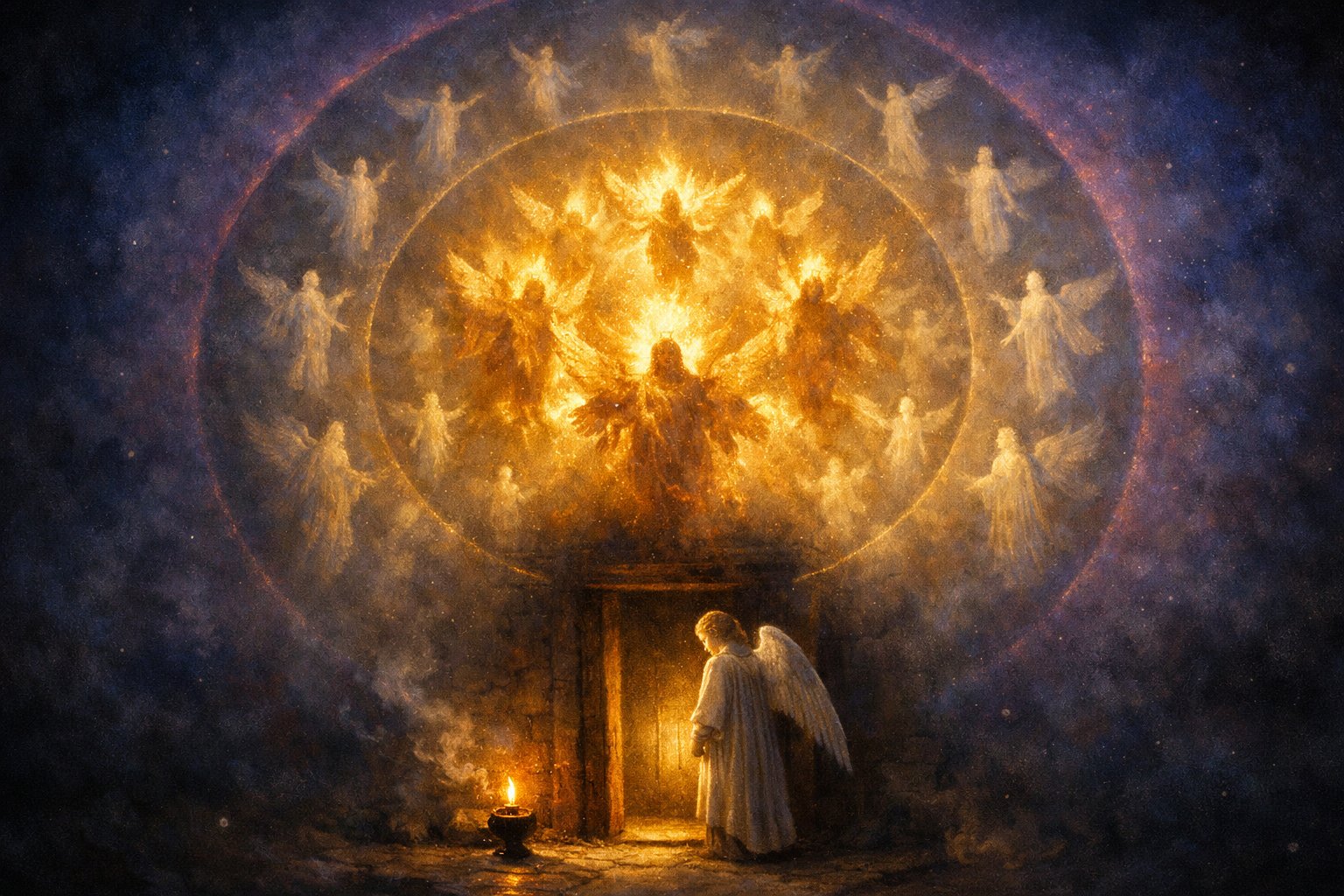
The hierarchies of angels are a ninefold ranking of celestial beings, grouped into three triads, first systematized by Pseudo-Dionysius the Areopagite around 500 CE. From highest to lowest the orders run Seraphim, Cherubim, Thrones, Dominions, Virtues, Powers, Principalities, Archangels, and Angels.
I came to this subject the way I come to most things, through a person rather than a doctrine. A woman in a Lancashire parish once told me she had seen “one of the high ones” at her mother’s deathbed, and she was certain it was not the kind that runs errands. She had no vocabulary for ranks, yet she had drawn the same distinction the medieval theologians drew: some angels stand near God, and some stand near us. The nine orders of angels are the map people reach for when an encounter feels too large for a single word.
This guide walks through the orders one sphere at a time, names the texts and thinkers who fixed their sequence, sets the Christian scheme beside its Jewish cousin, and listens to what modern witnesses actually describe. It treats the hierarchy as both a theological argument and a piece of living folklore, worth recording for what it is within the wider study of paranormal and supernatural phenomena.
The Nine Orders, From Throne to Doorstep
The nine orders divide into three spheres of three, descending from angels who contemplate God directly to angels who walk human roads, a structure Pseudo-Dionysius set out in the sixth century and later writers rarely abandoned. He named the first sphere the Counselors, the second the Governors, and the third the Messengers, a gradient of nearness rather than rank in any military sense.
The table below lays out the orders, the sphere each belongs to, the role assigned to it in the tradition, and the scriptural verse most often cited as its anchor.
| Order | Sphere | Primary role | Scriptural anchor |
|---|---|---|---|
| Seraphim | First (Counselors) | Ceaseless praise before the throne | Isaiah 6:2-3 |
| Cherubim | First (Counselors) | Guardians of divine knowledge | Genesis 3:24; Ezekiel 10 |
| Thrones | First (Counselors) | Seats of divine judgment | Colossians 1:16 |
| Dominions | Second (Governors) | Regulate the duties of lower angels | Ephesians 1:21; Colossians 1:16 |
| Virtues | Second (Governors) | Govern the order of the cosmos | Ephesians 1:21 |
| Powers | Second (Governors) | Restrain hostile spiritual forces | Colossians 1:16 |
| Principalities | Third (Messengers) | Watch over nations and peoples | Ephesians 3:10 |
| Archangels | Third (Messengers) | Carry weighty messages to humanity | 1 Thessalonians 4:16; Jude 1:9 |
| Angels | Third (Messengers) | Personal guardians and daily messengers | Psalm 91:11 |
The First Sphere: Seraphim, Cherubim, Thrones
The first sphere holds the angels that never leave the divine presence. Seraphim, whose name in Hebrew means “the burning ones,” appear in Isaiah 6:2-3 as six-winged figures circling the throne and crying “Holy, holy, holy.” Cherubim, a word linked to the idea of fullness of knowledge, guard the way to Eden in Genesis 3:24 and reappear in Ezekiel’s vision as composite creatures of many faces. Thrones, the third order, are pictured as great wheels rimmed with eyes, the seats on which divine judgment rests. None of these beings, in the older texts, much resembles the soft-winged figure of a greeting card. They are strange on purpose, because they belong to the part of the cosmos furthest from ordinary sight.
The Second Sphere: Dominions, Virtues, Powers
The second sphere governs rather than worships. Dominions, named in Ephesians 1:21 and Colossians 1:16, function as the middle management of heaven, receiving direction from the highest orders and assigning duties downward. Virtues regulate the movement of the heavens and the working of what the medieval mind called miracles, the moments when the ordinary order bends. Powers stand as the border guards of the spiritual world, charged in the tradition with restraining hostile forces. Where the first sphere contemplates, the second administers. The poetry of the texts cools here into something closer to a chain of command.
The Third Sphere: Principalities, Archangels, Angels
The third sphere is the one humanity meets. Principalities watch over nations, cities, and congregations. Archangels carry the messages that change a life, and the tradition names a handful of them: Michael the defender, Gabriel the announcer, Raphael the healer. The lowest order, simply called Angels, includes the guardian angel assigned, in popular belief, to the individual soul. Two things sit close together here worth keeping straight:
- Archangel as title versus archangel as order. Michael is called an archangel in Jude 1:9, yet many theologians rank his actual dignity far higher, among the Seraphim.
- Rank versus errand. The lowest orders are not the least powerful so much as the most frequently sent, the ones whose work touches the human doorstep.
Who Fixed the Order? Dionysius and His Inheritors
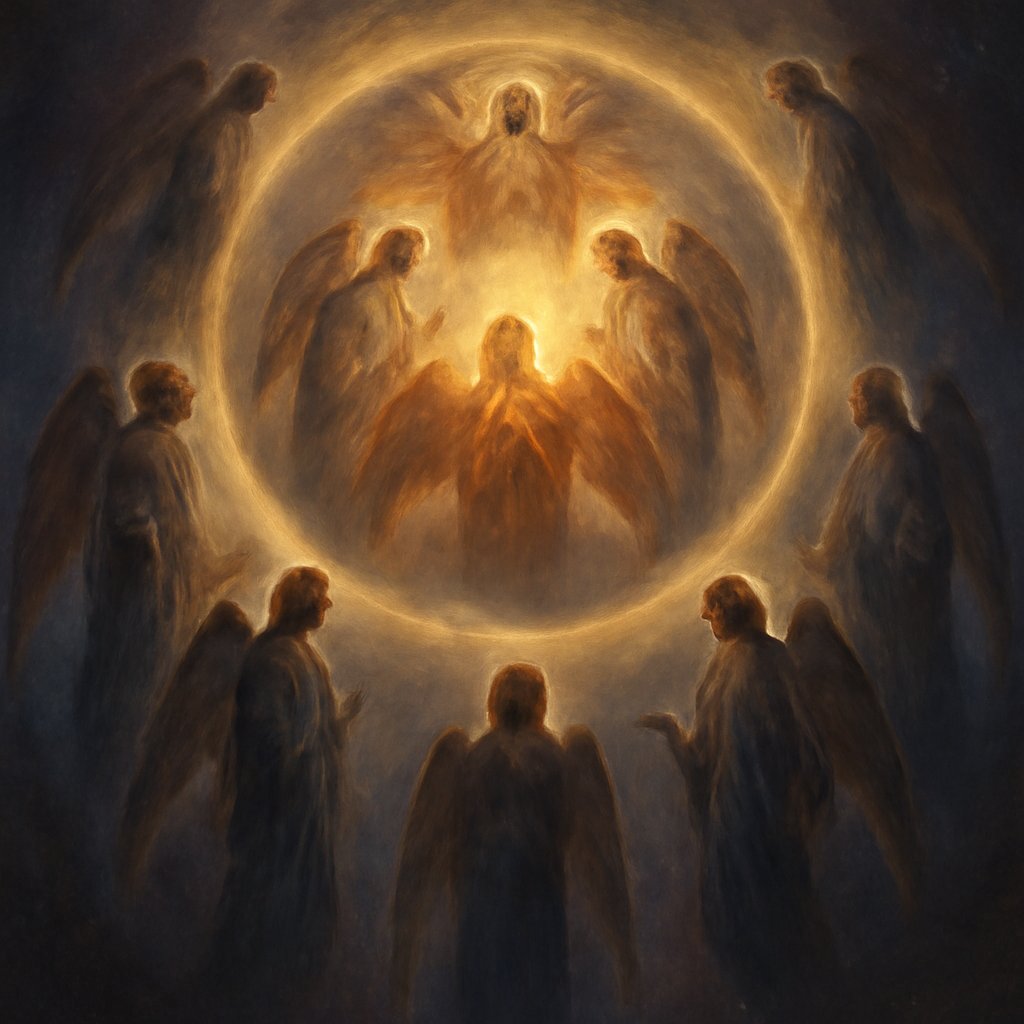
Pseudo-Dionysius the Areopagite composed De Coelesti Hierarchia in Greek around 500 CE, writing under the borrowed name of a first-century Athenian convert and weaving Neoplatonic philosophy into Christian theology. The pseudonym gave the work near-apostolic authority for a thousand years, until Renaissance scholars exposed the borrowed identity, according to the Stanford Encyclopedia of Philosophy entry on Pseudo-Dionysius and the parallel account in the Internet Encyclopedia of Philosophy [1][2].
The text did not stay in Greek. John Scotus Eriugena, one of the few Latin scholars of his age who could read the language, translated the Dionysian corpus into Latin in the 860s and carried its vocabulary into Western thought. The popular telling vs the actual record diverges on one point worth resolving: Dionysius did not invent the orders. He inherited the names scattered across the letters of Paul and the visions of Isaiah and Ezekiel, then arranged them into a single ascending ladder. His contribution was the architecture, not the inhabitants.
Thomas Aquinas took up that architecture in the thirteenth century. In the Summa Theologica, first part, question 108, he defended the ninefold pattern and fused it with Aristotelian metaphysics, arguing that each angel is a pure intellect and, lacking a body, constitutes a species entirely its own. For Aquinas the hierarchy was not a ranking of favorites but a description of how knowledge of God flows downward, each order illuminating the one beneath it.
Gregory, Dante, and a Disagreement in Heaven
Not everyone shelved the orders the same way. Pope Gregory the Great offered a slightly different sequence in the sixth century, swapping the placement of two orders. Dante Alighieri followed Gregory’s order in his earlier work, the Convivio, then changed his mind. In Paradiso, canto 28, he stages the correction inside the poem itself, having a soul in the heaven of the Primum Mobile smile at the memory of Gregory’s error and confirm the Dionysian sequence instead. It is a rare thing, a medieval poet publicly admitting he had ranked the angels wrong.
The Same Ladder in Other Traditions
Judaism arranged its angels into ten ranks rather than nine, a scheme the philosopher Maimonides set down in his twelfth-century legal code, the Mishneh Torah, placing the human-facing Ishim at the bottom. His list runs from the Chayot HaKodesh and the Ophanim at the summit down through Seraphim and Malachim to the Ishim, the order that appears to prophets and stands closest to the human intellect, as recorded in Maimonides’ Mishneh Torah [3].
Two things get conflated here. The Christian nine and the Jewish ten share several names, Seraphim and Cherubim among them, but they are not translations of one another. Maimonides ranks his orders by depth of comprehension, how fully each grasps the divine, while Dionysius ranks his by nearness and the relaying of light. The overlap is real, the logic underneath is different. Islamic angelology adds its own named figures, Jibril and Mika’il among them, without committing to a fixed ladder of nine or ten at all. The hierarchy, in other words, is one solution to a shared problem, not the only one.
What Witnesses Say They Meet
Modern witnesses almost never report meeting a Throne or a Dominion by name; they report light, warmth, a voice, and a sense of being accompanied, which researchers catalogue under the plain heading of the being of light. The orders are a theology of structure. The encounter, as people actually tell it, is a theology of presence, and the two rarely match in the moment of the experience.
Across the replication record of near-death research, the gap between rank and experience is consistent. Children who report a near-death experience name angels far more often than adults do, while adults reach for phrases like “a bright one” or “a being of light” to describe what a child would simply call an angel. Gallup and Proctor, in their 1982 national survey, found that roughly eight percent of Americans reporting a near-death experience described another being present during it. The witness rarely supplies a rank. The rank is what the listener adds afterward, reaching, like my Lancashire informant, for the one word that fits.
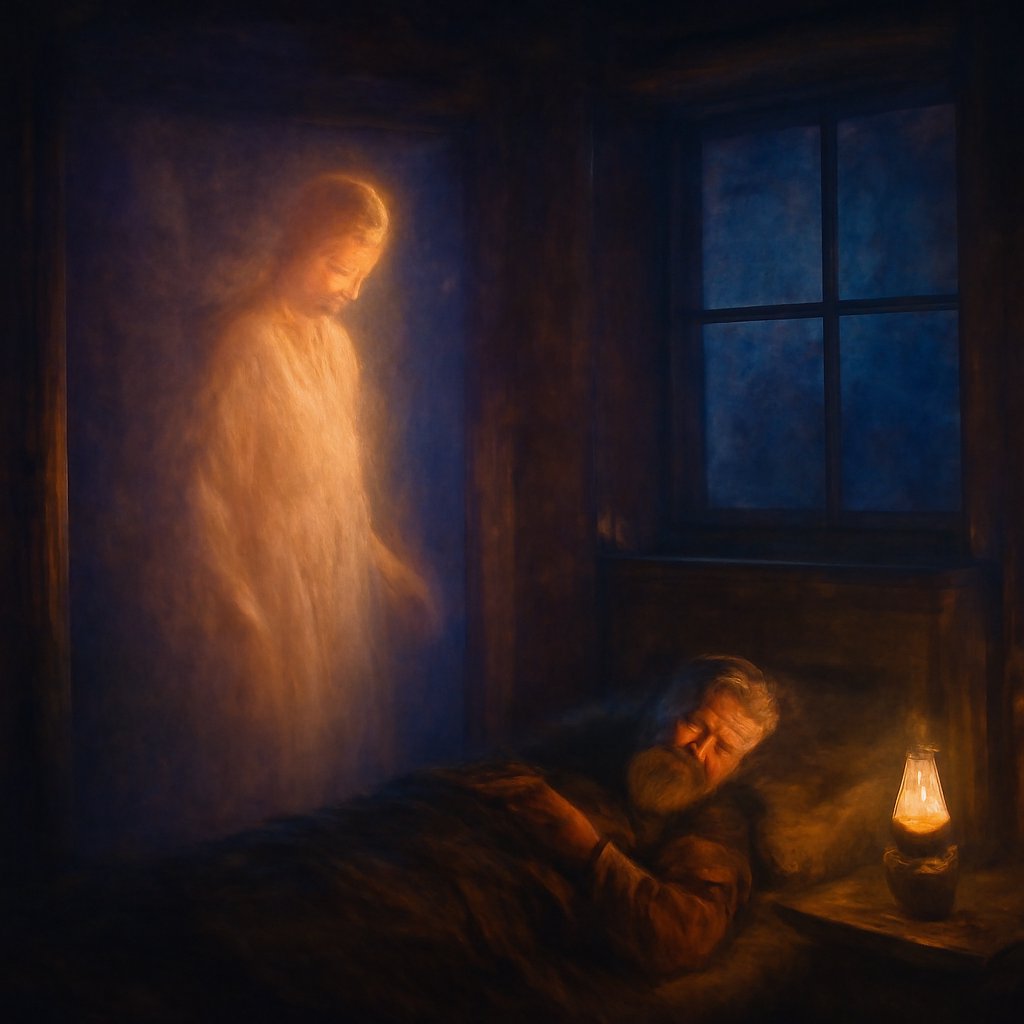
The folklorist’s interest is precisely in that act of fitting, and it runs through the field collections behind this column. When a person who has never read Dionysius insists the figure at the bedside was “a high one,” she is performing the same sorting the theologians performed, drawing a line between the near and the far. A 2024 international survey of believers across the United States, the United Kingdom, South Africa, and India found that about seventy-five percent of respondents believe in angels and that thirty-six percent of those believers report a personal encounter, most often described as peaceful rather than frightening [4]. The hierarchy survives because the experience keeps asking to be organized.
Why the Orders Still Matter
Roughly seven in ten American adults still say they believe in angels, a figure that has held near that level across two decades of polling even as other supernatural beliefs decline. A 2023 AP-NORC poll put the number at sixty-nine percent, with a Gallup survey from the same year landing on the same figure, the lowest reading since 2001 yet still a clear majority [5].
The orders endure not because anyone has counted the Seraphim but because the hierarchy does useful work. It gives shape to a class of experience that resists ordinary description. It lets a tradition hold together the terrifying wheels of Ezekiel and the gentle companion of a deathbed without pretending they are the same thing. And it preserves, in a fixed and teachable form, a distinction every witness seems to make without being taught: that some presences belong to the far edge of the cosmos, and some come all the way to the door. That tension between record and experience is the thread running through everything we catalogue here. The map is medieval. The need for it is not.
Frequently Asked Questions
What are the nine orders of angels in order?
From highest to lowest, the nine orders are Seraphim, Cherubim, Thrones, Dominions, Virtues, Powers, Principalities, Archangels, and Angels. They are grouped into three spheres of three, descending from the angels nearest God to the angels nearest humanity.
Who created the hierarchy of angels?
Pseudo-Dionysius the Areopagite arranged the scattered scriptural names into a single ninefold system in De Coelesti Hierarchia, written in Greek around 500 CE. Thomas Aquinas later defended and refined the scheme in the Summa Theologica, and it became the standard Western model.
What are the three spheres or triads of angels?
The first sphere, the Counselors, holds the Seraphim, Cherubim, and Thrones. The second sphere, the Governors, holds the Dominions, Virtues, and Powers. The third sphere, the Messengers, holds the Principalities, Archangels, and Angels closest to human life.
Are archangels really near the bottom of the hierarchy?
The order called Archangels sits eighth of nine, but the title is used loosely. Michael, called an archangel in Jude 1:9, is ranked by many theologians among the Seraphim. The low placement describes the order’s role as messengers, not the dignity of named individuals.
What is the difference between the Christian and Jewish angel hierarchies?
Christianity follows nine orders ranked by nearness to God, after Pseudo-Dionysius. Judaism, in the Mishneh Torah of Maimonides, lists ten ranks ranked by depth of comprehension. They share several names, including Seraphim and Cherubim, but order their angels by different logic.
Where does the Bible describe these orders?
No single passage lists all nine. The names are drawn from across scripture: Seraphim from Isaiah 6, Cherubim from Genesis and Ezekiel, and Thrones, Dominions, Powers, and Principalities from Paul’s letters in Ephesians 1:21 and Colossians 1:16. Dionysius gathered them into one sequence.
What do seraphim and cherubim actually look like in scripture?
Isaiah’s seraphim have six wings and hover above the throne. Ezekiel’s cherubim are composite beings with four faces and wheels full of eyes. The chubby winged infants of later art, the putti, have no basis in the biblical descriptions of either order.
Why do people still believe in angels today?
Belief stays high because the experience persists. About sixty-nine percent of American adults report believing in angels, and a 2024 international survey found that thirty-six percent of believers describe a personal encounter. The hierarchy gives that recurring experience a shared vocabulary and structure.