
The conferenced FY2026 National Defense Authorization Act, finalized by House and Senate negotiators in late 2025, instructs the Department of Defense to deliver Congress a retrospective briefing on every UAP intercept operation conducted since 2004 by U.S. Northern Command (USNORTHCOM) and the North American Aerospace Defense Command (NORAD). It is the first such mandate written into statute. The provision sits inside a defense bill that also funds the All-domain Anomaly Resolution Office (AARO) and renews the Pentagon’s standing reporting requirement on unidentified anomalous phenomena. The briefing covers twenty-two years of dual-command intercepts, from the 2004 Nimitz “Tic Tac” encounter through the August 2024 Langley AFB drone swarm and into the spring 2026 incursion pattern AARO has flagged as “concerning.” This article reads the statute against the public sensor record and names what the Pentagon will be required to put in front of cleared members on Capitol Hill.
Published: May 18, 2026. Last reviewed: May 18, 2026.
What the FY2026 NDAA Actually Requires
The conferenced FY2026 NDAA, reported out of conference committee on December 7, 2025, contains a discrete UAP-transparency section that compels the Secretary of Defense to brief the congressional defense and intelligence committees on every documented intercept, attempted intercept, or sensor-confirmed encounter involving an unidentified anomalous phenomenon over the NORAD and USNORTHCOM areas of responsibility from January 1, 2004 through the date of enactment [1][2]. The statutory language is narrow but procedurally aggressive. It assigns the responsible parties — the NORAD commander, the USNORTHCOM commander (a dual-hatted position currently held by General Gregory Guillot), and the All-domain Anomaly Resolution Office director — and it sets a delivery window of 180 days from enactment [3].
The bill does not, on its face, require declassification. It requires a briefing — classified where necessary, with an unclassified annex where possible. That distinction matters. Earlier UAP statutory milestones, including the AARO-establishing language in the FY2022 NDAA and the Schumer-Rounds amendment debated for the FY2024 cycle, all turned on the same definitional point. Congress can compel briefings far more easily than it can compel release. The FY2026 NDAA is a briefing mandate with teeth on attendance and timeline, not a disclosure mandate on content [2].
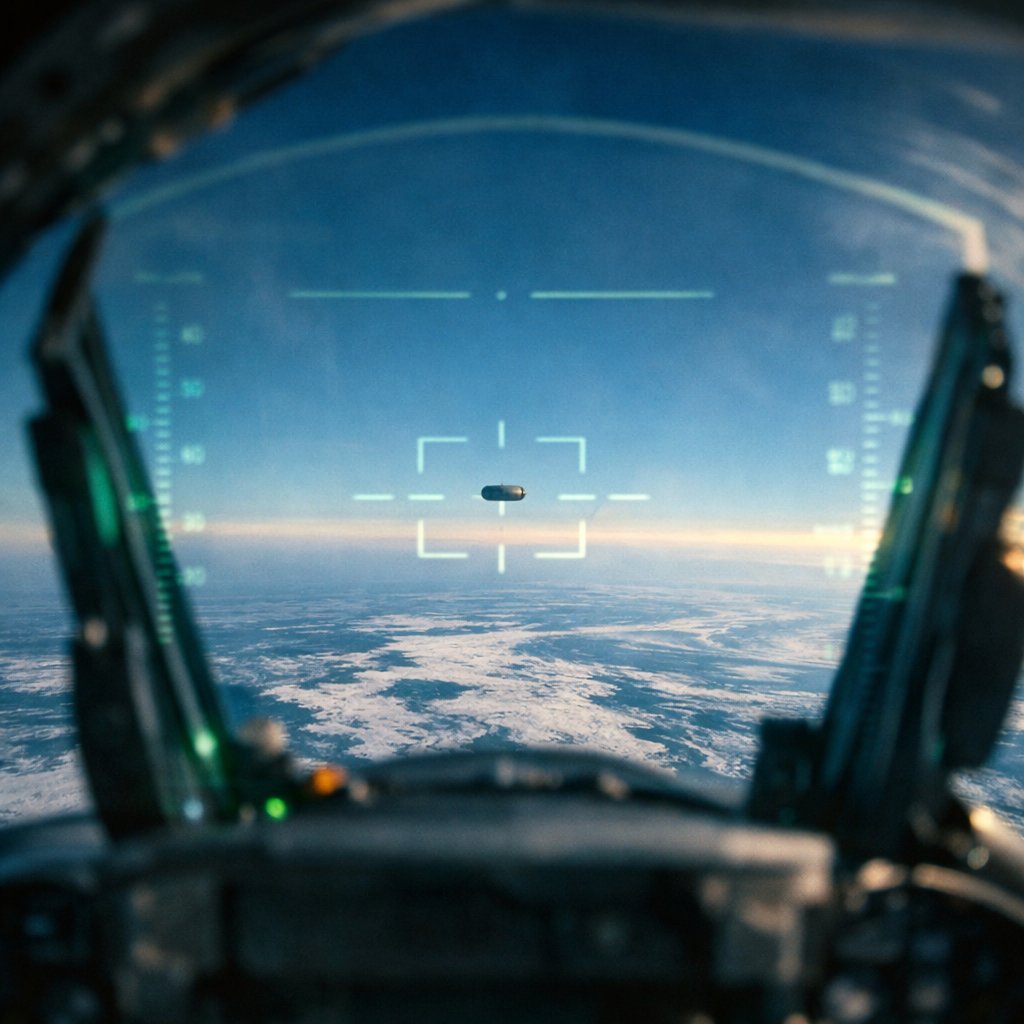
NORAD, NORTHCOM, and the Twenty-Two-Year Sensor Record
NORAD is the binational U.S.-Canadian command established in 1958 to provide aerospace warning, aerospace control, and maritime warning for North America; USNORTHCOM, established in 2002 after the September 11 attacks, is the geographic combatant command responsible for the homeland defense mission inside the continental United States, Alaska, Mexico, and the surrounding maritime approaches [4]. The two organizations share a four-star commander and a co-located headquarters at Peterson Space Force Base in Colorado Springs. Any object that enters the North American air defense identification zone — balloon, drone, foreign military aircraft, or unidentified anomalous phenomenon — runs through their integrated sensor fusion architecture before it runs through anything else.
The twenty-two-year window the NDAA carves out is not arbitrary. It begins with the Nimitz “Tic Tac” encounter of November 14, 2004, off the coast of San Diego — the case that anchored the Pentagon’s eventual AATIP disclosure and the 2017 New York Times reporting by Helene Cooper, Ralph Blumenthal, and Leslie Kean [5]. It extends through the GIMBAL and GO FAST incidents of January 2015, both off the U.S. East Coast and both later released by the Department of Defense as authentic Navy F/A-18 sensor footage [5][6]. It includes the February 2023 sequence in which NORAD tracked and shot down four high-altitude objects in eleven days — the Chinese surveillance balloon over the Atlantic on February 4, then a high-altitude object over northern Alaska on February 10, a cylindrical object over the Yukon on February 11, and an octagonal object over Lake Huron on February 12 [7][8]. And it captures the August 2024 Langley AFB drone-swarm incursion, the still-unattributed multi-week pattern of unidentified small unmanned systems over a fighter base that hosts F-22 Raptors [9].
What the Sensor Record Contains
On the sensor record: NORAD ingests inputs from the North Warning System (the Arctic radar chain co-operated with Canada), the Over-the-Horizon Backscatter radar pickets, AWACS E-3 Sentry orbits, F-15, F-16, F-22, F-35, and CF-18 fighter intercept tapes, and the federated civilian feeds piped in from the Federal Aviation Administration. USNORTHCOM overlays its own short-range air defense radars around critical infrastructure and its Joint Interagency Task Force feeds. The conferenced NDAA effectively asks: what did this aggregated picture show during every confirmed UAP intercept since 2004, and what was the disposition of each track?
The Spring 2026 “Concerning Spurt” of Incursions
Through May 2026, USNORTHCOM and NORAD officials have publicly described an elevated tempo of unexplained drone and UAP incursions over and around sensitive military installations and critical infrastructure, a pattern AARO Director Jon Kosloski and his predecessor Sean Kirkpatrick have characterized in congressional testimony as a “concerning spurt” rather than a one-off [10]. The pattern emerged in late 2023 over the Atlantic coast Combat Air Forces basing complex, intensified in August 2024 at Joint Base Langley-Eustis, and has continued into 2025 and 2026 at sites including Naval Air Station Patuxent River, Naval Weapons Station Earle, and a cluster of Strategic Command-aligned facilities the Pentagon has declined to name on the unclassified record [9][10].
What’s actually being measured here: small unmanned aerial systems, varying in apparent size and propulsion signature, operating at altitudes and on flight profiles that frustrate routine identification. Some are almost certainly hobbyist drones. Some are almost certainly state-actor surveillance platforms. Some, on the existing public record, are neither — or are not yet attributable on the documents released so far. The FY2026 NDAA’s retrospective briefing will be the first time a single document forces the dual command to lay out, end-to-end, what its sensors saw and what its operators were permitted to identify.

The February 2023 Shoot-Downs as Test Case
The February 2023 shoot-down sequence is the cleanest test case for the kind of accounting the NDAA briefing will compel. On February 4, 2023, an F-22 Raptor flying out of Joint Base Langley-Eustis fired a single AIM-9X Sidewinder missile to destroy a Chinese-origin high-altitude surveillance balloon over the Atlantic off the South Carolina coast, the first time in NORAD’s history that a manned aircraft engaged an aerial object over U.S. territorial waters [7][8]. Six days later, on February 10, an F-22 destroyed a smaller cylindrical object over the Beaufort Sea ice off northern Alaska. On February 11, a CF-18 from the Royal Canadian Air Force fired on a similar object over central Yukon. On February 12, an F-16 brought down an octagonal object over Lake Huron.
Per the public record, the three smaller objects were never recovered intact, and NORAD officials have stated they are unable to definitively identify the origin or operator of any of the three [7]. AARO’s subsequent volume-one historical report, dated March 8, 2024, and a follow-on volume released in November 2024, classify the trio as “case open” pending recovery [11]. The FY2026 NDAA briefing will require NORAD and USNORTHCOM to walk Congress through, with sensor evidence, what each fighter pilot saw on tape and what the radar fusion picture showed before, during, and after each engagement.
Tic Tac, GIMBAL, GO FAST: Why the 2004 Start Date
The November 14, 2004 Nimitz encounter, in which Commander David Fravor of Strike Fighter Squadron 41 and Lieutenant Commander Alex Dietrich intercepted an unidentified object the size of an F/A-18 Hornet roughly 100 miles southwest of San Diego, is the documentary anchor that pulled UAP back onto the congressional record after a thirty-year dormancy [5]. The case sits inside USNORTHCOM’s area of responsibility for homeland defense and inside the Pacific Fleet’s training-range air picture. Both the Fire Control radar return from the USS Princeton and the ATFLIR pod video from the F/A-18F that Fravor’s wingman flew were captured by Navy sensors and later released by the Department of Defense [5][6].
The January 2015 GIMBAL and GO FAST incidents add what the 2004 case lacked: full-fidelity infrared imagery cleared for public release, captured off the East Coast during a working strike-group air-defense exercise [6]. The conferenced NDAA’s 2004 start date is therefore a documentary choice as much as a chronological one. It begins the retrospective at the first incident where the sensor record survived intact through declassification, and it ensures the Pentagon cannot brief Congress on a “modern” UAP record without addressing the case that re-opened the file.
“Restoring Public Trust”: The House Oversight Frame
The House Committee on Oversight and Accountability’s November 13, 2024 hearing — titled “Unidentified Anomalous Phenomena: Exposing the Truth” and followed by the November 19, 2024 “Restoring Public Trust Through UAP Transparency” subcommittee session — produced the rhetorical scaffolding the FY2026 NDAA negotiators drew on [12]. Witnesses included Luis Elizondo, the former AATIP director; Dr. Tim Gallaudet, the retired Navy rear admiral; Michael Shellenberger, the journalist; and former Department of the Air Force Deputy Assistant Secretary for Space Acquisition and Integration Michael R. Gold. Each pressed the same point: that the executive branch’s sensor record is more complete than the unclassified statements made to date suggest, and that the dual-command intercept history is the cleanest available subset of that record [12].
The framing-vs-fact distinction worth resolving: the hearings produced testimony, not evidence. Testimony, however credible, is not radar tape. The FY2026 NDAA briefing requirement is the first statutory instrument that converts the political momentum of those hearings into a specific documentary delivery from the two commands that own the sensor data. The conferenced bill text was reported by DefenseScoop’s Brandi Vincent on December 8, 2025, and the underlying provision appeared in the public Conference Report 119-XXX accompanying the bill [1][3].
What the Briefing Will Likely Cover — and What It Will Not
The 180-day delivery window means the Pentagon’s UAP briefing to Congress is likely to land in mid-to-late 2026, assuming on-time enactment. What it will cover, on a plain reading of the statute: every NORAD or USNORTHCOM intercept since 2004 that involved an object the responsible commander logged as unidentified anomalous phenomenon at the time of the engagement; the sensor disposition of each track; the pilot debrief record where one exists; the recovery status of any physical material; and the disposition code AARO has assigned to each case [3][11].
What it will not cover, on the same plain reading: cases adjudicated as fully identified at the time of the intercept (the Chinese balloon being the closest borderline example); cases that sat exclusively inside another command’s area of responsibility, such as INDOPACOM tracks over Guam or Hawaii; and any incident the executive branch successfully argues falls under Special Access Program protection. The classification-versus-disclosure distinction will be the central tension of the eventual delivery. Marcus Halloway will be watching for the unclassified annex.
How to Read the Briefing When It Arrives
When the NORAD-USNORTHCOM UAP intercept briefing lands on the Hill in 2026, three questions will determine whether it advances the public record or merely formalizes it. First: does the unclassified annex name specific cases by date, location, and intercept platform — or does it offer only aggregate counts? Second: does the document distinguish between intercepts where the pilot logged the object as anomalous at the time versus intercepts the executive branch is retroactively reclassifying as identified? Third: does the briefing disclose the recovery status and disposition of the three February 2023 smaller objects, the August 2024 Langley swarm, and any 2025-2026 incidents that share their signature profile?
The load-bearing fact: this is the first time in U.S. legislative history that a single statute will require a single, unified retrospective accounting from the two commands that own the North American sensor picture. Whether the resulting document is granular or generic will tell the public more about the politics of disclosure than about the phenomena. Either outcome is informative. Both will be on the documentary record.
| Incident | Date | Command AOR | Intercept Platform | Disposition (public record) |
|---|---|---|---|---|
| Nimitz “Tic Tac” | Nov 14, 2004 | USNORTHCOM / PACFLT range | F/A-18F + USS Princeton radar | Released; case open |
| GIMBAL | Jan 2015 | USNORTHCOM (Atlantic) | F/A-18F ATFLIR pod | Released; case open |
| GO FAST | Jan 2015 | USNORTHCOM (Atlantic) | F/A-18F ATFLIR pod | Released; case open |
| Chinese surveillance balloon | Feb 4, 2023 | NORAD / USNORTHCOM | F-22 (AIM-9X) | Identified; recovered |
| Alaska high-altitude object | Feb 10, 2023 | NORAD / USNORTHCOM | F-22 (AIM-9X) | Unidentified; not recovered |
| Yukon object | Feb 11, 2023 | NORAD (Canada AOR) | CF-18 / U.S. F-22 | Unidentified; not recovered |
| Lake Huron object | Feb 12, 2023 | NORAD / USNORTHCOM | F-16 (AIM-9X) | Unidentified; not recovered |
| Langley AFB drone swarm | Aug 2024 | USNORTHCOM | Multiple platforms, no engagement | Unattributed; case open |
For broader context on the cases that bracketed this twenty-two-year window, see the esovitae pillar page for alien and extraterrestrial mysteries, where the documentary record on related incidents sits alongside this one.