

Drafted with AI assistance from the sources listed; images are AI-generated illustrations. How EsoVitae is made
Four UK excavations running concurrently in spring 2026 — the A46 Newark Bypass scheme in Nottinghamshire, the HS2 Phase One archaeology programme along the West Midlands corridor, Vindolanda‘s 2026 season on Hadrian’s Wall in Northumberland, and the South Cadbury Environs Project in Somerset — together push the pre-Roman Britain timeline earlier, broaden its regional grain, and tighten the dating chain that connects them.
The Four 2026 Spring Digs at a Glance
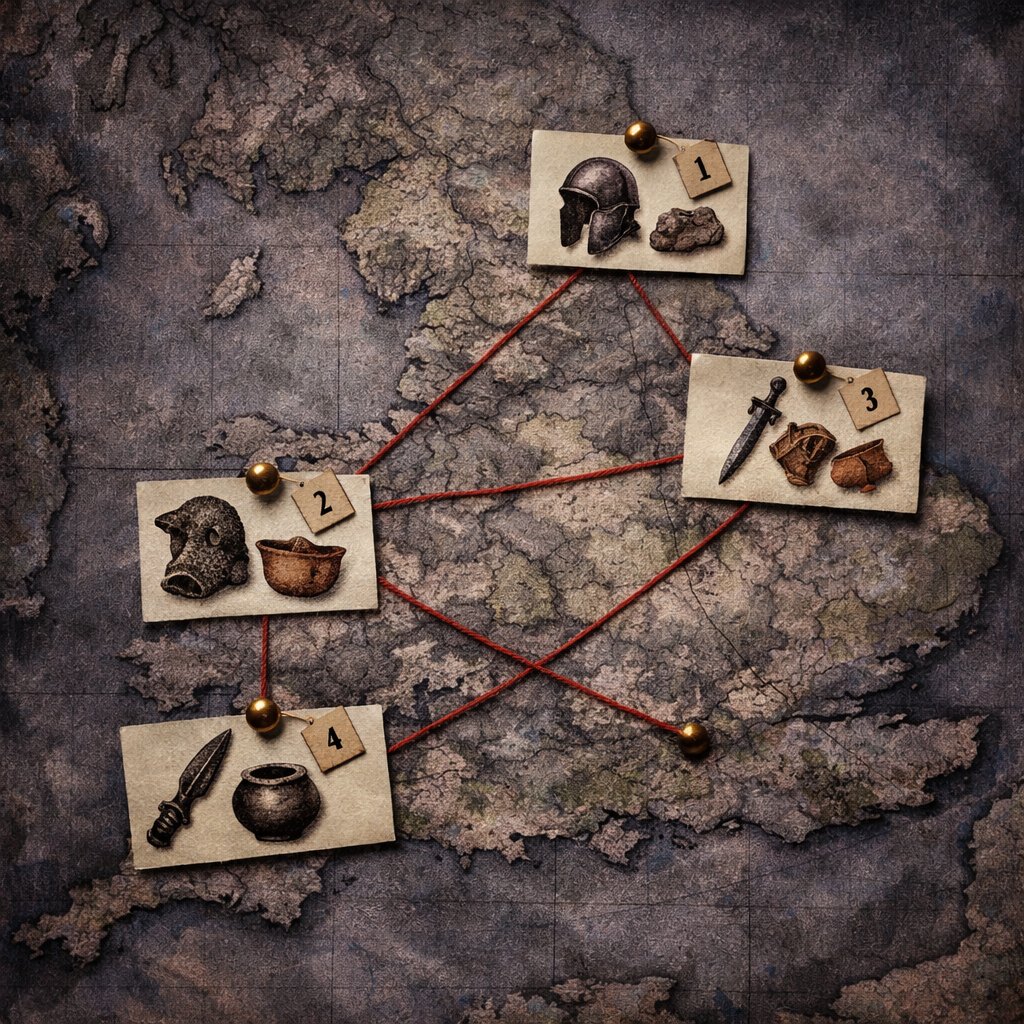
Between March and May 2026, four separate British excavations were actively reporting findings that bear on pre-Roman Britain, each run by a different lead institution and each producing a different category of evidence [1][2][3][4]. Treating them as a single comparative file — the way a cold-case reviewer would treat four parallel investigations into the same missing decade — makes patterns visible that no single dig surfaces on its own.
The four are not equivalent in scale or method. The A46 Newark Bypass scheme is a developer-funded linear excavation across roughly 9.63 hectares, run on behalf of National Highways. The HS2 archaeology programme is a multi-year umbrella that has logged finds from more than 60 sites between London and Birmingham since 2018, and continues to release seasonal updates through 2026. Vindolanda is a long-running annual season on the Roman frontier in Northumberland, where the layers immediately beneath the Roman fort hold pre-Roman strata. The South Cadbury Environs Project, originally led by the late Richard Tabor for the University of Bristol, has resumed seasonal fieldwork around the Late Iron Age hillfort in Somerset traditionally identified with Cadbury Castle [4].
| Dig | Region | Lead body | Period span | Headline 2026 evidence |
|---|---|---|---|---|
| A46 Newark Bypass | Nottinghamshire (East Midlands) | National Highways / commercial archaeology contractor | c. 6000 BC – AD 1000 | Mesolithic flintwork, Romano-British well, 2 Anglo-Saxon timber houses, 7 burials [1] |
| HS2 archaeology programme | London – Birmingham corridor | HS2 Ltd / consortium of contractors | Palaeolithic – Modern | Iron Age coin hoards, Roman trading post at Fleet Marston, ongoing 2026 reporting [2] |
| Vindolanda 2026 season | Northumberland (Hadrian’s Wall) | Vindolanda Trust | 1st c. BC – 5th c. AD | Continued anaerobic-preservation finds, wooden writing tablets, pre-fort layers [3] |
| South Cadbury Environs | Somerset (South West) | University of Bristol-affiliated project | Neolithic – Late Iron Age | Hillfort enclosure refinements, Late Iron Age occupation continuity into Roman period [4] |
Newark A46: the Background Case in the Comparison
The A46 Newark Bypass excavation has produced finds dating from roughly 6000 BC through the early medieval period across an evaluation area of about 9.63 hectares, including a Romano-British well, two Anglo-Saxon timber buildings, and seven articulated human burials reported in 2026 [1]. Esovitae’s standing case file on the Newark dig sits at the Historical & Archaeological Mysteries pillar; for the present synthesis, the Newark site functions as the deepest-time witness in the four-site comparison.
What Newark contributes to the comparative file is continuity. The same 9.63-hectare strip records human activity from the Mesolithic through the Anglo-Saxon period, which is unusually long for a single linear scheme. That continuity becomes useful when paired with the Vindolanda and South Cadbury sequences, both of which also document long pre-Roman occupations on different soils, in different climates, and under different post-Roman fates.
HS2 Archaeology: an Accumulating Corridor-Wide Dataset
The HS2 archaeology programme has, since 2018, investigated more than 60 sites along the Phase One route between London and Birmingham, producing one of the largest single-project archaeological datasets in British history and continuing to file public updates through 2026 [2]. Headline finds across the programme include the Roman trading settlement at Fleet Marston in Buckinghamshire, an Iron Age coin hoard at the same site, and the medieval church and burial ground at St Mary’s, Stoke Mandeville.
Per the case file: HS2 is unusual in two ways. First, it is corridor-shaped rather than site-shaped, which forces investigators to compare environments — chalk, gravel, clay, river terrace — within a single programme. Second, the data release is staggered. Reports from the programme’s 2022 fieldwork were still being published into 2026, which means the spring 2026 reporting cycle is a mix of new fieldwork and curated older results. HS2 Ltd’s own historic environment dashboard has logged the programme’s accumulating output since 2020.
Vindolanda 2026: the Pre-Fort Strata Question
The Vindolanda Trust’s 2026 excavation season at the Roman fort site near Bardon Mill, Northumberland, continues a multi-decade programme on the Hadrian’s Wall frontier whose anaerobic preservation conditions have already produced more than 1,800 ink-on-wood writing tablets since 1973 [3]. The site is conventionally taken as Roman, but the pre-fort strata — the ground surfaces and structures that preceded the first Roman timber fort in the early AD 80s — speak to late Iron Age Brigantian occupation immediately before the conquest crossed the Stanegate.
Why the Pre-Fort Layers Matter
What the timeline reveals: the conventional reading of Vindolanda as a Roman creation skips a generation. The pre-fort layers preserve the surfaces the first Roman builders cut into. Two questions follow. Were those surfaces empty when the Romans arrived, or were they an active Brigantian settlement that was either displaced or absorbed? And does the artefactual assemblage from the lowest layers — pottery, metalwork, animal-bone deposits — pattern with native Iron Age sites elsewhere in the north, or with imported Continental material that arrived ahead of the army? The 2026 season reporting continues a chain of evidence that bears directly on both.
Vindolanda’s strength as a witness is not headline-novelty; it is calibration. Each season’s stratigraphy is cross-checked against the published ink-tablet corpus, which carries absolute dates inside the documents themselves. That gives the site a self-correcting dating chain: if a layer’s pottery typology suggests one year and a writing tablet in the same context names a different consul or campaign, the discrepancy is investigated rather than smoothed over. Few other British sites combine anaerobic preservation, dated documents, and continuous excavation seasons on this scale.
South Cadbury Environs: a Hillfort Reread on Its Own Terms
The South Cadbury Environs Project‘s 2026 fieldwork around the Late Iron Age hillfort at Cadbury Castle in Somerset is the smallest and least-publicised of the four sites, yet it furnishes the comparison’s southwestern anchor and tests whether the Iron Age – Roman transition in the West Country resembles or diverges from the Midlands and the northern frontier [4]. South Cadbury has been excavated in several modern campaigns, beginning under Leslie Alcock in the late 1960s and renewed by Richard Tabor’s environs project at the start of the 21st century.
The site is widely cited in popular literature for its long-running identification with the Camelot of medieval Arthurian romance, an identification Alcock himself treated as suggestive but unproven. The current programme has set that question aside. What it is actually testing is the relationship between the hillfort’s defensive enclosures and the surrounding landscape’s continuous occupation across the Iron Age – Roman boundary. The provisional reading from earlier seasons — that occupation continued through the conquest period without an obvious depopulation event — is what the 2026 fieldwork is meant to refine.
What the Four Digs Reveal in Aggregate
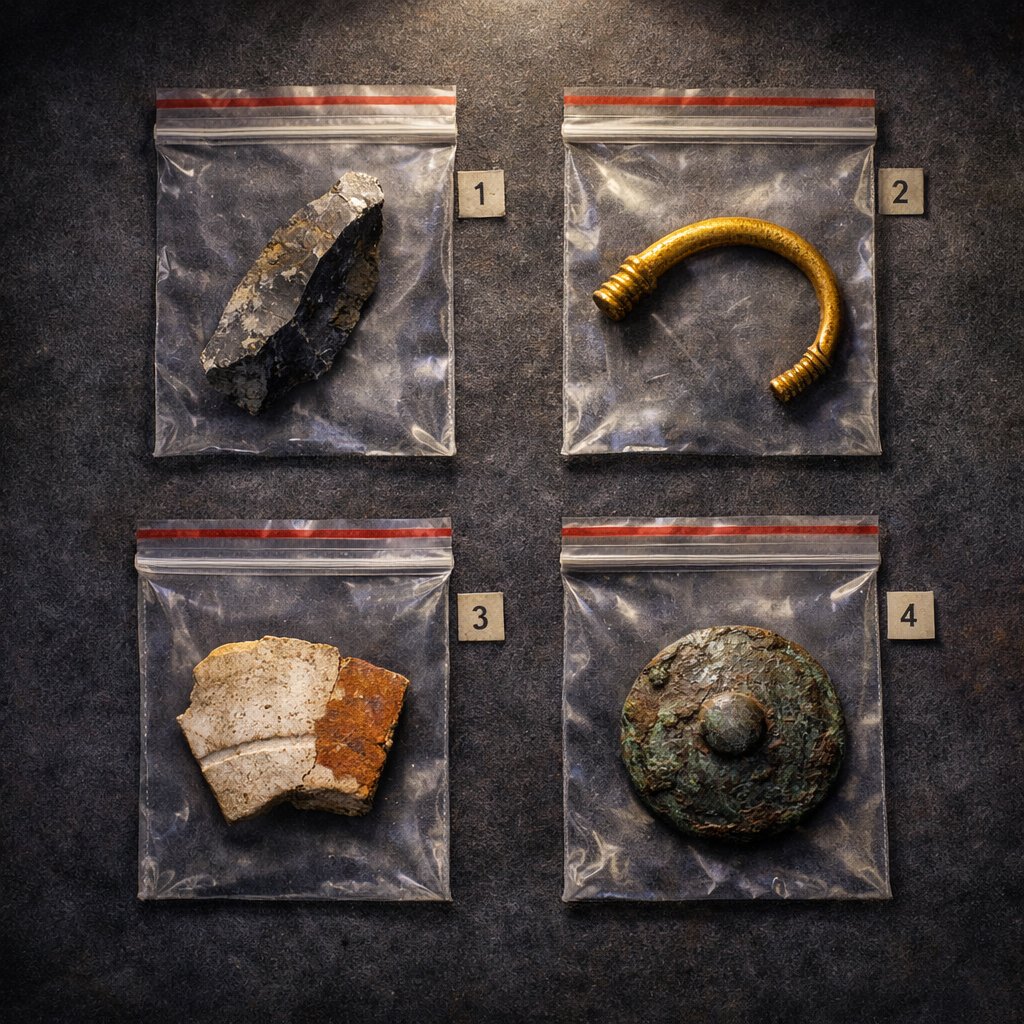
Taken as a single comparative file, the four spring 2026 digs sketch a picture of pre-Roman Britain that is older, more regionally varied, and more continuous through the Roman transition than any single site reveals alone. The synthesis below is interpretive — this is a notes-column reconstruction, not the report — and each thread is flagged for what would strengthen or break it.
The load-bearing fact: each of the four digs records human presence well before the conventional Roman arrival date of AD 43, and each records it on different soil and under a different post-Roman fate. Newark records 6000 BC through Anglo-Saxon; HS2 logs Iron Age and earlier across multiple river-terrace and chalk environments; Vindolanda preserves the pre-fort surfaces a Brigantian community walked on in the AD 70s; South Cadbury holds Late Iron Age occupation that survived the Claudian conquest without obvious dislocation.
Three Threads to Watch
- Continuity of occupation through the Roman transition. South Cadbury and Vindolanda both yield pre-fort or pre-conquest layers that do not show evacuation. Newark’s Romano-British well sits above earlier strata. HS2’s corridor finds repeatedly show overlapping Iron Age and Roman activity. The thread to watch: whether the four-site evidence ledger continues to record continuity, not displacement, across AD 43.
- Regional variation in pre-Roman material culture. A Brigantian assemblage at Vindolanda, a Durotriges-adjacent hillfort at South Cadbury, a Mesolithic-through-Iron-Age palimpsest at Newark, and a corridor of Iceni- and Catuvellauni-adjacent sites along HS2 are not the same Britain. The four digs together let archaeologists test whether “pre-Roman Britain” is a useful singular noun at all.
- Dating-method cross-checks. Newark’s stratigraphic dates, Vindolanda’s tablets (which carry absolute dates), HS2’s coin hoards (independently dated by mint), and South Cadbury’s pottery sequence provide four different dating chains. Cross-checking radiocarbon against stratigraphy against numismatic dates against typology is the cleanest way to catch chronological drift.
Where Inference Ends and the Record Begins
The honest line on this synthesis: the four digs are real, the headline finds at each are public, and the comparative pattern is interpretive. Media coverage of any one of these sites tends to fold the 2026 season into a single “rewriting British history” frame. The actual record is narrower. What the 2026 fieldwork has so far established is incremental — better dates, finer stratigraphy, additional confirmed continuity — not a paradigm shift.
Speculation about what these digs collectively mean for the bigger pre-Roman picture belongs in the notes column. What belongs on the report: four named UK excavations were actively producing pre-Roman or transitional evidence during spring 2026; each is run by a different institution; each documents long occupation; and read together they continue to favour a continuity-with-regional-variation model of late Iron Age Britain rather than a single-event displacement model. The notes column flags the obvious next move — synthesising the four assemblages quantitatively rather than narratively, with shared dating protocols — but the report stops at the named, dated, attributed evidence above.
One last note for the reader who came here looking for a single overturned consensus. Pre-Roman Britain has been actively re-read for at least four decades, since aerial photography and developer-funded planning archaeology began to surface sites the older county histories never recorded. The four 2026 digs are part of that long re-reading; they are not its endpoint. Each adds rows to an evidentiary ledger that already runs to thousands. Read them that way — as new entries in an open case file, not as the closing chapter — and the comparison does the work it is meant to do.