By Emilia Wellesley · Published May 4, 2026 · Updated May 13, 2026
Last reviewed: May 4, 2026.
El Dorado, often conceptualized as a city filled with gold, has tantalized explorers for centuries. As we dissect the origins and explorations surrounding this legendary city, the layers of myth and reality begin to unfold, revealing a narrative steeped in cultural richness and the dire consequences of greed.
Discovering the Start of a Legend
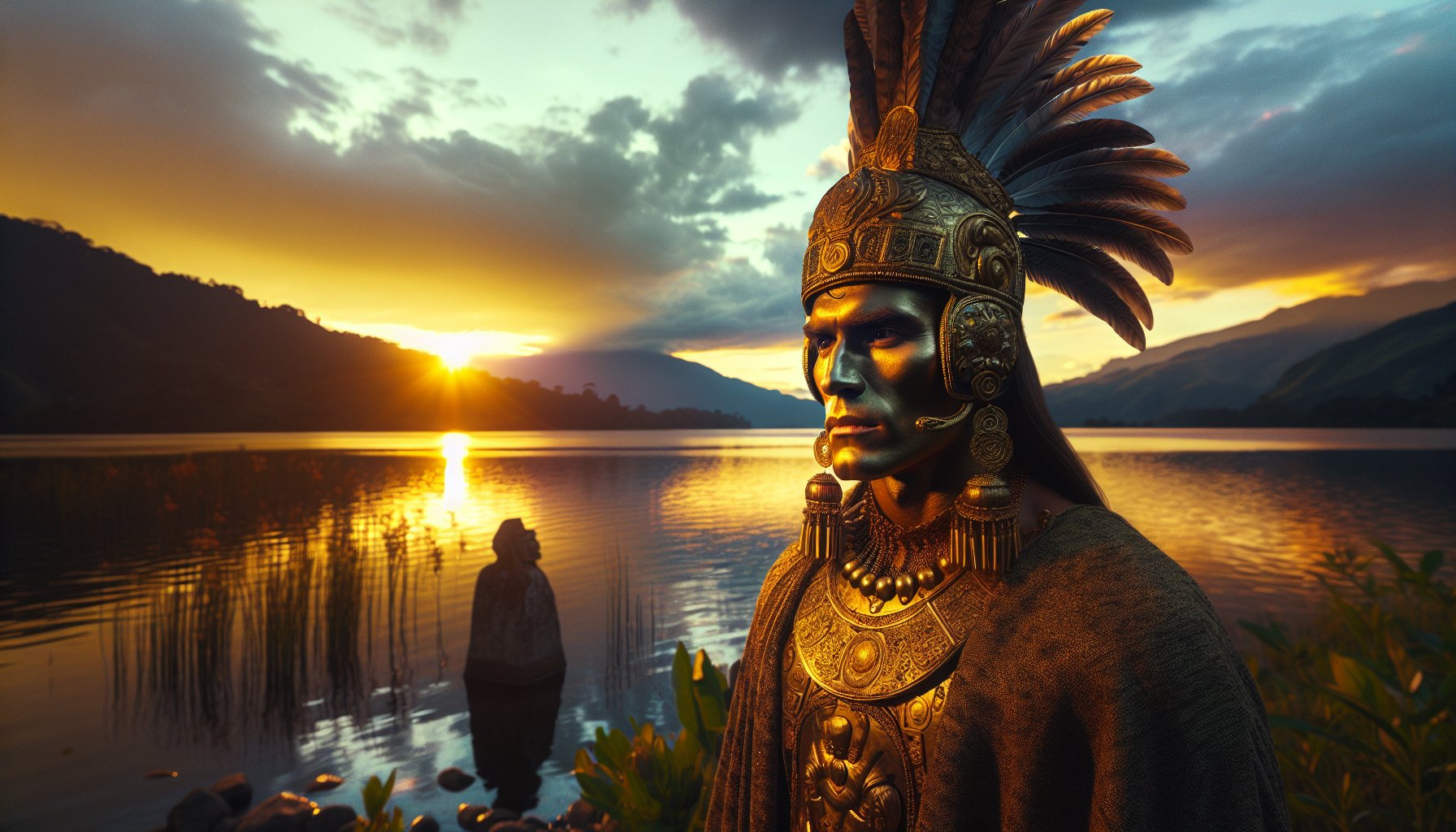
El Dorado, often depicted in tales and fanciful maps as a shimmering city overflowing with gold, gets its origins from a far less materialistic, yet profoundly significant cultural ceremony among the Muisca people. Initially, "El Dorado" referred not to a place but to a person, specifically, a tribal chief. During rituals, this leader was adorned head to toe in fine gold dust, making him a breathtaking sight to behold, especially during the ceremonies conducted at Lake Guatavita. This dramatic sight left an indelible mark on the minds of the Muisca’s neighbors and later, the Spanish conquerors.
The transformation of El Dorado from a person to a place is a fascinating evolution of storytelling and myth-making, primarily driven by the Spanish during their conquests. What started as a ceremonial title given to the Muisca chief—known for being covered in gold dust as an offering to their gods—morphed into a legend about a city of unimaginable wealth. To the Spaniards and other European adventurers who caught wind of the tale, "El Dorado" became synonymous with riches waiting to be claimed.
This narrative shift from a human figure of the "Gilded Man" to a mythical location filled with gold illustrates a significant cultural misunderstanding and reinterpretation. The Spanish and other Europeans were enamored with gold and projected their own values onto the stories they heard. For the Muisca, however, gold held a different significance—it was not a symbol of wealth but a sacred material used in religious offerings and ceremonies, crucial to their spiritual life. Thus, the European quest for El Dorado was not just a geographical expedition; it became a devastating intrusion into the spiritual and cultural life of the indigenous population.
Such exploitations, spurred by tales of a gold-laden city, led to numerous expeditions into the heart of the continent. The misunderstanding and greed that fueled these journeys marked the beginnings of what would be a long and tumultuous period of colonial exploitation in South America. The lust for gold blinded many to the rich cultures and knowledgeable societies they encountered, treating the legend as fact rather than a symbolic, deeply rooted cultural practice connected to the Muisca people.
This historical unraveling of the El Dorado legend not only exposes the layers of myth interwoven with glimpses of historical reality but also attests to the profound impacts these narratives held over the conquistadors' actions and the native cultures they so deeply affected. As scholars and historians dive deeper into the ethnohistorical records, they continually strive to separate the mythical chaff from the factual wheat, revealing the true legacy of the Muisca and their misrepresented ceremonial leader—El Dorado.
The Muisca People and Their Culture
At the heart of the El Dorado legend lie the Muisca people, an advanced civilization whose customs and beliefs have been shrouded in both mystique and misinterpretation. Residing in the highlands of modern-day Colombia, the Muisca were part of the Chibcha language group, which played a pivotal role in the cultural and economic fabric of pre-Columbian South America.
Gold and the Sacred
Unlike the Spanish conquerors, who equated gold with wealth and power, for the Muisca, gold held a profoundly different significance. It was less a symbol of material wealth and more an emblem of spiritual connection. Gold, or what they called 'the sweat of the sun', was primarily used in religious rituals and offerings to symbolize fertility and reverence to their deities. The famous El Dorado ceremony involved the Muisca chieftain, known as the Zipa, being covered in gold dust during rituals at sacred lakes such as Lake Guatavita. These rites were not mere displays of wealth, but heartfelt offerings to their gods, hoping to ensure prosperity and balance in their world.
Societal Structure and Rituals
The Muisca civilization was distinctive for its organized societal structure, which was more akin to a confederation of states rather than a single unified empire typical of the Incans. They had robust political systems with rigorous social stratification, which was closely intertwined with their cosmology and religious beliefs. Chiefs and priests held significant sway, guiding the spiritual and daily affairs of the Muisca people.
Central to understanding the allure of the El Dorado legend is the investiture of the Zipa. When a new leader was chosen, a grand ceremony ensued where he was adorned in gold dust and precious jewels. Accompanied by priests and nobles, the Zipa would then cleanse himself in the sacred waters, casting gold and emeralds into the lake as offerings to the gods. It was this ceremonial richness—this vivid spectacle of golden splendor—that captured the imaginations of the Spanish and later, the entire world.
Furthermore, the daily life of the Muisca was infused with a rich tradition of metalwork and craftsmanship which underscores their advanced cultural accomplishments. Their skill in creating intricate gold ornaments and artifacts not only reveals their craftsmanship but also highlights their deep spiritual and societal connections to this metal, resonating through their complex mythology and rituals.
The interplay between the Muisca’s gold-centric rituals and European greed transformed a sacred tradition into the globally spun tale of El Dorado, casting a long shadow over the historical truths of an intriguing, sophisticated civilization. By examining these cultural nuances, one can begin to peel back the layers of sensationalism and appreciate the true essence of the Muisca people and their unjustly mythologized practice that spurred some of history’s most relentless treasure hunts.
Early Expeditions in Search of El Dorado
Amongst the spectral shadows cast by tales of the New World, few burned as vividly in the European imagination as the legend of El Dorado. Narratives of a king clad in gold dust and a city cobbled with the same precious metal prompted numerous expeditions led by an array of intrepid conquistadors, each hoping to write their names in history by uncovering this mythical city.
Driven by Gold: Early Spanish Expeditions
Leading the charge was Gonzalo Jiménez de Quesada, a Spanish adventurer whose journey into the rugged Andes in search of El Dorado began in 1536. His expedition was marked by harsh conditions, unexpected alliances, and brutal confrontations with indigenous tribes. Though Quesada did not find the gilded city, his encounters with the Muisca people brought first-hand accounts of a rich culture steeped in rituals involving immense quantities of gold. However, rather than gold-laden streets, Quesada’s findings brought insight into a sophisticated civilization with its own social hierarchy and customs, which included elaborate metalwork that European minds translated into tales of immense wealth.
Sir Walter Raleigh's Pursuits: The Dream of El Dorado
Following on Quesada's heels came Sir Walter Raleigh, the illustrious Elizabethan courtier, whose two voyages in the late 16th century were driven by the intoxicating promise of El Dorado. Fueled by tales passed down from travelers and previous expeditions, Raleigh's endeavors took him through the heart of what is now Venezuela. He documented his voyages meticulously, describing tantalizing visions of a rich land named Manoa, supposedly overseen by a golden king. Yet, despite his exhaustive searches, Raleigh found neither gold nor a gilded city. His accounts, rich in detail, were a mix of personal observations and the embellished stories of indigenous tribes, creating a patchwork of facts and folklore that only deepened the allure of El Dorado for those who followed.
The Impact of These Expeditions
Despite their failure to uncover a golden city, these early expeditions laid down a complex web of geographical and cultural understanding that would define South American exploration. The journeys of men like Quesada and Raleigh not only enriched the European geographical imagination but also painted a picture of a continent ripe with complex societies and rich traditions that debunked the mythical status of El Dorado, transforming it from a city of material wealth to a tantalizing historical quandary.
Unraveling Myths: The Role of Indigenous Information
Importantly, these European explorations into the unknown territories were profoundly influenced by indigenous myths and the oral histories relayed by local tribes. The legend of El Dorado, as it was known by the conquistadors, morphed with each telling, reshaped by the cultural lens and worldly desires of both the Europeans and the indigenous peoples they interacted with. This co-mingling of stories meant that with each expedition, the actual history of places like Lake Guatavita and rituals of the Muisca were interwoven with half-truths and fantastical elements, muddying the waters of history but enriching the tapestry of myth that surrounded El Dorado.
These ambitious voyages, driven by dreams of gold and glory, illustrate the profound impact of the El Dorado legend not only on the treasure hunters and adventurers but also on the broader historical understanding of South America’s complex pre-Columbian cultures. As new generations undertook these journeys, the line between the conqueror’s greed and the genuine intrigue about foreign civilizations continued to blur, setting the stage for an ongoing dialogue between myth and historical reality.
Geographical Focus and Ethnographic Accounts
The tale of El Dorado, draped in the mystique of unmeasured wealth, unfolds against a backdrop of diverse landscapes, from the rainy veils of the Amazon rainforest to the towering Andes. Central to this tale is Lake Guatavita, located in the heart of Colombia, a serene yet pivotal niche in the expansive canvas of the El Dorado legend. It’s here, among the sacred waters, that the Muisca chieftains would, as ritual dictates, cast golden offerings into the lake, an act to appease their gods—an act, perhaps more poignantly, that spun the Europeans' heads with visions of gold.
As the sun shone, the lake’s surface flickered with the promise of untold riches beneath, enticing the likes of Gonzalo Jiménez de Quesada and later adventurers to probe its depths. These were not merely isolated quests but a perpetual cascade of European expeditions fueled by the potent cocktail of greed and intrigue that the El Dorado legend stirred.
Yet, what do the historical and ethnographic accounts tell us about the indigenous perspective, which often remains a voiceless echo in the clamorous pursuit of gold? The Muisca, a sophisticated society flourishing in the pre-Columbian era, held gold in a spiritual rather than economic regard. To them, gold was not a commodity but a sacred element, essential to their rituals and ceremonies. This cultural misunderstanding—or deliberate oversight—by the Spanish conquistadors, who equated gold with wealth and empire, spun a web of mythology around the factual bases of the Muisca traditions.
The Spanish explorers, with their chronicles and reports, interwoven with the oral histories of the Muisca and other indigenous tribes, present a layered narrative where truth and embellishment interlace. Francisco de Orellana, during his daring Amazon expedition, propagated tales of immense wealth in the fabled city of El Dorado, further fueling the European imagination and prompting an unyielding flood of treasure hunts.
In absorbing the varied accounts, one encounters a vivid tableau of colonial ambitions clashing with indigenous realities. This interaction, often marred by coercion and misunderstanding, led to the distortion of native customs in European narratives. Consequently, the myth of El Dorado evolved to fit the colonial narrative—a mythical city of gold waiting to be conquered, overshadowing the rich cultural and spiritual significance the Muisca placed on their rituals and artifacts.
Navigating through the myths, the geographical significance of the Andes and the Amazon as more than just physical locations becomes clear. They are storied lands where myths were birthed and cultural identity was contested. The landscape itself, with its dense foliage and imposing mountain ranges, played a crucial role in shaping the narrative of El Dorado, serving both as a tantalizing mystery and a formidable barrier.
This intersection of geography with the Muisca ethnohistory invites a deeper reflection on how landscapes influence cultural narratives and how, in turn, these narratives define our understanding of geography. The conquest of El Dorado was not merely a conquest of place, but of the stories tethered to the very soul of the land.
The Impact of the El Dorado Myth
The legend of El Dorado, symbolizing an unreachable treasure trove deep in the heart of South America, stands as a testament not only to human ambition but also to the darker consequences of unbridled greed. The fixation on this mythical city of gold, engagingly rich with Muisca culture and ritual significance, spurred numerous expeditions led primarily by European conquerors, notably the Spaniards, whose consequences irrevocably changed the fabric of indigenous communities.
Devastation of Indigenous Cultures
In the wake of the Spaniards’ relentless quest for El Dorado, the indigenous populations across the Amazon rainforest and the Andes experienced profound disruptions. Expeditions, fueled by tales of a land overflowing with gold, often resulted in the severe exploitation and reduction of native tribes. These communities faced diseases brought by Europeans, to which they had no immunity, coupled with enslavement and cultural disintegration. The myth of El Dorado, thus, became emblematic of the broader impacts of the colonial conquests—a narrative fraught with cultural loss and the upheaval of millennia-old civilizations, such as the Muisca, the Chibchas, and later the Omagua encountered by Sir Walter Raleigh.
Environmental and Social Repercussions
Beyond the immediate implications for indigenous societies, the El Dorado legend precipitated vast environmental impacts. Vast tracts of untouched tropical jungles were altered or destroyed due to mining and other invasive exploratory activities. The ecological footprint left by these historical expeditions continues to be a topic of study and concern, especially in areas where myth pushed men to dig deeper and disrupt more profoundly.
The Psychological Portrait of Greed
The pursuit of El Dorado provides stark insights into the psychology of greed and obsession prevailing during the Age of Exploration. Driven by the potent combination of ambition and imagined riches, figures such as Francisco Orellana and Gonzalo Jiménez de Quesada became enveloped in a cycle of exploration and exploitation—a reflection of the broader European attitude towards the wealth of the New World. This obsession, which often blurred the lines between myth and reality, resulted in tragic tales of overreach and failure, encapsulating a profound historical narrative of warning against the perils of avarice.
Through understanding these multifaceted impacts, the legend of El Dorado transcends the bounds of a mere treasure hunt. It becomes a significant historical episode that underlines the severe repercussions of colonial expeditions fueled by myth and the European imagination of uncharted territories. Reflecting on this past, the story of El Dorado not only educates but also serves as a contemplative mirror for current practices in exploration, cultural interactions, and environmental management, urging a thoughtful balance between discovery and respect for both heritage and habitat.
Archaeological Findings and Historical Evidence
As the dust settles on the tales spun around El Dorado, a keen focus on archaeological digs and historical documents presents a more grounded view of this mythic narrative. The lure of a city paved in gold has certainly driven many explorers to the brink of madness, but what the spade and the pen have uncovered tells a story less about mythical gold-laden streets and more about complex societal rituals and a rich cultural heritage.
Discoveries at Lake Guatavita
Lake Guatavita, a serene body of water nestled in the Colombian highlands, has been a focal point in the story of El Dorado. Early colonial documents and recent archaeological undertakings have both aimed to peel back the layers of silt and mystery that shroud this lake. Notably, in numerous dredging attempts, most ambitiously in the early 20th century, explorers found various gold ornaments and artifacts. These findings corroborate indigenous narratives about the sacred offerings made by the Muisca people to their deities. The artifacts recovered—mostly votive offerings rather than utilitarian gold—underscore the ceremonial significance of gold to the Muisca, a stark contrast to the conquistadors' greed-filled pursuits.
The Golden Raft of El Dorado
One of the most emblematic discoveries interlinking history with the legend is the Golden Raft of El Dorado, unearthed in 1969. This small, yet intricately crafted artifact, depicting a raft with figures, one prominently larger than the others—a likely representation of the Muisca chieftain—is a tangible link to the tales that fueled European imaginations. Found in a cave near Bogotá, the raft paints a vivid picture of the ceremony of El Dorado, where a new leader was covered in gold dust and sent on a raft to the center of Lake Guatavita. This ceremony, far from the tales of a gold-rich city, was a spiritual and political ritual, showcasing the sophisticated social and religious structures of the Muisca civilization.
Interpreting Artifacts and Documenting Myths
The juxtaposition of colonial narratives with the tangible evidence excavated from sites like Lake Guatavita opens insightful discussions on the portrayal of El Dorado. Scholars and historians, by rigorously examining these artifacts within the ethnohistoric context, have begun to piece together a narrative that respects the cultural and historical sovereignty of the Muisca people. This effort moves the discourse beyond the simplistic and often dismissive colonial interpretations that have long overshadowed indigenous histories.
Furthermore, the geographical and anthropological studies into the Andean and Amazonian regions have dispelled many of the exaggerated myths propagated during the Age of Exploration. Sophisticated cartographic analyses and ethnohistorical studies have located El Dorado not on a map, but within the lived realities and spiritual worldviews of the Muisca culture, revealing a civilization rich in tradition and complexity, far beyond the European imagination of a mere golden city.
In sum, while the fantastical city of gold might never materialize on any horizon, the archaeological and historical ventures into understanding El Dorado have unearthed a wealth of knowledge about Pre-Columbian cultures. These findings challenge the legacy of the legend, shifting the narrative from one of lost treasure to one of rediscovered cultural richness and historical truth.
El Dorado in Modern Culture and Education
Teaching El Dorado: Myth vs. History
The classrooms of today face the challenge of unpacking the El Dorado legend, a task that involves distinguishing between the embroidered tales of boundless riches and the verifiable historical accounts. Educators leverage this legendary quest not only to capture the imagination of students but also to shed light on the critical thinking necessary to separate fact from fiction. Historical purpose and cultural context are emphasized, demonstrating how the myth evolved from a tribal ritual involving the Muisca people to a powerful symbol of unattainable wealth. Through lessons that incorporate diverse resources—ranging from primary expedition diaries to modern archaeological reports—students are encouraged to explore how such myths are constructed and the real-world consequences they often precipitate.
Representation in Media and Literature
El Dorado continues to inspire a trove of cultural productions that reflect its undying appeal in the popular imagination. In cinema, the legend has been depicted in various portrayals, from the adventurous to the mystical, often serving as a backdrop for narratives exploring themes of discovery and conquest. Literary works, too, imbue the legend with new life, sometimes focusing on the historical greed and exploitation it symbolized, and other times reimagining the fabled city in speculative and fantasy genres. These artistic interpretations play a crucial role in how the myth of El Dorado permeates modern consciousness, underscoring the blend of historical truth and mythological embellishment that can often lead to misinterpretations.
Beyond the sphere of education and media, the narrative of El Dorado also prompts discussions about cultural heritage management. The commercial portrayal and exploration narratives tied to El Dorado bring to light important conversations regarding the ethical implications of historical storytelling and the preservation of cultural sites. As such, tourism in regions historically linked to the El Dorado legend is often fraught with debates between commercial exploitation and respectful commemoration.
In both academic curriculum and cultural representations, the legend of El Dorado serves as a profound case study in the dynamic interplay between history, myth, and the influences they wield on contemporary culture and thought. As new generations engage with this age-old legend, they not only revisit the allure and mysteries of the past but also learn valuable lessons on the impacts of historical narratives and cultural perceptions.