

Drafted with AI assistance from the sources listed; images are AI-generated illustrations. How EsoVitae is made
The Stargate Project ran for twenty-three years inside the United States intelligence community, from a 1972 SRI International parapsychology contract to its 1995 closure at Fort Meade, and the bulk of its operational and laboratory record is now declassified, sitting under the CREST reading-room banner at the Central Intelligence Agency. The interesting question is no longer whether it existed. The interesting question is what its own records say about what it did, and what it did not do.
What the Stargate Project Actually Was
The Stargate Project was a United States government-funded research and operational program in remote viewing that ran from 1972 to 1995 under at least five sequential codenames — SCANATE, Gondola Wish, Grill Flame, Center Lane, Sun Streak, and finally Stargate — moving between the Defense Intelligence Agency, the U.S. Army’s Intelligence and Security Command, and the Central Intelligence Agency. [1][2]
The laboratory work was contracted out, first to SRI International in Menlo Park, California, under physicists Harold E. Puthoff and Russell Targ, and later to Science Applications International Corporation in Palo Alto. [3] The operational unit — the side that took live tasking from defense and intelligence clients — sat in Building 2560 at Fort George G. Meade in Maryland. [4] At its peak in the early 1980s the program ran on roughly a million dollars a year, employed three to six full-time viewers, and produced thousands of session reports against targets ranging from Soviet weapons facilities to American hostages in Iran. [1][5]
The 1972 SRI Beginning: Ingo Swann and Pat Price
The first contract was small: in late 1972 the CIA’s Office of Technical Service paid SRI fifty thousand dollars for a six-month feasibility study after Puthoff drew the agency’s attention with a series of preliminary tests on a New York artist named Ingo Swann. [1][3] Swann’s claim — that he could mentally describe distant locations from a written set of geographic coordinates — was the seed of what became the SRI coordinate remote viewing protocol, formalized in 1976.
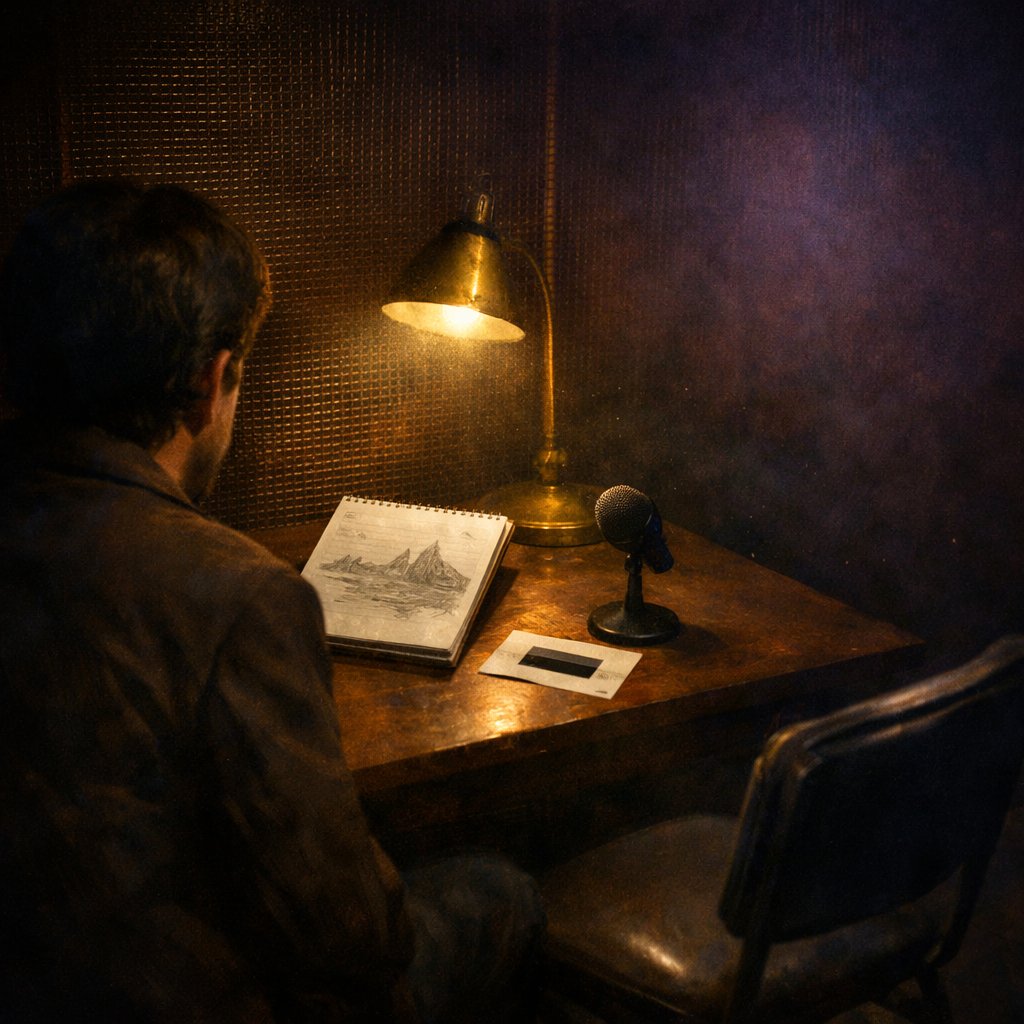
Folklorists notice the form a program takes early on, because the form constrains everything afterward. The form Stargate took at SRI was scientific in its trappings — blinded judges, target pools, ranking analyses — and storytelling in its texture: a viewer, alone in a Faraday-shielded room, sketching in pencil while a monitor wrote down what the viewer said in the cadence the viewer said it. The cadence shows up across the declassified transcripts as a kind of late-night cadence. It is striking how often the viewer slipped into the present tense.
The Pat Price Case Files
The viewer who left the most paper in the early SRI files was Pat Price, a former Burbank police commissioner. Price was assigned, in July 1974, a set of geographic coordinates that corresponded to a National Security Agency listening post at Sugar Grove, West Virginia; his session sketches, since released, name code-word documents and label cabinets in the building’s interior with a specificity that troubled the analysts who debriefed him. [6] Price died of a heart attack in Las Vegas in 1975, before SRI could formally publish his results.
The 1974 Nature Paper and the Methodological Fight That Followed
Targ and Puthoff published their first SRI results in the journal Nature on October 18, 1974, under the title “Information transmission under conditions of sensory shielding,” reporting statistically significant matches between viewer descriptions and randomly selected geographic targets in the San Francisco Bay area. [7] The paper passed peer review with an unusual editorial preface noting the controversy, and it remains the only remote-viewing study Nature has published.
The methodological fight began almost immediately. The Edinburgh-based psychologist David Marks, working with Richard Kammann, reviewed the unedited session transcripts and argued in a 1978 Nature reply that the published “blind” judging had been contaminated by cues — dates, weather notes, references to earlier targets — left in the transcripts the judges saw. [8] Targ and Puthoff disputed the severity of the leakage; the journal exchange ran for several years. Two things get conflated here: whether the SRI viewers produced statistically significant results under the protocols actually used, and whether those protocols controlled for the sensory-leakage and judging-bias channels modern parapsychology now considers mandatory.
Operational Tasking: What the Viewers Were Actually Asked
Once the program migrated to operational status in 1978 under the Army’s Grill Flame designation, the tasking shifted from laboratory targets to live intelligence questions, and the questions were not theoretical. Declassified tasking sheets show viewers asked to describe the interior of the Lop Nor Chinese nuclear test site, to locate a downed Soviet Tu-22 bomber in the Zaire jungle in 1979, to track the 1979 Iran hostages inside the Tehran embassy compound, and to provide intelligence on the Soviet Typhoon-class ballistic-missile submarine before its 1980 launch. [1][4][9]
The viewer associated with the most-cited operational hits is Joseph McMoneagle, U.S. Army warrant officer, viewer number 001, who was tasked on the Typhoon submarine in 1979 and produced a sketch and dimensions that matched the boat’s reveal months ahead of satellite confirmation; for that and related work he was awarded the Legion of Merit in 1984. [4][5] McMoneagle’s case is the strongest single piece of evidence the program ever generated, and the AIR report, which generally found the operational record weak, acknowledged it by name. [10]
The Typhoon Submarine and the Bomber in Zaire
The 1979 Tu-22 case turned on a single line of viewer testimony: viewer Rosemary Smith, working from coordinates handed to her by President Jimmy Carter’s National Security Adviser Zbigniew Brzezinski, indicated a location in the Zaire jungle that fell within a few miles of where Carter’s intelligence team subsequently recovered the aircraft. [1][9] Carter referenced the incident publicly in a 1995 speech, calling it “eerie.” The skeptical reading — that the search box was already narrow when the viewer was asked — has merit; the loose-coordinate framing in the original task does not survive cross-checking against the cable traffic released later. The conflation worth resolving here is between “the viewer narrowed the search” and “the viewer confirmed an existing narrow hypothesis.”
The 1995 AIR Report and the Closure of the Program
In 1995 the CIA, under a Congressional directive, contracted the American Institutes for Research to perform an independent assessment of Stargate’s operational utility and scientific basis, and AIR delivered its report in September of that year, recommending the program’s termination. [10] The reviewers — statistician Jessica Utts of the University of California Davis, and psychologist Ray Hyman of the University of Oregon — disagreed sharply on the laboratory record but converged on the operational verdict. [10][11]
Utts concluded that “the statistical results of the studies examined are far beyond what is expected by chance,” and that the SRI/SAIC laboratory replication, especially the autoganzfeld series, met the standard for psi as a real phenomenon under the test conditions used. [11] Hyman, examining the same data, agreed the effects were statistically robust but argued they remained “anomalous” rather than proven psi, citing residual methodological concerns. [10] Both reviewers agreed that the operational intelligence produced — the actionable side, the side that justified the budget — was unreliable, ambiguous, and seldom converted into useful product. The AIR report estimated the rate of operationally useful contributions at well under one percent of taskings. [10] What the 1995 AIR report actually establishes: laboratory effect plausibly real under those protocols; operational utility, by the program’s own customers, not demonstrated. The CIA terminated the program later that year.
What the Records Have Become: The CREST Reading Room
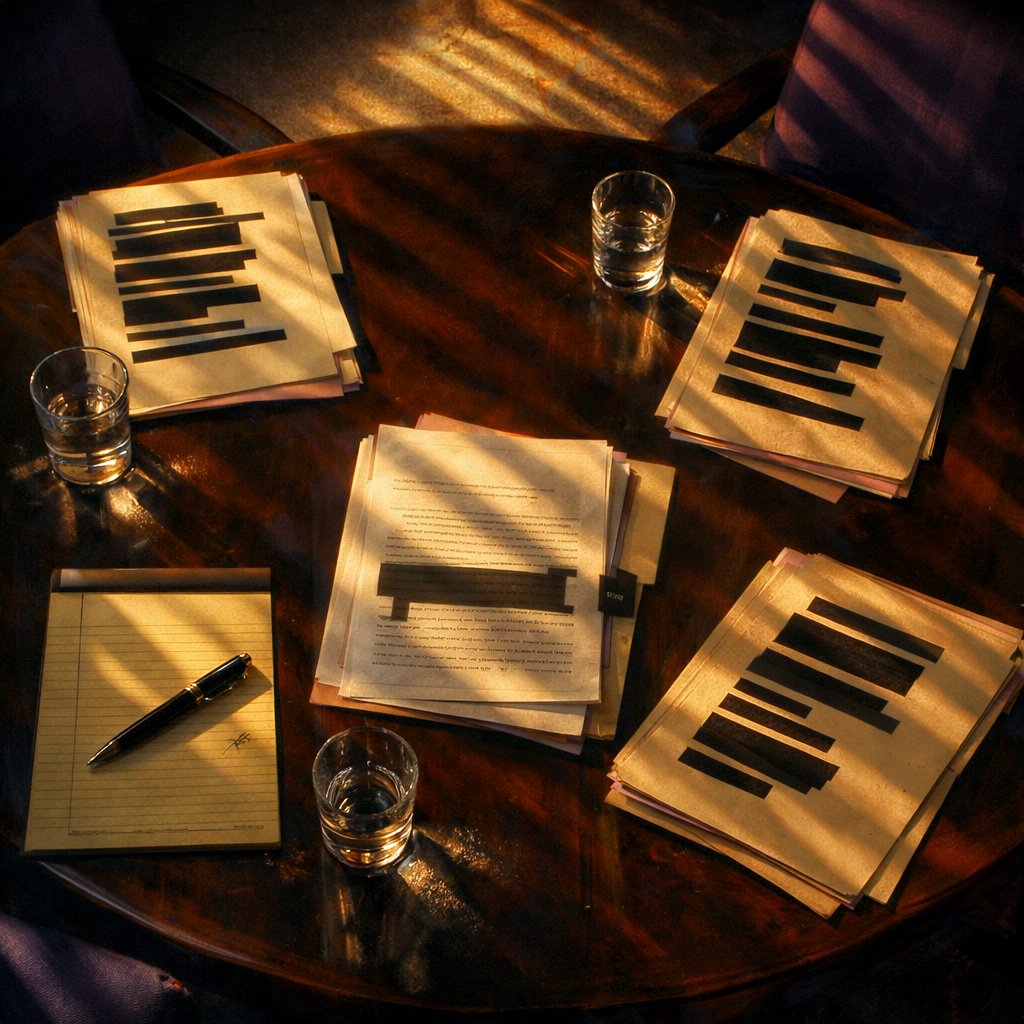
In January 2017 the CIA released roughly twelve million pages of declassified records — the CREST collection — to the public internet, including approximately 89,000 documents tagged to Stargate and its predecessor programs. [12] The collection is searchable; viewer session transcripts, monitor notes, target packages with the operational answers redacted, internal program-defense memos, and the AIR report itself are all there. On the documentary record, the program is now one of the most comprehensively-released intelligence research efforts in the post-Cold-War declassification era.
A folklorist reading the transcripts notices what an intelligence analyst would notice second: the viewers speak the way people speak when they are reaching for something. They describe in fragments. They draw, then talk over the drawing. They get specific about a smell or a sound and then go vague about whether the building has two stories or three. The body of paranormal and supernatural phenomena research has many such transcripts, from Society for Psychical Research séance records to NDE interviews, and the Stargate files belong recognizably to that genre even as they sit inside the National Archives.
| Program Name | Years | Agency | Site / Role |
|---|---|---|---|
| SCANATE | 1972-1976 | CIA-OTS | SRI feasibility, coordinate protocol |
| Gondola Wish | 1977-1978 | U.S. Army INSCOM | Fort Meade unit founding |
| Grill Flame | 1978-1983 | INSCOM + DIA | First sustained operational tasking |
| Center Lane | 1983-1985 | INSCOM | Expanded viewer roster |
| Sun Streak | 1985-1991 | DIA | Counter-narcotics + counterterror tasking |
| Stargate | 1991-1995 | DIA -> CIA (1995) | Final designation, AIR review, closure |
Why It Still Matters in 2026
Three decades after the closure of the Stargate Project, three things remain worth tracking. First, the laboratory question Utts left open — whether the autoganzfeld effect sizes hold under tighter pre-registered replication — is being actively re-tested by groups such as the Koestler Parapsychology Unit at the University of Edinburgh, with the most recent published meta-analysis appearing in 2018. [13] As of 2026, the replication record remains contested rather than settled. Second, the operational question — whether any intelligence service still uses anything resembling these techniques — is an empirical one and the answer in the public record is no. [10] Third, the cultural question — why the United States military funded twenty-three years of psi research at all — is the one folklorists find most useful, because it tells you what an institution will pay to know when conventional methods fail it.
The viewers themselves left memoirs. McMoneagle published “Mind Trek” in 1993 and “Memoirs of a Psychic Spy” in 2002; Targ has published a series of retrospective volumes; Swann’s manuscript “Reality of the Unseen” sat unpublished for years before partial release. They wrote, on the whole, the way the SRI transcripts read: specific about the small details, careful about the large claims, and conscious that the institutional record now sits open for anyone to argue with. The folklorist’s job here is the same as it was with the ninety-four-year-old and her November lights. Render the testimony in its own cadence. Cite the actual confidence intervals. Let the reader sit with the uncertainty that the people in the room sat with too.