
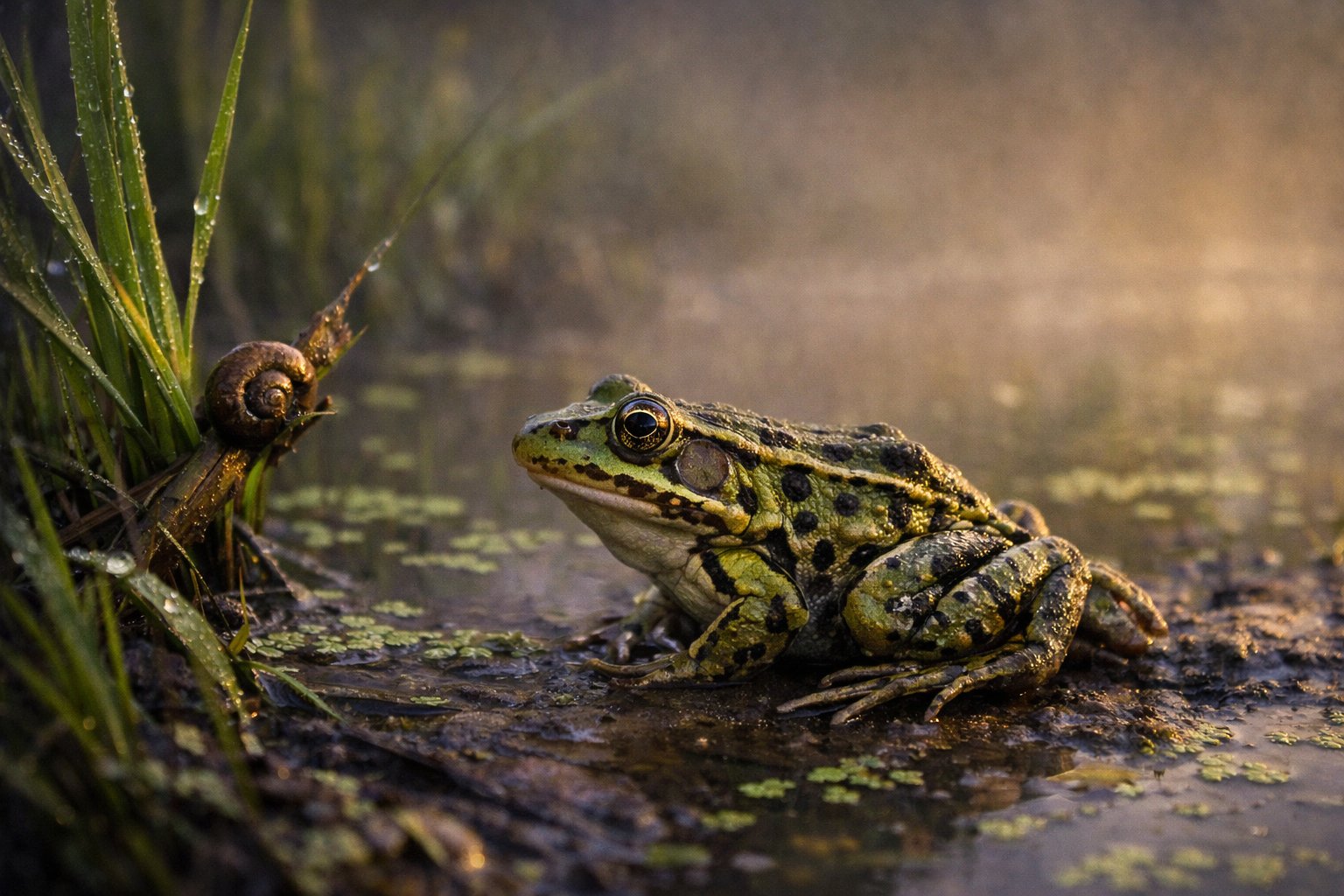
Drafted with AI assistance from the sources listed; images are AI-generated illustrations. How EsoVitae is made
Polymelia is the growth of one or more limbs beyond a species’ normal set. In animals it arises mainly three ways: a parasite that scrambles limb-bud signaling, as Ribeiroia ondatrae does in frogs; incomplete conjoined twinning in mammals; and atypical regeneration after injury, as in branch-armed octopuses.
What an Extra Limb Actually Is
Polymelia is the technical term for one or more supernumerary limbs, whole legs or arms that develop in addition to a species’ standard complement, and it is distinct from polydactyly, the duplication of digits within an otherwise normal limb. The difference matters because the two outcomes usually come from different failures in development.
A working biologist reads an extra limb the way a hydrologist reads a flood line: not as a verdict on the animal but as a record of something that happened to it. An embryo lays down its body plan along an invisible grid of chemical signals. When an extra limb appears, the grid was redrawn somewhere, by a parasite, a wound, a twin that never fully separated, or a misfiring gene. The animal that results is healthy in every other respect and entirely ordinary to itself. The novelty is ours, not the frog’s. The field term that gathers all of these outcomes is polymelia, and the study of such developmental anomalies is called teratology, from the Greek for marvel or monster, a word older and more honest than the squeamishness it sometimes provokes.
What makes polymelia worth a careful look is that the same striking result, a leg too many, can be reached by at least four separate routes. Sorting which route produced a given case is exactly the kind of patient detective work that animal anomalies reward.
The Minnesota Frogs That Started a Field
On a July afternoon in 1995, students from the Minnesota New Country School in Henderson, led by teacher Cindy Reinitz, waded into a wetland near the Ney property and found northern leopard frogs with missing eyes, bent spines, and legs growing out of legs. Their tally launched a national research effort.
The numbers the class reported were not subtle. At some sites roughly half the young frogs they caught were malformed, a rate no one in the room had seen before. The students sent their data to the Minnesota Pollution Control Agency, where biologist Judy Helgen recognized that this was not a one-pond accident. Over the following seasons, clusters of deformed leopard frogs turned up across Minnesota and then across the continent [2][3].
The discovery did something institutions rarely manage on their own: it built infrastructure. The United States Geological Survey and partner agencies stood up the North American Reporting Center for Amphibian Malformations so that field observations from anglers, teachers, and biologists could be pooled rather than lost. By the time that reporting center opened, the Henderson find had become the moment amphibian malformation went from local curiosity to a tracked ecological signal, with the malformed frog itself serving as the sensor [2].
Ribeiroia ondatrae: A Parasite That Builds Extra Legs
Pieter Johnson and colleagues identified the flatworm Ribeiroia ondatrae as the principal cause of extra-limb deformities in frogs, publishing the link in the journal Science in 1999 after surveying Pacific treefrog ponds in California where infection and malformation rose together. The parasite does not poison the frog. It rebuilds it.
The mechanism is geometric. As a tadpole grows its hind legs, swimming larvae of Ribeiroia ondatrae burrow in and encyst in a dense ring around the developing limb bud and the pelvic region. That cluster of cysts disturbs the patterning field. Stanley Sessions showed early on that even inert resin beads placed near a limb bud could trigger duplications, and later work found that infected limbs carry disrupted levels of retinoic acid, the signal that tells limb tissue where and how much to grow [1][4]. Push that signal off its normal gradient at the wrong moment and the limb field answers with surplus: extra feet, extra whole legs, sometimes a fan of them.
The Three-Host Life Cycle
Ribeiroia ondatrae runs a three-host circuit. Adult worms live in wading birds and some mammals, which pass eggs into ponds; the larvae infect ram’s horn snails (Planorbella trivolvis) first, multiply there, then emerge to encyst in amphibians; a heron or egret eats the frog and closes the loop [1]. What the eDNA assay returns is consistent with this map: molecular water sampling detects Ribeiroia DNA most reliably in the same nutrient-rich ponds where malformed frogs cluster. Johnson’s group later showed that nutrient runoff, by feeding the algae that feed the snails, can amplify the whole chain, tying farm chemistry to frog anatomy through a parasite no wider than an eyelash [5].
Not Every Extra Leg Is a Parasite
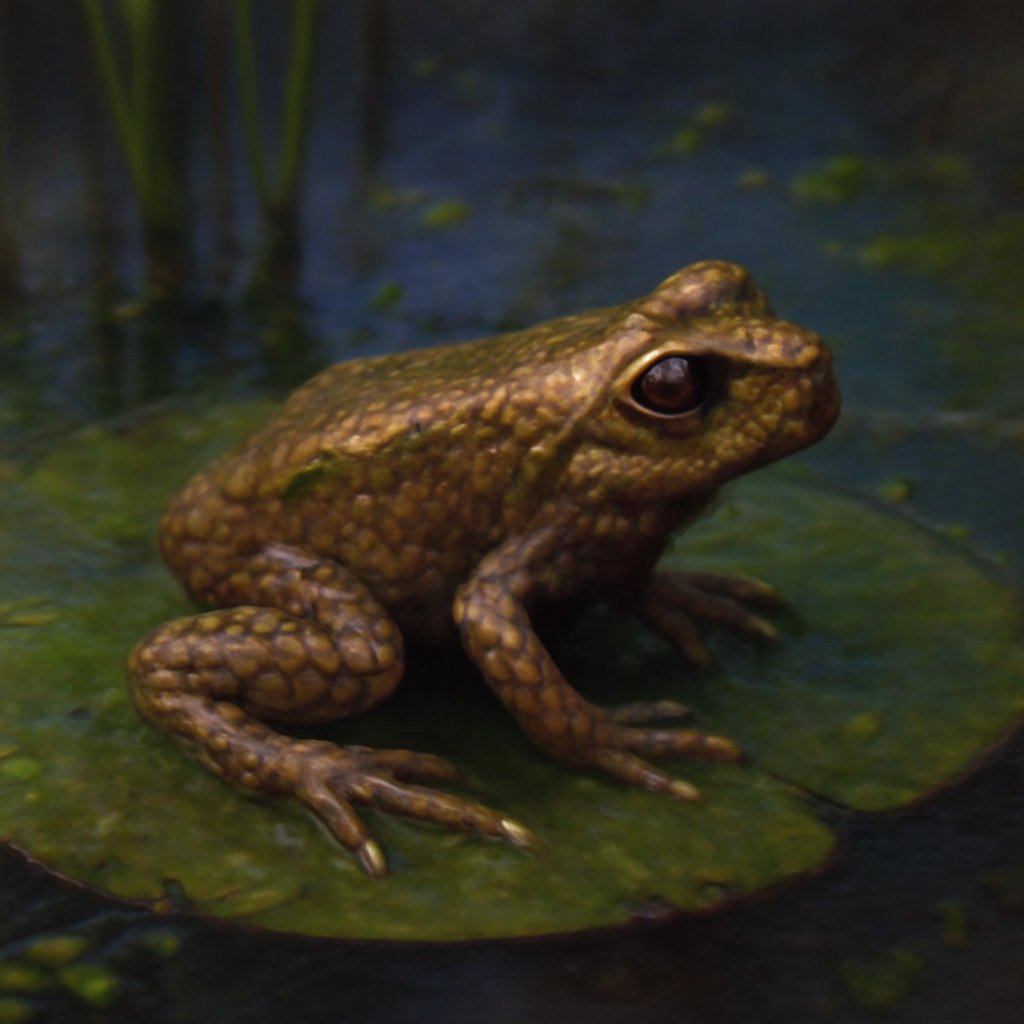
Selective predation, not infection, drives most cases of missing frog limbs, a distinction Stanley Sessions and Brandon Ballengée established in 2009 by raising tadpoles alongside dragonfly nymphs that bit off developing legs. The result reframed the whole debate about deformed amphibians.
The load-bearing fact: extra limbs and missing limbs are not the same malformation and usually do not share a cause. In the aquarium trials, dragonfly nymphs grabbed tadpoles, turned them, and snipped the soft hind-limb buds. Very young tadpoles regrew the leg; older ones healed over as amputees [6]. That accounts for the legless and short-legged frogs. It does not produce extra legs. Ribeiroia remains the best-supported explanation for true polymelia; contaminants and ultraviolet exposure are proposed contributing stressors, not replacements [1][6]. Keeping those threads apart separates a real diagnosis from a tidy story.
| Cause | Biological mechanism | Typical limb outcome | Representative case |
|---|---|---|---|
| Ribeiroia ondatrae infection | Cercariae encyst by the hind-limb bud and disturb retinoic acid signaling | Extra hind limbs (polymelia), partial duplications | California and Minnesota frog ponds [1][4] |
| Predatory injury | Dragonfly nymphs amputate limb buds; young tadpoles regenerate, older ones do not | Missing or stunted limbs, not extra ones | Sessions and Ballengée aquarium trials [6] |
| Incomplete twinning or chimerism | An asymmetric conjoined twin contributes a partial second body | Whole extra limbs on the trunk or pelvis | Six-legged calves, chimeric Simmental calf [7][8] |
| Atypical regeneration | A wounded appendage regrows as a branched or multiplied structure | Branched or surplus arms | 96-armed common octopus, Shima Marineland [9] |
| Ectopic developmental signaling | Mutations misplace Sonic hedgehog expression in the limb bud | Mirror-image digit or limb duplication | Laboratory ZPA grafts and ZRS mutants [10] |
Twinning, Chimeras, and the Six-Legged Calf
In mammals, an extra limb almost always traces back to a twin rather than a parasite, the leftover of a sibling that began to form and then merged back into a single asymmetric body. Veterinarians call the surviving animal a conjoined asymmetric twin, and the surplus limb is its silent partner’s contribution.
The morphometric data: bovine polymelia is rare and patterned. Fewer than four cattle per 100,000 births carry extra limbs, and the surplus legs are sorted by where they attach, notomelia on the back, cephalomelia on the head, thoracomelia at the chest, and pygomelia at the pelvis, with notomelia along the spine being the most common form [8]. A 2019 analysis of a six-legged Simmental calf went further: genetic testing showed the animal was a chimera carrying two cell lines, meaning its extra limbs came from an absorbed dizygotic twin rather than a split of its own embryo [7]. The calves are typically healthy once the non-functional limbs are surgically removed, which is the everyday clinical end of a phenomenon that older cultures read as an omen.
Parasitic twinning of this kind also appears in other vertebrates and, rarely, in humans, where it is again a developmental accident of twinning and not a heritable trait passed to offspring.
When the Body Plan Doubles: Octopus Arms and the Signaling Switchboard
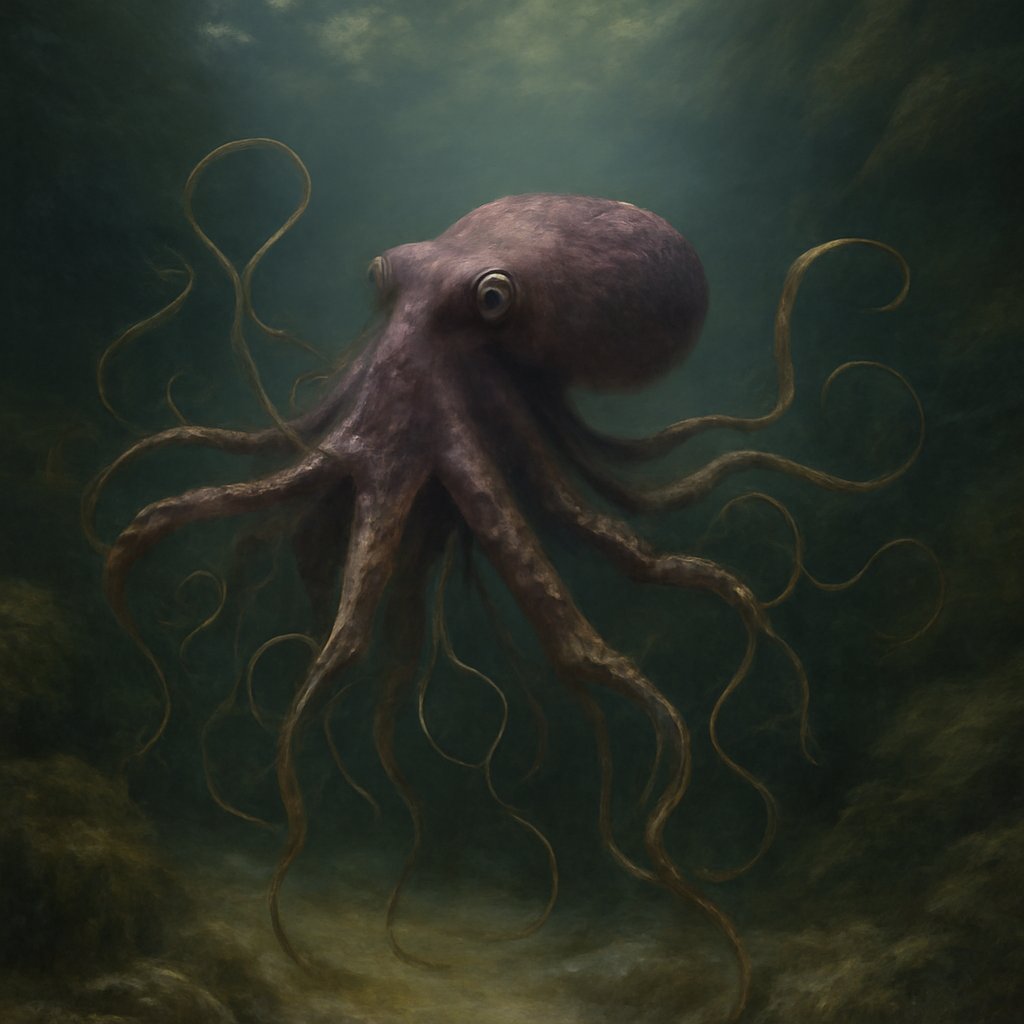
A common octopus pulled from Matoya Bay, Japan, in 1998 carried 96 arms, each of its eight original limbs having branched repeatedly after what aquarists believe was an old injury. It lived five months at Shima Marineland, laid eggs, and its hatchlings emerged with the standard eight arms [9].
That outcome is the clean signature of regeneration gone generous. Octopus arms regrow readily, and a wound at the right angle can produce a forked or multiplied regrowth instead of a single replacement, so the surplus stayed with the individual and never entered its genome. The vertebrate version of the same switchboard is better mapped. The zone of polarizing activity, a patch of tissue at the rear edge of every limb bud, secretes a signaling protein called Sonic hedgehog that tells the limb how many digits to build and in what order. Two classic results make the point: graft a second zone of polarizing activity onto the front of a limb bud and you get a mirror-image duplication, while mutations in the ZRS, the distant switch that controls where Sonic hedgehog turns on, scatter the signal and yield extra digits in mice, cats, and people [10]. Whether the trigger is a flatworm, a torn arm, or a misplaced enhancer, the lesson repeats: a limb is built by a conversation, and an extra limb is that conversation held twice.
An Ethologist’s Provisional Reading
An animal with an extra limb is not a riddle so much as a recording. Watch what the animal does with its surplus leg and the biology comes forward: the malformed frog swims poorly and is eaten sooner, the six-legged calf walks on the four legs that work, the branch-armed octopus hunts as octopuses do. The extra limb is rarely the animal’s problem. It is the field’s clue.
Read across the cases, a single principle holds. Limbs are assembled by signals, and any agent that can perturb a signal at the right hour, a parasite ringed around a limb bud, an unfinished twin, a wound that heals into a fork, a gene switch in the wrong place, can leave the same visible mark by a different road. That is why these animals belong in a catalogue of animal anomaly mysteries rather than a freak show: each one is a natural experiment in how a body decides where its legs go. Readers who want the parallel cases of developmental rarity can follow the rest of our coverage of bizarre animal mutations and their causes, and the longer method behind this kind of patient observation lives in the our related coverage. The honest conclusion is the provisional one: we can usually name the road that produced an extra limb, and we are still mapping the hours at which each road opens.
Frequently Asked Questions
What is the condition called when an animal has extra limbs?
The condition is called polymelia, from the Greek for many limbs. It describes one or more whole supernumerary limbs and is distinct from polydactyly, which is the duplication of toes or fingers within a single otherwise normal limb.
What causes frogs to have extra legs?
Most true extra-leg deformities in frogs are caused by the flatworm parasite Ribeiroia ondatrae. Its larvae encyst around the developing hind-limb bud and disrupt the retinoic acid signal that controls limb growth, prompting the limb field to build surplus legs.
Are extra limbs and missing limbs in frogs the same problem?
No. Research by Stanley Sessions and Brandon Ballengée showed that missing or stunted frog legs are usually caused by predatory dragonfly nymphs biting off limb buds, while extra legs are best explained by Ribeiroia infection. They are different malformations with different causes.
What were the deformed Minnesota frogs of 1995?
In 1995 students from the Minnesota New Country School found northern leopard frogs with extra legs, missing legs, and other malformations near Henderson, Minnesota. Their report to the Minnesota Pollution Control Agency triggered national research and the creation of a malformation reporting center.
How does the Ribeiroia parasite make extra limbs?
Ribeiroia ondatrae cercariae burrow into a tadpole and encyst in a dense ring around the hind-limb bud. The physical crowding and altered retinoic acid levels disturb the limb’s patterning signals at a critical stage, which can cause the limb to duplicate rather than form a single normal leg.
Why do some calves have six legs?
A six-legged calf is usually a conjoined asymmetric twin: a second embryo began to form and merged back into the surviving calf, leaving extra limbs. Fewer than four cattle per 100,000 births show this polymelia, and the non-functional limbs are often surgically removed.
How did an octopus end up with 96 arms?
A common octopus caught off Japan in 1998 grew 96 arms when its eight original limbs branched repeatedly, most likely after an injury. Octopus arms regenerate easily, and an unusual healing pattern can produce forked regrowth. Its offspring hatched with the normal eight arms.
Is polymelia inherited or passed to offspring?
Generally no. Whether caused by a parasite, an incomplete twin, or atypical regeneration, polymelia is a developmental accident rather than a heritable trait. The 96-armed octopus and dicephalic livestock both produced normal single-bodied young, consistent with a non-genetic origin in most cases.
What is the zone of polarizing activity?
The zone of polarizing activity is a patch of tissue at the rear edge of a developing limb bud that releases the Sonic hedgehog signaling protein. It tells the limb how many digits to grow and in what order. Grafting a second one creates a mirror-image limb duplication.
Can pollution cause animal limb deformities?
Indirectly, yes. Nutrient runoff can feed the algae and snails that host Ribeiroia, amplifying parasite numbers and malformation rates in frogs. Chemical contaminants and ultraviolet light have also been proposed as added stressors, though the parasite remains the best-supported direct cause of extra limbs.
Sources
- Johnson, P.T.J., et al. “The Effect of Trematode Infection on Amphibian Limb Development and Survivorship.” Science, vol. 284, 1999, pp. 802-804. science.org
- U.S. Geological Survey. “Malformed Frogs in Minnesota: An Update.” Fact Sheet FS-043-01. pubs.usgs.gov
- Ney Nature Center. “Un-Frog-getable: 30 Years Since the Deformed Frogs.” Account of the 1995 Minnesota New Country School discovery. neycenter.org
- Stopper, G.F., et al. “Presence of Ribeiroia ondatrae in the developing anuran limb disrupts retinoic acid levels.” 2011. pubmed.ncbi.nlm.nih.gov
- Johnson, P.T.J., et al. “Aquatic eutrophication promotes pathogenic infection in amphibians.” Proceedings of the National Academy of Sciences, 2007. pnas.org
- Ballengee, B., and Sessions, S.K. “Explanation for Missing Limbs in Deformed Amphibians.” Journal of Experimental Zoology Part B, vol. 312B, 2009, pp. 770-779. pubmed.ncbi.nlm.nih.gov
- “Polymelia in a chimeric Simmental calf: anatomic and genetic analysis.” BMC Veterinary Research, 2019. pmc.ncbi.nlm.nih.gov
- National Geographic. “Why Does This Calf Have Six Legs?” Coverage of bovine polymelia incidence and types. nationalgeographic.com
- Snopes. “Is the Viral Photo of a 96-Armed Octopus Real?” Fact-check of the Octopus vulgaris specimen at Shima Marineland. snopes.com
- Hill, R.E. “How to make a zone of polarizing activity: insights into limb development via the abnormality preaxial polydactyly.” Development, Growth and Differentiation, 2007. onlinelibrary.wiley.com