By Wren Ashby · Published June 17, 2026 · Updated September 2, 2026
An antlered doe is a female deer that grows antlers because her body carries unusually high androgen levels, most often from an ovarian or adrenal source or an intersex condition. In nearly every deer species this is an endocrine anomaly, not a heritable mutation or an evolutionary trait.
Published: June 5, 2026. Last reviewed: June 5, 2026.
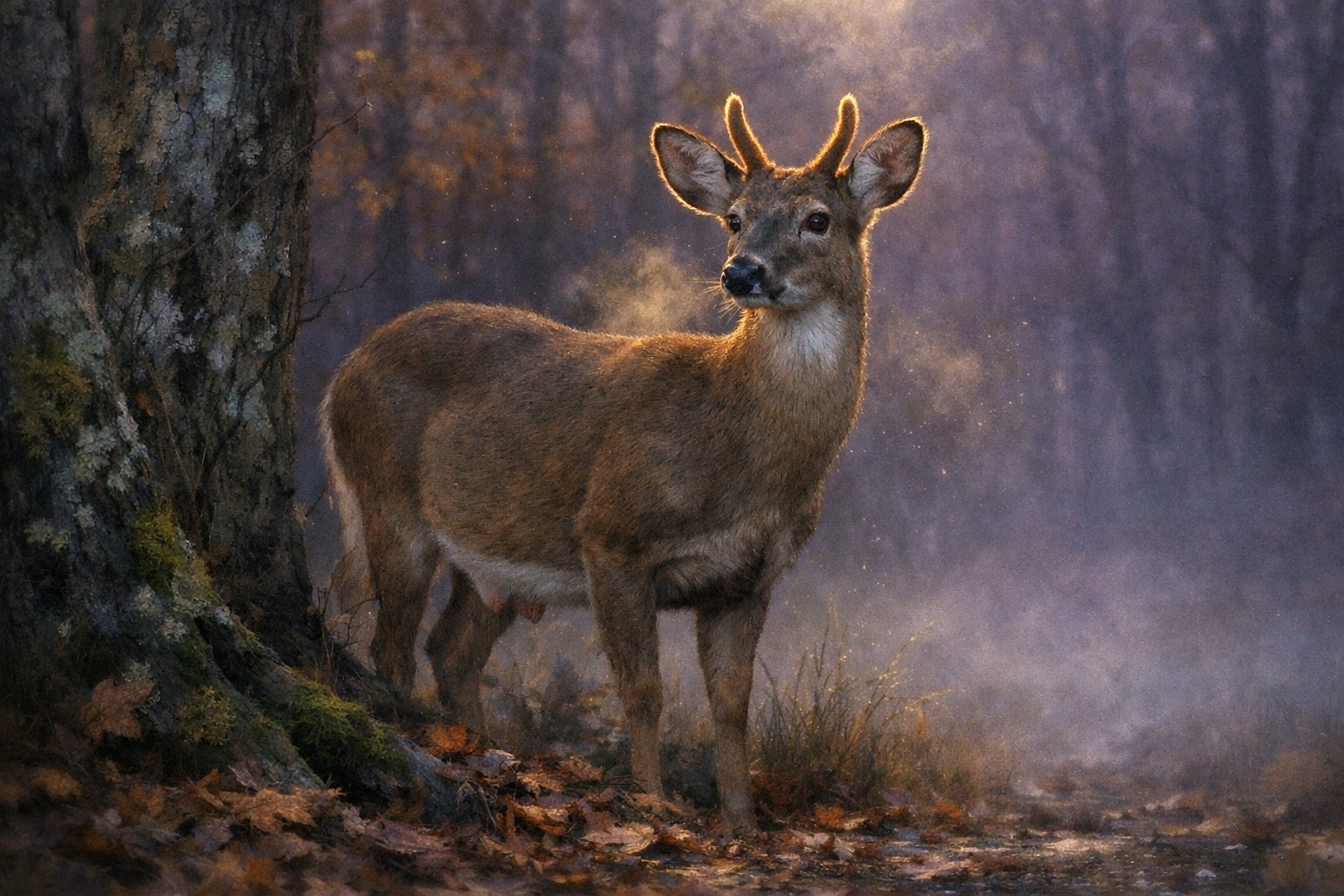
Stand at the edge of a winter field at dusk and watch a small deer work the tree line. Two short beams rise from her skull, still sheathed in furred velvet, and the slack udder beneath her says she has nursed a fawn this year. The animal in front of you is not a contradiction in terms. She is a reading of her own bloodstream, and the antlers are the dial. The antlered doe sits among the more instructive puzzles in animal anomaly mysteries, because answering what she is forces a clean split between three ideas people routinely blur: a passing hormonal accident, an inherited mutation, and an evolved trait.
What an antlered doe actually is
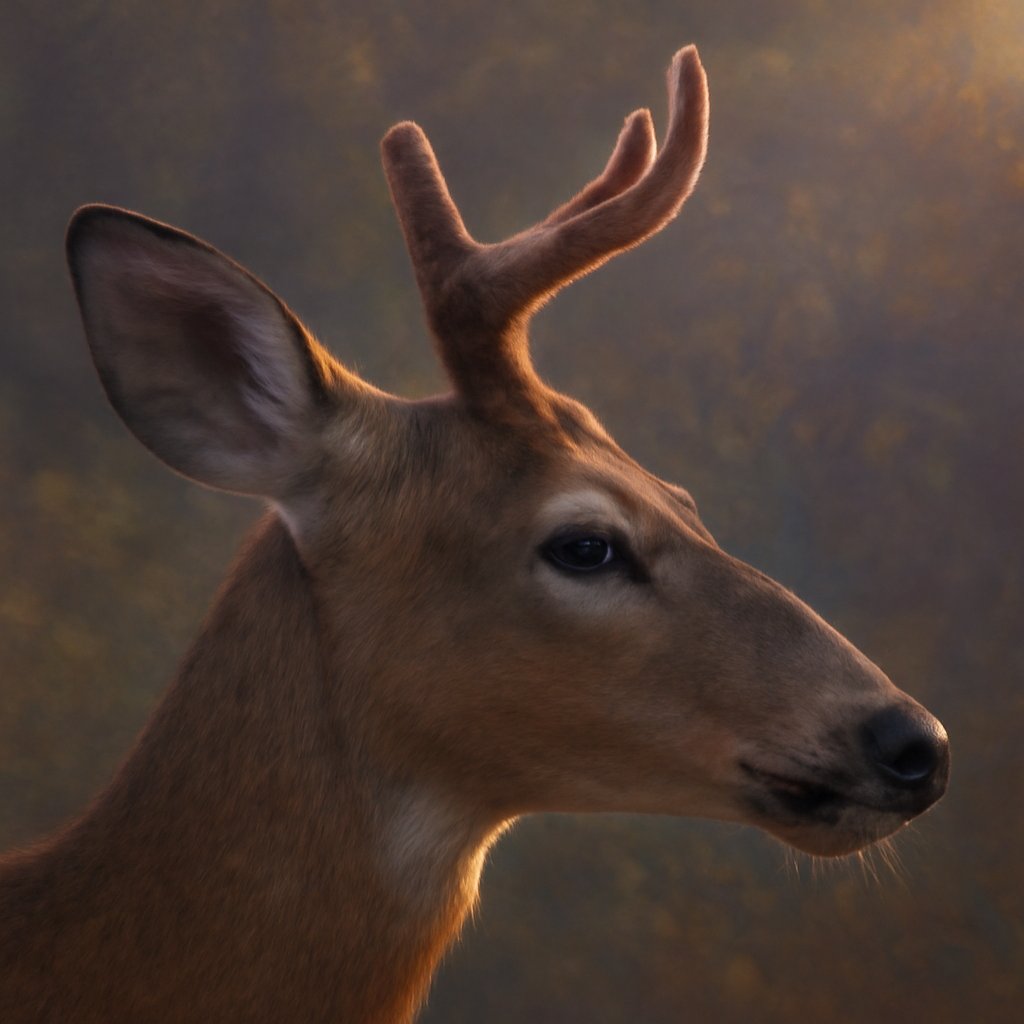
An antlered doe appears in roughly 1 in 2,650 to 1 in 3,500 white-tailed deer, according to mid-century surveys in New York (1941 to 1955) and Pennsylvania (1958 to 1961), and almost always wears small, velvet-covered antlers rather than a hardened rack [1]. The antlers themselves stay modest, a pair of furred knobs or short unbranched spikes that keep their velvet through the seasons when a buck’s rack would have hardened and polished. Behavior gives nothing away. These animals breed, carry fawns, and raise them like any other female in the herd. People often call her a doe with horns, but the two structures are not the same organ: antlers are solid bone that regrows and sheds every year, while a horn is a permanent keratin sheath over a bony core. What sets an antlered doe apart is anatomy you cannot read from a hundred yards: a bony growth platform on the frontal bone that, in most does, never switches on.
How often it really happens
Published prevalence figures for antlered does range from about 0.02 percent to 1.5 percent of a deer population, with most rigorous surveys clustering near one in a thousand [1][6]. A Michigan survey in 1963 recorded one antlered doe for every 956 bucks, a higher rate than the eastern states, and field workers in eastern Alberta during the 1980s logged rates fifteen to forty times above the classic numbers [1]. The spread is real, not just sampling noise. Part of the variation is detection rather than biology, because field workers examine carcasses closely while a distant doe in velvet reads as just another female. Where the figure climbs, biologists look for a local driver, and the search itself is the lesson: an anomaly is a measurement, not a verdict on the species.
The hormone behind the headgear
Antlers are an androgen-dependent secondary sexual character: testosterone, acting on a frontal-bone growth zone called the pedicle, triggers the entire antler cycle, which is why a doe grows antlers only when her testosterone runs abnormally high [3]. The pedicle is the permanent bony pillar that rises from the skull and tops out as the living antler each year. Every deer, male or female, is built with the periosteum that can form one. Sex does not strip out the hardware. It only withholds the chemical signal that powers it.
When researchers led by Chunyi Li gave supplemental testosterone to red deer (Cervus elaphus), the result was blunt. Reported in General and Comparative Endocrinology in 2003, every one of eight castrated males grew pedicles and antlers, two of three freemartins did the same, and one of three normal females did too [3]. Reduced to its evidence, the antler is not a male organ at all but an androgen-triggered one, and the capacity to grow it sits latent in the female skull, waiting on a hormone that usually never arrives [3][2].
Why the velvet usually never comes off
Velvet retention is the single most reliable field mark of a true antlered doe, because stripping velvet and polishing antler takes a sharp testosterone surge that most does never produce [1]. Jim Heffelfinger, wildlife science coordinator for the Arizona Game and Fish Department, put it plainly: most antlered does keep their velvet because they cannot get the testosterone boost just before the rut that dries and sheds it [1]. The velvet stays on, the antler keeps its blood supply, and the structure can persist for years without the clean autumn hardening a buck goes through. A permanently velvet antler driven by chronically low androgen has its own name in the literature, the perruque or wig antler, and the antlered doe is its quieter cousin.
Anomaly, not mutation: what the bodies reveal
George B. Wislocki dissected three antlered does of the genus Odocoileus and reported in the Journal of Mammalogy in 1954 that all three had functioning or recently functional ovaries, evidence that these were fertile females and not disguised males [2]. Wislocki was a Harvard anatomist whose work mapped how antler growth tracks the gonads, and his small series did something a thousand trail-camera photos cannot. It opened the animals up. Two of his three does carried completely normal ovaries; the third’s were atrophic; all three showed signs of having borne young [2]. The headgear rode on top of an ordinary reproductive female. Nothing about that is a mutation in the heritable sense. It is a phenotype, an outcome of one body’s hormone balance, and it dies with her rather than passing to her fawns.
Two things get conflated here: the soft-antlered fertile doe whose ovaries are intact, and the intersex animal whose gonads are mixed or ambiguous [4][1]. A 2022 case in the journal Animals shows how strange the second category gets. A roe deer (Capreolus capreolus) with a complete female reproductive tract, vagina, cervix, and uterine horns, also carried a right testicle and a left ovotestis, and grew antlers that held their velvet. Genetic testing returned an XX karyotype with no SRY gene, the usual male switch absent entirely. The authors classified it as an SRY-negative, XX ovotesticular disorder of sexual development [4].
When the doe is actually a buck
Hard, polished antlers on an apparent female almost always belong to a male in disguise, a cryptorchid or hypogonadal buck whose testes are retained, undersized, or damaged enough to scramble the usual signals [1]. John Ozoga, who studied white-tailed deer for three decades at Michigan’s Cusino research facility, framed the test simply: if an antlered doe carries polished antlers, you should suspect it is not a true female [1]. Field reports inflate the count for exactly this reason, since a hard-racked deer with a slight body and no obvious scrotum is easy to log as a doe at a glance. Genuine hard-antlered females do exist. A black-tailed deer in western Washington, examined by Tommy Eidson, carried hardened antlers alongside ovaries, a vagina, and unused teats [1]. But the combination is rare enough that the careful move, before naming any hard-racked animal a doe, is to look for the testes.
Where female antlers are evolution: the reindeer exception
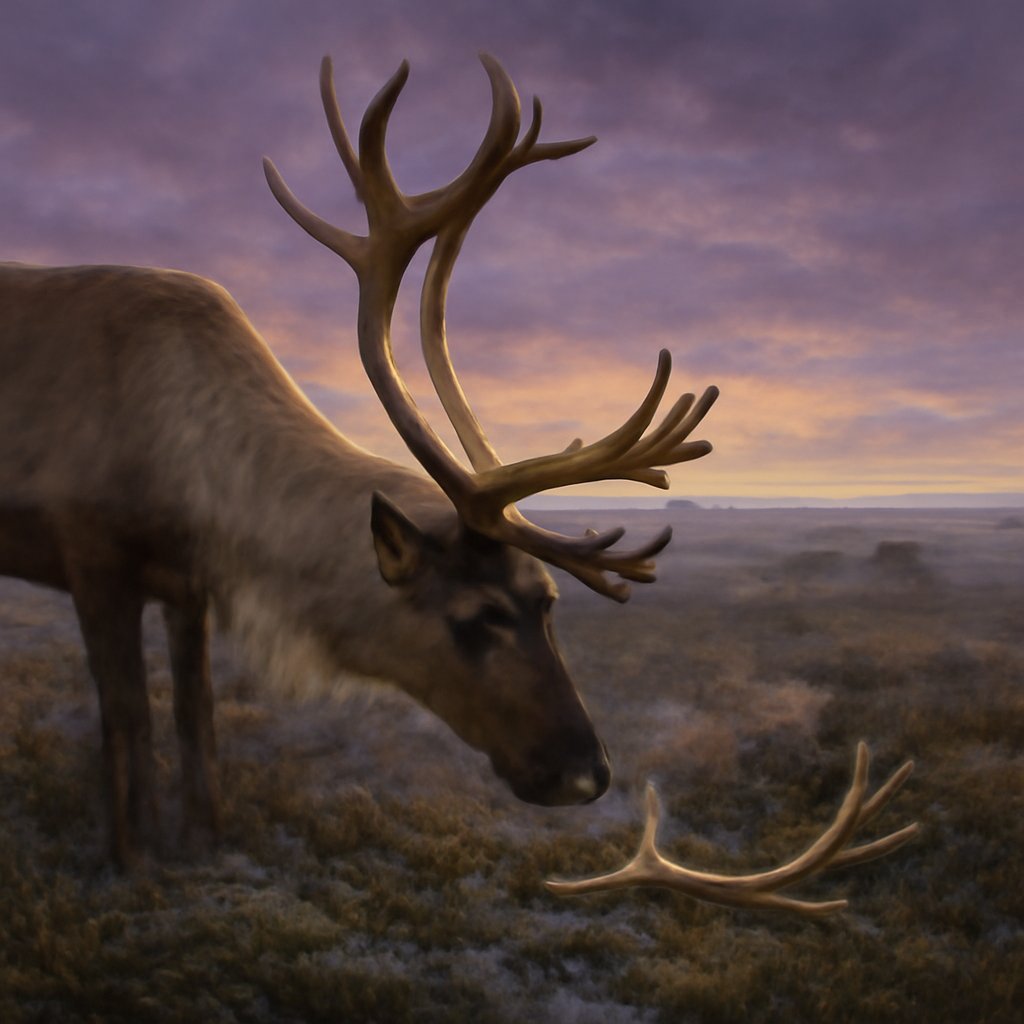
Reindeer and caribou, both Rangifer tarandus, are the only deer in which females routinely grow antlers as a normal, heritable, evolved trait, shed each spring and regrown each year across the entire female population [5]. This is the clean other end of the spectrum. In white-tailed deer an antlered female is a one-off accident; in reindeer she is the rule, and the trait is written into the species rather than into one animal’s adrenal gland. The behavioral payoff has come into focus only recently.
Per the IUCN classification, Rangifer tarandus has been listed as Vulnerable since 2015, after an observed population decline near 40 percent, which makes the foraging value of female antlers more than an academic curiosity for a species losing ground across the Arctic [7]. A study published in the journal Ecology and Evolution in February 2026 found that female caribou gnaw on antlers shed years earlier, recycling calcium and phosphorus at exactly the window when a nursing mother’s mineral budget runs thinnest [5]. Older ideas, that female antlers mimic young males to deflect aggression or serve as weapons against predators, struggle with one fact: the females drop their antlers in spring, just as newborn calves face the most danger [5]. A set of bones you can eat after calving fits the timing far better than a weapon you throw away before the fight. For reindeer, the answer to the title’s question is evolution. For every other deer, it is not.
Reading the antlered doe in the field
A polished, hard-antlered deer that also carries ovaries and a vagina is rarer than a velvet-antlered doe, and in most field cases a hard rack signals a cryptorchid or intersex male rather than a true female [1][2]. Put the pieces in order and the mystery resolves into a short diagnostic. Velvet that never sheds points to a fertile doe with a mild androgen surplus. Mixed or hidden gonads point to an intersex condition like the roe deer’s ovotesticular DSD. A hard, clean rack points, more often than not, to a buck wearing the wrong label. None of these is the same event, and only one of them, in only one genus, is evolution at work [4][5].
The antlered doe at a glance
| Pattern of female deer with antlers | Typical antler state | Underlying cause | Mutation, anomaly, or evolution? |
|---|---|---|---|
| Fertile true doe (Odocoileus, Capreolus) | Small, velvet, retained year-round | Mild androgen surplus; ovaries normal | Endocrine anomaly, not heritable |
| Intersex individual (XX DSD) | Velvet or partly hardened | Ovotestis, freemartin, or pseudohermaphrodite | Developmental anomaly, not heritable |
| Misidentified buck | Hard and polished, or perruque | Retained, undersized, or damaged testes | Male, read incorrectly as a doe |
| Female reindeer or caribou (Rangifer tarandus) | Full, hardened, shed yearly | Normal female physiology; evolved trait | Evolution, heritable and population-wide |
The antlered doe rewards the oldest habit in field biology, which is to withhold the human conclusion until the animal has been read accurately. She is not a glitch in white-tailed deer and not a preview of where the species is heading. She is one body’s chemistry made visible on the skull, a single measurement held up to the light. Watch her browse the tree line, note the velvet that will not strip, and you are reading an endocrine state, not a destiny. For more field notes on the animals that sit at the edges of the textbook, follow Wren Ashby’s field work through the rest of these animal anomaly mysteries.