By Emilia Wellesley · Published May 4, 2026 · Updated May 13, 2026
Last reviewed: May 4, 2026.
Delve into one of Colonial America's oldest mysteries: the disappearance of the Roanoke Colony. This educational exploration navigates through the events, key figures, and prevailing theories surrounding the lost settlers of 1587 under the governorship of John White.
Key Events of Roanoke Island
Establishing the Colony in 1587
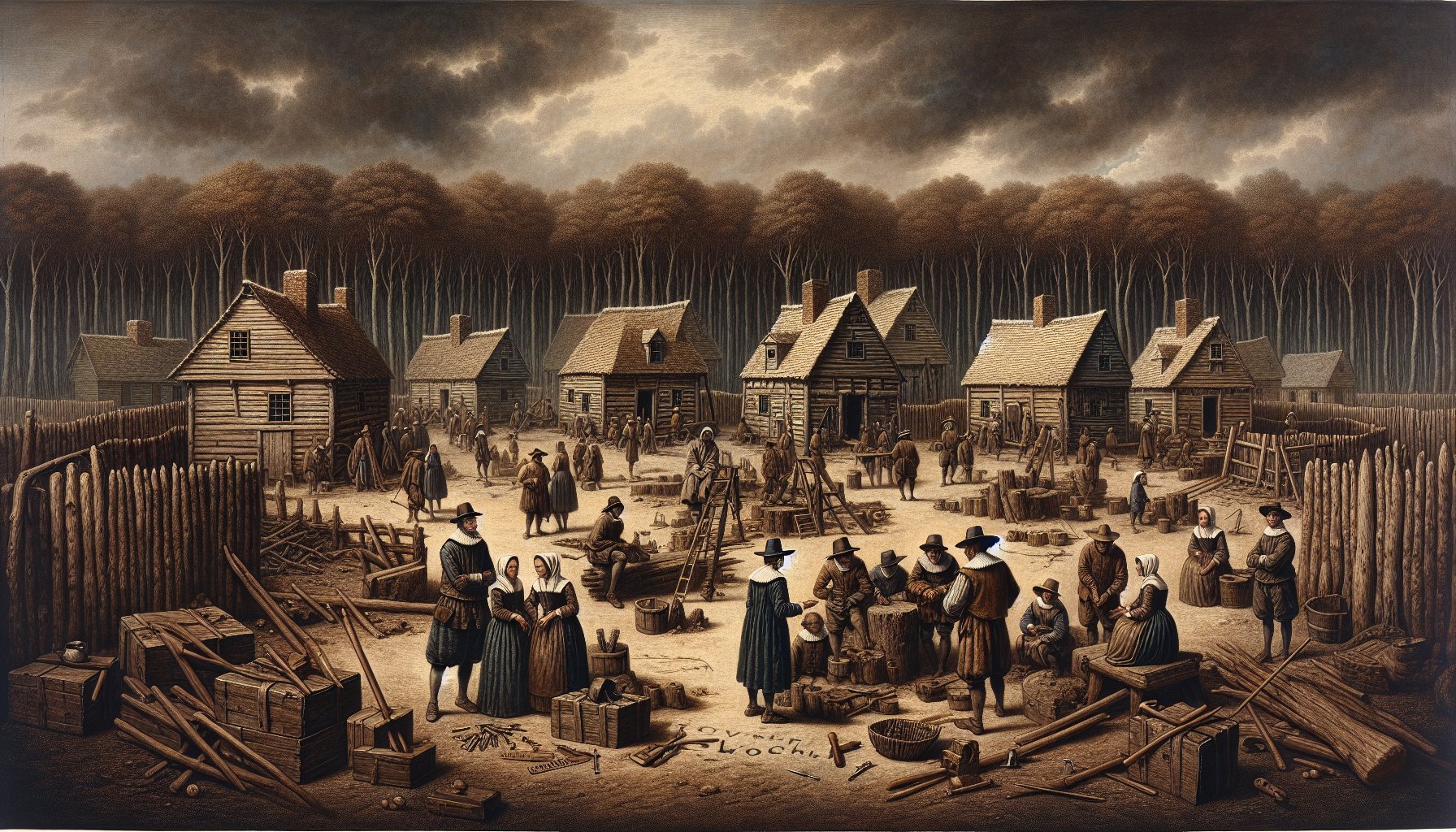
Sir Walter Raleigh's ambition to establish an English foothold in the New World led to the foundation of the Roanoke Colony. Under the authority granted by Queen Elizabeth I, Raleigh organized an expedition, appointing John White as governor. The colonists arrived at Roanoke Island in July 1587, equipped with high hopes and diverse expertise, aimed at building a sustainable settlement.
Early Efforts and Foundations
The initial months on Roanoke Island were marked by:
- Construction Efforts: Rigorous building of a settlement capable of enduring the harsh realities of the New World.
- Limited Resources: Despite the scarcity, they established basic fortifications and dwellings.
- Relationships with Local Tribes: Attempts to cultivate relationships with the local Algonquian tribes, pivotal yet strained, shaping the later mysteries of the colony's fate.
The Disappearance of the Colonists
As enthusiastic as the start might have seemed, the colony faced immediate challenges, including:
- Scarcity of Supplies: A critical shortage impacting the colony's sustainability.
- Tense Relations: Increasingly tense relationship with Native American tribes.
Despite these obstacles, the true crisis emerged following John White's departure back to England to secure additional supplies.
Circumstances Leading to the Mystery
- Departure for England: Governor White left for England in late 1587, intending a brief mission to resupply.
- Delayed by War: The outbreak of war with Spain and the Spanish Armada delayed his return until 1590.
- Mysterious Scene Upon Return: Upon his return, White found Roanoke deserted, with the word "CROATOAN" carved into a post of the fort and no sign of the 117 colonists.
This enigmatic disappearance of the Roanoke settlers marks one of the earliest and most intriguing mysteries of Colonial America. Lost to the wilderness, what unfolded at Roanoke remains a subject of speculation and scholarly research, urging historical detectives to piece together clues from a bygone era, each hoping to uncover the true fate of America’s Lost Colony.
Central Figures in Roanoke’s Story
John White – Governor and Grandparent
Diving into the heart of the Lost Colony's drama, John White stands as a figure marred by both leadership responsibilities and personal anguish. Entrusted with the governorship by Sir Walter Raleigh, his role was pivotal yet plagued with challenges, particularly the heartbreaking discovery of the colony's disappearance upon his delayed return in 1590. Hindered by the daunting interference of the Spanish Armada, his return was not just a resupply mission but a desperate rush to reunite with his family, including his daughter Ellinor and granddaughter Virginia Dare—the first English child born in America.
White's leadership was marked by decisions that were both bold and controversial. His insistence on delaying his return to England, despite the looming threat of Spanish ships, demonstrated a commitment to his settlers and his family. However, this decision came with dire consequences. His eventual return to a deserted Roanoke, with the cryptic "CROATOAN" carved into a post, only intensified the enigma. His following actions, or perhaps the lack thereof, have spurred much debate among historians. Did he search enough for his lost colonists? Could he have prevented their mysterious fate?
Virginia Dare – Symbol of Hope and Mystery
Virginia Dare's birth during such precarious times symbolizes a beacon of new life and potential amidst the uncertainty of colonial endeavors. The events surrounding her birth are tinged with both hope and an ominous shadow, as she became an iconic yet ephemeral figure in American lore. Her existence is often romanticized in narratives that paint her as a mystical figure, perhaps assimilated into the Native American tribes or vanished through other mysterious means.
The implications of her short life in Roanoke are profound. Not only does she embody the innocence of the new settlers, but her mysterious fate also encapsulates the entire colony's disappearance—her story is a poignant element in the broader narrative of early American settlement and survival struggles. Furthermore, her legacy persists in the cultural memory of the United States, symbolizing the fleeting yet foundational moments of early English colonization.
In exploring these central figures, we delve into a narrative that is as personal as it is historic, reflecting the broader human aspects behind the historical facts and figures. John White and Virginia Dare are not merely names in textbooks but are emblematic of the hopes, fears, and ultimate despair that often accompany new ventures into unknown lands. Their stories remind us that history, while filled with dates and documented events, is fundamentally about human experiences and the legacies they leave behind.
Cultural and Historical Context
- The Elizabethan Era’s Influence
- Political and Cultural Background
The Elizabethan Era, a period marked by the reign of Queen Elizabeth I, was a time of significant expansion and exploration, sparked by burgeoning national pride and the promise of new lands. This age provided a fertile ground for ambitious projects like the colonization attempts sponsored by prominent figures such as Sir Walter Raleigh. Understanding the socio-political climate of the time, characterized by intense rivalries with Spanish and Portuguese maritime powers, is crucial to grasp why England was so intent on establishing a foothold in the New World. The era's drive toward exploration was not merely for territorial gain but also for the spread of Protestantism, positioning England against Catholic Spain.
- Interactions with Native American Tribes
- Relations with the Algonquian Tribes
The settlers of Roanoke had a complex relationship with the local Native American tribes, predominantly the Algonquian-speaking peoples. Initial interactions, facilitated by figures like Manteo, a Native American who traveled to England and returned with the settlers, were relatively cooperative, providing the English essential knowledge about cultivation and local resources. However, the dynamics shifted swiftly due to misunderstandings, cultural clashes, and the colonists' desperation as their situation grew dire. This period saw sporadic conflicts as well as alliances, such as the one symbolized by Manteo’s baptism and his designation as the Lord of Roanoke—a gesture indicating a significant, albeit brief, merging of Native and English interests.
Understanding these interactions is pivotal, shedding light on the colonists' possible fates and the role of Native tribes in the survival or disappearance of the Roanoke settlers. The narrative that unfolds from these relationships is intricate, pointing to a mesh of cultural exchanges, inevitable conflicts, and the survival strategies amidst the harsh realities of colonial ventures. Such a backdrop is essential in considering theories about the colonists' mysterious fate, whether it involves assimilation into tribes or tragic ends stemming from these fraught interactions.
Clues and Artifacts Left Behind
The Mysterious "CROATOAN" Carving
Peering back into the fog of 1590, the Roanoke Colony’s narrative takes a cryptic twist with the discovery of a single word: CROATOAN, carved deeply into the palisade that once fortified the settlers. This carved message, found by Governor John White upon his delayed return, remains the most tantalizing clue unraveling the fate of the English colonists.
- Significance of the Inscription: The importance of this engraving can't be overstated; it's not just a word but a breadcrumb beckoning historians and archaeologists alike toward potential resolutions of this centuries-old enigma.
- Potential Meanings: Scholars suggest that this carving might connect to Hatteras Island, formerly known as Croatoan Island, hinting at a possible relocation or an urgent message pointing towards some kind of interaction with the local Croatan tribe.
The examination of this cryptic inscription opens numerous doors for historical analysis and archaeological digs. By scrutinizing this carving, researchers embark on a quest, piecing together evidence and exploring correlations that surge beyond simple speculation—an intricate puzzle sprawled across the sands of time.
The Controversial Dare Stones
Moving from carved wood to etched stone, the narrative surrounding Roanoke wades into deeper waters with the Dare Stones. These stones, allegedly inscribed by Eleanor Dare, detail the trials and tribulations faced by the colonists post-1587.
- Source and Controversy: While their authenticity has been hotly contested, the stones present a narrative of struggle and survival, claiming that native tribes attacked the settlers resulting in numerous fatalities.
- Debate on Authenticity: The Dare Stones, discovered much later during the 1930s and beyond, stirred as much mystery as they sought to solve. Skeptics and proponents of the stones divide the field, with critics flagging them as elaborate hoaxes due to inconsistencies in style and substance. Yet, some historians argue that if even a fraction of this epistolary stonework holds truth, it could significantly reshape the established narrative of abandonment or massacre.
Navigating the precarious waters of authenticity, the investigation into these stones stitches a complex quilt of folklore, fact, and fabrication. Archival work and advanced scientific testing continuously reevaluate their veracity and historical value, ensuring the saga of the Dare Stones remains as compelling as it is controversial. Such artifacts compel both the academic community and the public to deep dive into the archives of American folklore, challenging established historical boundaries.
Insights and Implications
Viewing these clues through the analytical lens of both seasoned archaeologists and budding historians, "CROATOAN" and the Dare Stones stand not only as markers of historical events but also as symbols of the ongoing quest for truth in historical investigation.
- Impact on Scholarship: These artifacts ignite scholarly debates and provoke a revisiting of old shores with new tools, embodying the perpetual cycle of historical discovery and rediscovery.
- Secrets of the Past: Every chisel mark on wood and every scratch on stone whispers secrets of the past, awaiting the right combination of knowledge, technology, and sometimes sheer luck, to unwrap tales wrapped in the silent alcoves of history.
They underscore the critical intersections between initial clues and their extended narratives in colonial American history, inviting a reconsideration of what might have transpired in those baffling final days of the Roanoke Colony.
Prevailing Theories and Debates
In grappling with the profound enigma encapsulated by the disappearance of the Roanoke Colony, historians and archaeologists alike churn through a multitude of theories and conjectures. Among the forefront of these hypotheses stand the notions of assimilation with local Native American tribes and the grimmer prospects of catastrophe through conflict, disease, or starvation.
Assimilation with Native Tribes
The notion that the lost colonists of Roanoke may have blended into the local Native American tribes, particularly the Croatan or possibly other nearby Algonquian peoples, has tantalized researchers for centuries. Substantial archaeological findings, including European artifacts found within Native American archaeological sites in the region, stoke the fires of this theory. Furthermore, historical revisits to John White’s narratives and the carved "CROATOAN" word at the deserted colony suggest a possible movement of the settlers seeking refuge with the Native tribes.
Evidence supporting cultural integration comes from the narrative accounts and the peculiar inclusion of European goods in native settings. Ethnographic comparisons and historical analyses propose that such integration could have been a viable means of survival for the colonists facing harsh unfamiliar conditions. The debate pivots on how deeply the colonists would have been assimilated, affecting their cultural and physical survivability in a new and challenging environment.
Theories of Catastrophe and Conflict
Conversely, theories steeped in the potential for catastrophe still persist vigorously. Historical records from the Elizabethan era, coupled with archaeological scrutiny, suggest the colonists could have succumbed to disease, exacerbated by a severe drought indicated by tree-ring data from the period surrounding the colony's disappearance. The likelihood of a starving colony also cannot be brushed aside given the scant supplies documented by Governor White before his departure and delayed return due to the Spanish Armada.
The specter of conflict—with either Spanish forces or between the colonists and Native American tribes—paints a grim picture but fits into the turbulent colonial tapestry of the time. The English settlers were encroaching on indigenous lands, and this overbearing presence could not have sat well with the local tribes, notwithstanding initially peaceful interactions as documented with Manteo and Wanchese.
Moreover, archaeological digs, like those at Fort Raleigh and on Hatteras Island, endeavor to unearth evidence of defensive postures that might support the theory of an attack on the settlers. Yet, no concrete evidence, like widespread battle artifacts or mass graves, has been unearthed, leaving this theory as unresolved as the mystery itself.
In weaving through the fabric of historical and archaeological discourse, these debates hinge not just on the discovery of new evidence but also on the reevaluation of existing artifacts and records. Each theory attempts to fill the void left by the absent settlers with plausible scenarios that resonate with both the physical evidence available and the broader historical context of European-Native American interactions during the nascent stages of colonial America.
Thus, while the narrative of the Lost Colony’s fate remains obscured in the shadows of history, the enduring intrigue and profound mystery continue to fuel scholarly pursuit and public fascination alike, making Roanoke a cornerstone of American folklore and a poignant reflection on the complexities of early colonial survival and interaction.
Modern Investigations and Discoveries
Recent Archaeological Excavations
In a quest to peel back the layers of time and mystery, recent archaeological endeavors have intensified on Roanoke Island and the surrounding areas, such as Hatteras Island, once known as Croatoan Island. These digs, nurtured by the latest technological advancements like digital artifact scanning and geo-spatial analysis, have breathed new life into the quest for clues about the fate of the 1587 colony.
Historians and archaeologists, armed with ground-penetrating radar and DNA sequencing tools, have uncovered a trove of artifacts that potentially link back to the Elizabethan era settlers. Items such as English pottery shards, armor pieces, and even personal belongings have surfaced, suggesting a mingling of native and colonial presence during and possibly after the time the colonists were thought to have disappeared. Furthermore, the alignment of these findings with primary sources from the period has allowed for a richer, more detailed understanding of the settlers' daily lives and their interactions with the local Algonquian tribes.
Reassessments of Historical Data
Shifting from spades to software, the approach to Roanoke's enigma has also seen a revolution in how historical data is reevaluated. Modern historians, equipped with access to digital archiving and enhanced analytical tools, have begun cross-referencing old letters, maps, and documented accounts with newfound evidence. This reassessment has led to several compelling theories about the colony's fate being refined or even reimagined.
One significant stride in technology is the use of linguistic software to analyze the writings and recorded speeches related to Roanoke, including the enigmatic "CROATOAN" carved message. These analyses help decipher not just the language but the possible implications behind these words, offering new angles on whether this was a distress signal, a relocation marker, or something else entirely.
In tandem with factual reassessment, simulation models reconstruct the environmental and socio-political conditions of the late 16th century. These models offer insights into the impact of factors like the Spanish Armada’s movements, local drought conditions, and the dynamics within and between indigenous tribes, which might have influenced the colony's mysterious end.
The integration of technological tools and methods has not only widened the scope of investigation but also fine-tuned the accuracy with which the historical narrative of the Lost Colony is understood, making each discovery a potential key to unlocking the longstanding mystery. By continuously blending the old with the new, modern investigations ensure that the story of Roanoke is not merely preserved but dynamically explored and narrated.
Cultural Legacy and Memory
The Lost Colony in American Folklore and Education
- Impact on American Cultural Identity
The mysterious disappearance of the Roanoke Colony has cemented itself as a foundational myth in American folklore, sparking both intrigue and scholarly research for centuries. Its story, akin to a dramatic historical play, offers a narrative of courage, mystery, and unresolved fate, resonating deeply with American cultural identity. Educational curriculums often highlight this enigma, framing the Lost Colony as a precursor to later successful settlements such as Jamestown, thus underscoring the perilous nature of early European endeavors in the New World. The tale of Virginia Dare, the first English child born in America, and the enigmatic word "CROATOAN" carved into a tree, transform the story into a classroom tool for exploring themes of exploration, survival, and cultural interaction.
In literature and popular culture, the story of Roanoke has been adapted into countless forms, reflecting the collective fascination with the unknown. Novels, films, series, and even comic books play with the theme of the vanished settlers, sometimes veering into the realms of supernatural or speculative fiction. This cultural engagement not only underscores the story's compelling nature but also its utility in examining the broader American experience, reflecting themes of resilience, adaptability, and the eternal quest for understanding our past.
Commemorations and Reenactments
- Keeping History Alive Through Festivals and Performances
Annually, the story of the Lost Colony is celebrated and remembered through various events and reenactments, particularly at Roanoke Island Festival Park. These performances not only provide entertainment but serve as powerful educational tools, bringing history to life for audiences of all ages. By dramatizing the historical events that occurred in 1587, the reenactments offer a glimpse into the lives of the colonists and their struggles, making a remote historical event tangible and immediate.
Festivals such as these are critical in preserving this unique chapter of American history, ensuring that each new generation can learn about and from the past. The events are also a nod to the local traditions and the broader historical narrative of North Carolina and the Eastern seaboard. They strengthen community ties and reaffirm a shared heritage that contributes not just to regional identity but to national historical consciousness as well.
Moreover, venues like the Lost Colony Center for Science and Research and the actual site of Fort Raleigh National Historic Site engage visitors with interpretative walks, talks, and interactive exhibits. These platforms offer a more hands-on approach to history, allowing individuals to immerse themselves in the investigation of the past, much like the archeologists and historians who continue to seek answers about the colony’s fate. Here, the line between past and present blurs, inviting a continuous dialogue between the historical truths and modern interpretations, ensuring that the legacy of the Lost Colony continues to inspire and educate.
Through these multifaceted cultural practices and educational efforts, the mystery of Roanoke remains a vibrant part of American historical awareness, inviting everyone from academics to casual enthusiasts to ponder its lessons and legacies. The ongoing allure of Roanoke’s story is a testament to its indelible mark on American culture and its ongoing role in educating and uniting people through shared heritage and continuous inquiry.