
By EsoVitae Editorial · Published
Drafted with AI assistance from the sources listed; images are AI-generated illustrations. How EsoVitae is made
Delving into the multifaceted roles and spiritual significance of Stonehenge, the prehistoric monument that remains a symbol of mystery and ancient engineering.
Historical Background and Construction
Embarking on a journey through time, the story of Stonehenge begins on the windswept expanses of Salisbury Plain in England, where this prehistoric marvel was erected during the Neolithic and Bronze Age. The grandiose circular setting of massive stone blocks, known as megaliths, signifies a monumental feat of engineering and human endeavor that has stood the test of time, sparking wonder and speculation among scholars and laymen alike.
Neolithic Ingenuity
In addressing the unfathomable challenge of Stonehenge's construction, it becomes evident that the Neolithic builders possessed not only sophisticated technical skills but also a remarkable understanding of their natural environment. Carved out of the earth using only rudimentary tools made from stone, wood, and bone, each stone was an act of communal ambition and precise coordination.
The techniques employed were nothing short of ingenious. Large sarsen stones and smaller bluestones were transported over vast distances — a journey that involved not just brute force but the clever use of rolling logs, sledges, and perhaps even primitive boats. The construction of Stonehenge is a testament to the ingenuity of these ancient architects who, without the aid of modern technology, shaped and set these massive stones with astonishing accuracy and alignment.
The Megalithic Mystery
Delving deeper into the enigma, the origin and transport of Stonehenge's stones are cloaked in mystery and scientific debate. The larger sarsen stones are believed to have been sourced locally from Marlborough Downs, while the smaller, yet equally captivating bluestones have been traced back to the Preseli Hills in Wales, some 140 miles away. How these stones were moved across such a sprawling landscape stirs the imagination and speaks to the extraordinary determination of the Stonehenge builders.
Theories abound regarding the choice of these particular stones. Some scholars suggest that the bluestones were revered for their healing properties, thus imbuing Stonehenge with both a spiritual and functional significance. Others propose that the geographic origins of the stones linked the monument to various territories across the prehistoric landscape, symbolizing a union of distant communities or a sign of pan-regional influence.
Through ground-penetrating radar and archaeological digs, recent excavations have provided further insights into the prehistoric construction techniques. These investigations reveal a site meticulously planned and executed with precision, utilizing interlocking joints that mirror the woodworking practices of the period. This suggests that Stonehenge's builders transferred skills from timber to stone, a creative leap in material adaptation and design.
In synthesizing these aspects, the historical background and construction of Stonehenge not only highlight a profound mastery of ancient engineering but also illuminate the deep spiritual and communal aspects of its construction. Each stone, each placement, and each angle reveals the Neolithic desire to harmonize with the cosmos, tethering their feats of engineering to the celestial movements that guided their agricultural and ritualistic lives.
Astronomical Features and Alignments
Solar and Lunar Alignments
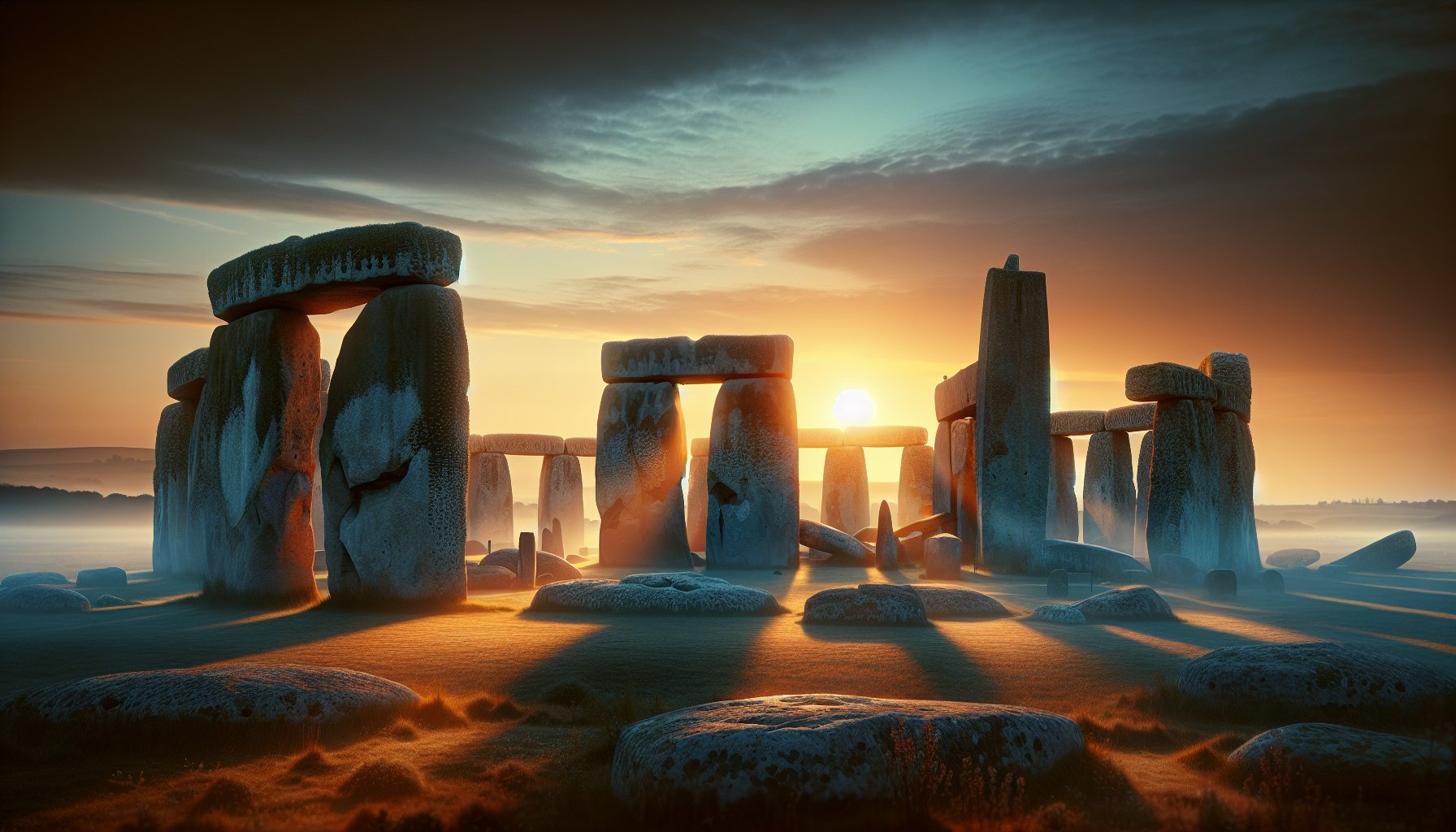
Peering into the celestial secrets of Stonehenge, one quickly realizes it's not just about monumental stones, but about monumental sky-bound spectacles as well. Serving as a Neolithic calendar, the alignment of Stonehenge with the summer solstice sunrise is a well-documented phenomenon that stimulates both awe and intrigue.
- Summer Solstice Alignment: On the longest day of the year, the sun rises perfectly in alignment with the Heel Stone, casting a precise beam of light onto the center of the circle, which is truly captivating.
However, the site's astronomical sophistication doesn't end with solar observations. Researchers probing deeper into its alignments suggest it may also harbor connections to lunar cycles.
- Lunar Cycles: Though less visually apparent than the dramatic solstice events, some alignments correspond with major lunar standstills, occurring every 18.6 years.
- Integrated Design: These celestial alignments bolster the theory that Stonehenge functioned as a sophisticated prehistoric observatory, integrating both solar and lunar cycles into its design.
Landmark of the Heavens
Diving deeper into the astronomical essence of Stonehenge, one encounters the discipline of archaeoastronomy, which reveals that this enigmatic structure may have served as a kind of ancient astronomical observatory. The precision with which Stonehenge aligns with key solar and potentially lunar events suggests a deliberate design, tailored towards monitoring celestial phenomena.
- Comparative Analyses: Comparative analyses reveal similarities between Stonehenge and other prehistoric megalithic structures like the Carnac stones in France, which also exhibit astronomically-aligned features.
- Widespread Neolithic Concern: These alignments suggest a widespread Neolithic preoccupation with the cosmos.
Additionally, Stonehenge's potential as a tool for astronomical observation transcends simple night-sky watching. It likely served as a physical manifestation of cosmological understanding, marking significant times not only agriculturally but also in ceremonial and social contexts.
- Cultural and Social Significance: Its enduring mystery and construction genius continue to echo Neolithic humanity's sophisticated interaction with the skies.
-
Linking Heaven to Earth: Stonehenge stands as a focal point in the vast panorama of ancient human ingenuity in linking heaven to earth.
Druid Convergence and Ancestral Worship
Often cloaked in the cloak of mystery, the ancient towering bluestones of Stonehenge have whispered tales from the Neolithic era, beckoning historians and archaeologists alike to untangle their secrets. The leafy branches of Druidic rituals, once thought to be deeply rooted in the core of Stonehenge's purpose, have been subjects of scrutiny. Though modern research debunks the direct connection of Druids constructing this monumental site, evidence suggests that they might have embraced it for significant ceremonial rites—piggybacking on the celestial importance that predated their era.
The essence of ancestral worship at Stonehenge casts a longer shadow over its grassy plains. Human remains discovered around the area bear the silent testimony of Stonehenge serving possibly as an elite cemetery. This function underscores a broader practice of commemorating the dead, pivotal not only as a burial act but also as a conduit for collective memory and cultural endurance. As we peel back layers of soil and time, it becomes apparent that Stonehenge's role shifted with the sands of time, morphing into a canvas that reflected the spiritual and ritualistic needs of its consecutive users.
Sound Resonance and Spirituality
Delving deeper into the spiritual utilities of Stonehenge, recent studies spotlight its architectural acoustics, suggesting a venue where sound played a pivotal role. The specific placement of sarsen stones could have been strategic, perfect for amplifying a druid's chants or the eerie rhythm of ancient instruments during solstice celebrations. This acoustic feature likely elevated the experiential aspect of rituals, marrying sound with spirituality, and creating an immersive atmosphere for those gathered.
Furthermore, the theory that Stonehenge's circular design might act as a gigantic earthen speaker helps us fathom the lengths to which ancient societies went to intertwine natural elements with spiritual practice. The idea that every chant and cheer could ripple through the concentric rings of Stonehenge, touching every attendee in a unifying echo, adds a profound layer of understanding to its construction.
Navigating through these historical and mystical narratives, it is clear that Stonehenge was much more than a passive landmark. It was an active participant in the spiritual and societal customs of its time—a central hub for gatherings that stitched the celestial tapestry with the spiritual zeal of its human patrons. The resonance of Stonehenge, both literally and symbolically, continues to echo through the ages, capturing the human quest for connection with the cosmos and with each other.
Theories of Healing and Pilgrimage
Ancient Healing Ground
Unraveling the mystical allure of Stonehenge, historians and archaeologists have toyed with the intriguing theory that the site served as a healing center in Neolithic times. This hypothesis gains ground with the discovery of numerous human remains in the vicinity, each bearing marks of disease or injury.
Here are some key points about this theory:
- Human Remains: The types and conditions of skeletal remains suggest that individuals may have journeyed to Stonehenge seeking relief or cure, drawn by its reputed healing properties.
- Artifacts of Healing: Analysis shows tools and remnants indicative of medical procedures, surfacing during excavations.
- The spatial distribution and specific nature of these artifacts imply a systematic approach to healing, hinting at the site's ritualistic importance in health-related ceremonies.
- Burial Patterns: The intentional orientation or the presence of particular objects with these remains underscores Stonehenge’s role not merely as a place of physical healing but as a sanctified ground for spiritual restoration.
Cultural Pilgrimage Site
The concept of Stonehenge as a pilgrimage destination is bolstered by its complex network of ley lines and its proximity to other significant Neolithic and Bronze Age sites, such as the Durrington Walls and the numerous burial mounds scattered across Salisbury Plain. These connections suggest a vibrant, interconnected cultural landscape, where Stonehenge possibly stood as a central node in a widespread system of sacred sites.
- Archaeological Findings:
- Surveys and Carbon Dating: Detailed studies have mapped a trajectory of extensive footfall to the site.
- Ritualistic Processes: The arrangement and astronomical alignment of the stones suggest ceremonial practices timed with the solstices and equinoxes.
- Social and Spiritual Events: These gatherings reinforced communal bonds and shared cultural heritage, central to Neolithic societal structure.
Continuous studies, integrating methods like ground-penetrating radar and radiocarbon dating, paint a picture of Stonehenge not just as a static monument, but as a dynamic hub of ancient human activity.
- Holistic View: Whether for healing, worship, or communal gatherings, it is clear that Stonehenge's allure transcended the ordinary, marking it as a site of profound cultural significance in ancient times.
-
Evolving Narrative: The narrative of Stonehenge as a mere collection of strategically placed stones is being steadily replaced by a recognition of its role in the social and spiritual life of Neolithic populations.
Archaeological Insights and Modern Discoveries
Tools of Discovery
The quest to untangle the enigma of Stonehenge has been catapulted into the modern age with the advent of cutting-edge archaeological technologies. Ground-penetrating radar, a key player in this arsenal, allows researchers to see beneath the earth's surface without disturbing it, revealing hidden structures and anomalies that suggest the presence of unexcavated artifacts and features. This non-invasive method has reshaped our understanding of the scope and layout of this ancient site.
Radiocarbon dating, another pivotal tool, has been instrumental in pinpointing the age of organic materials found at Stonehenge. By measuring the decay of carbon isotopes, scientists have been able to establish a more accurate timeline of Stonehenge's construction phases, aligning them with other significant events in prehistoric Britain. These dates are crucial for understanding the sequence of construction and usage of the site, helping to refine previous estimates and hypotheses about the people who built and used Stonehenge.
New Findings and Interpretations
In recent years, significant discoveries have shed new light on Stonehenge’s broader landscape context. For instance, the detection of large Neolithic pits forming an immense astronomic circle around Stonehenge has been groundbreaking. These pits, revealed through remote sensing and geophysical surveys, indicate that Stonehenge was just one part of a much vast ceremonial landscape, potentially used for astronomical observations and tracking celestial events.
These findings compel a reevaluation of previous interpretations of Stonehenge. The site is now viewed not only as a standalone monument but as a component of a larger, interconnected religious or ceremonial complex. This has profound implications for our understanding of Neolithic social structures and spiritual life.
By continually updating the historical narrative with these latest archaeological data, scholars not only deepen our grasp of Stonehenge's origins and functions but also paint a richer, more complex picture of Neolithic society. Each layer of soil excavated and every artifact analyzed adds a piece to the puzzle, transforming our collective understanding of this prehistoric marvel.
Unveiling the Mysteries
As tools and techniques evolve, so too does our narrative of Stonehenge, proving that this ancient site still has many secrets left to reveal. Through diligent examination and the use of modern technologies, archaeologists and historians continue to peel back the layers of time, each discovery adding depth to the ongoing story of Stonehenge and its place in human history. The synthesis of archaeological findings with technical advancements has not only enriched our historical comprehension but also preserved the intrigue and mystique that surrounds this legendary monument.
Conservation Efforts and Cultural Legacy
Preserving a Prehistoric Monument
Ensuring the longevity of Stonehenge, a monument that has withstood the ravages of time, requires meticulous and innovative conservation practices. Managed by English Heritage, the site encounters numerous challenges due to its exposure to natural elements and the impact of consistent visitor footfall. Modern conservation tactics involve the use of advanced technologies such as digital archiving and laser scanning, helping to monitor the condition of the stones and surrounding landscape with precision. This data is paramount in developing strategies to prevent erosion, manage grassland health, and maintain the structural integrity of the stones.
Moreover, the site's proximity to a busy roadway has sparked extensive debates and studies concerning the effects of pollution and vibrations caused by traffic. Recent plans have proposed rerouting the nearby A303 road via an underground tunnel, aiming to reduce visual and auditory pollution while also recovering some of the landscape’s historical context. Heritage conservationists often find themselves torn between enhancing visitor experience and preserving the site’s authenticity and archaeological integrity.
Stonehenge in Modern Culture
Beyond its physical form, Stonehenge significantly influences modern culture, serving as an icon of mystery and ancient human ingenuity. Its silhouette frequently appears in artworks, literature, and media, symbolizing endurance and the mystical. Filmmakers and musicians alike draw inspiration from its eerie allure, with the monument featuring in numerous cultural productions that explore themes of paganism, time travel, and human history.
Additionally, Stonehenge plays a pivotal role in contemporary pagan and druid communities, who gather at the site to celebrate solar events such as the summer and winter solstices. These gatherings underscore Stonehenge’s ongoing religious and spiritual significance, echoing the ceremonial activities that might have occurred there thousands of years ago. Despite its ancient roots, Stonehenge thus remains a living site of worship and celebration, bridging the past with the present.
Public engagement and educational programs spearheaded by English Heritage also ensure that Stonehenge continues to educate and intrigue the public. Through immersive visitor experiences and detailed educational resources, Stonehenge is presented not just as a set of mysterious stones but as a capacitor of deep cultural narratives waiting to be explored, reflecting shifts in historical interpretations and understanding through centuries.
In weaving together the threads of archaeological accuracy and cultural reverence, conservation efforts at Stonehenge not only protect this prehistoric structure but also preserve its legacy as a perpetual symbol of human curiosity and cultural heritage. The ongoing dialogue between past and present, encapsulated at this ancient site, invites each visitor to ponder the profound interconnectedness of history, culture, and the environment.