By Emilia Wellesley · Published May 4, 2026 · Updated May 13, 2026
Last reviewed: May 4, 2026.
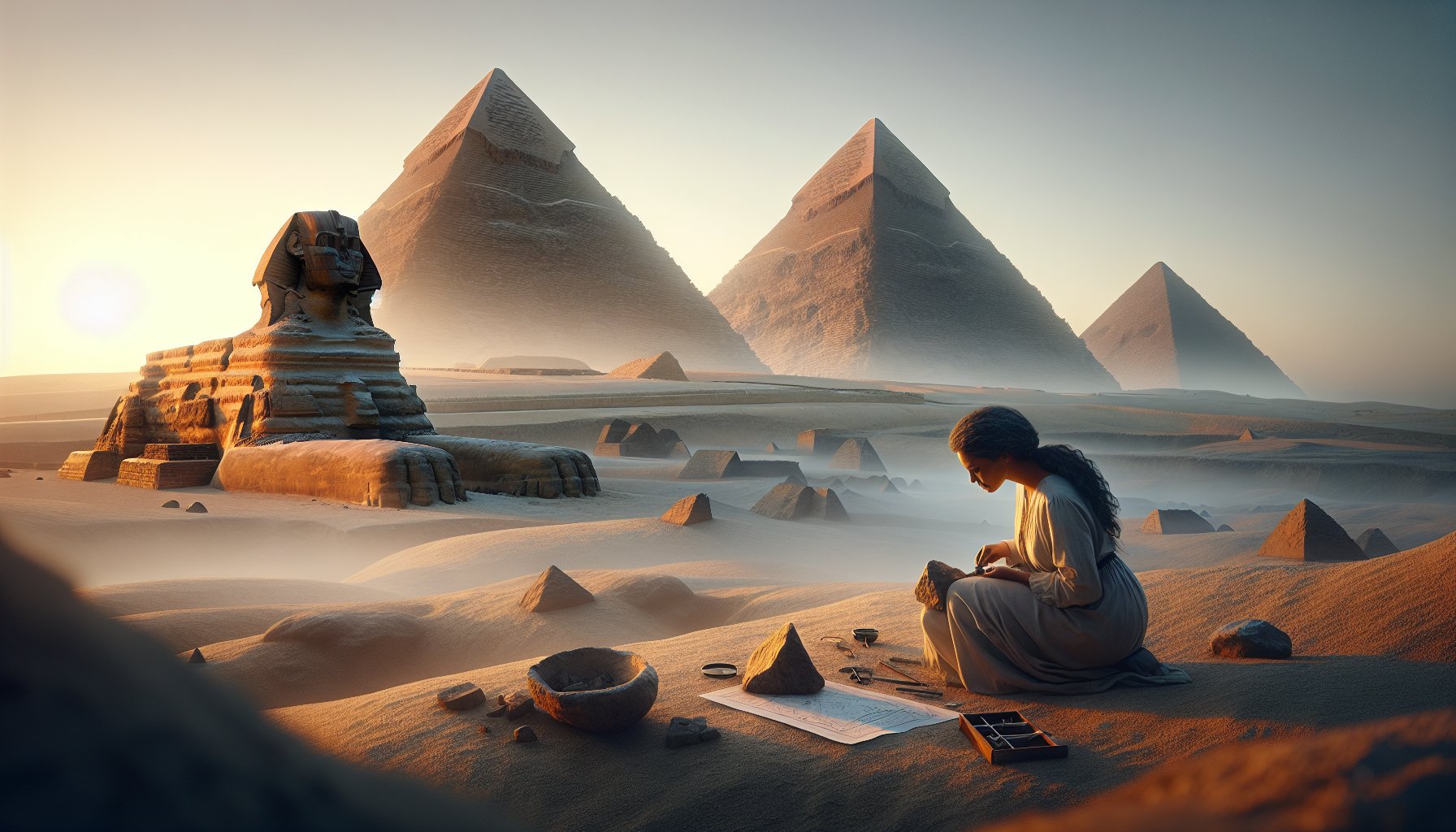
The Pyramids of Giza stand as enduring symbols of Ancient Egypt's glory. Constructed during the Old Kingdom under the reigns of Pharaohs Khufu, Khafre, and Menkaure, these monumental structures have captivated humanity for thousands of years with their mysteries and engineering marvels.
Pharaoh Khufu and the Great Pyramid
Khufu, often known in Greek as Cheops, reigns infamous through the annals of history primarily for constructing the Great Pyramid of Giza, the largest in the Giza complex and one of the surviving Seven Wonders of the Ancient World. The pyramid not only reflects Khufu's immense power and his kingdom's architectural prowess but also stands as a monumental legacy overshadowing his relatively obscure reign. Stretching up to a sky-striking original height of approximately 146.6 meters, the structure today marks slightly less due to millennia of erosion and stone removal, retaining a still-impressive height of 138.5 meters.
Pharaoh Khafre and His Contributions
Following the footsteps of his predecessor and possibly father, Khufu, Pharaoh Khafre (or Chephren in Greek) made his mark on the Giza Plateau by constructing the second pyramid, known for retaining much of its original limestone casing at the apex. Much can be conjectured about Khafre’s reign from this colossal structure, which is strategically positioned to appear taller than Khufu's when viewed from certain angles, although it boasts a smaller foot. Additionally, Khafre is historically intertwined with the Great Sphinx, which guards the plateau. The monumental statue features a lion's body coupled with a human head, often believed to be that of Khafre himself, serving as a stalwart protector of the necropolis.
Pharaoh Menkaure’s Architectural Advances
Menkaure, the builder of the third and smallest pyramid at the Giza complex, introduced significant architectural innovations despite the reduced scale of his pyramid. Notably, his use of granite, particularly for the pyramid’s lower casing and inner burial chamber, highlights an advancement in material technology over his predecessors. This utilization not only imparted a unique finish but also testified to the evolving engineering skills during his era. The Menkaure pyramid, though smaller, thus provides crucial insights into the technological and cultural transitions within the Old Kingdom of Egypt, corroborating a richer understanding of this epoch.
Architectural Significance and Construction Techniques
Reflecting on the astounding architectural achievements at Giza, one is naturally drawn to the sophisticated techniques employed by the ancient Egyptians. The Pyramids of Giza, particularly the ones built by Pharaohs Khufu, Khafre, and Menkaure, are archetypal examples not just of regal mausoleums but also of advanced engineering concepts prevalent during Egypt's Old Kingdom.
Limestone and Granite: Building Blocks of Eternity
Pioneering the use of massive limestone blocks, the builders sourced these from nearby quarries, most notably the famous Tura Quarry. Each limestone casing stone had to be precisely cut—a task requiring considerable ingenuity and labor. It’s not just about the sheer scale of this endeavor; the precision with which these blocks were cut and placed is nothing short of miraculous, aligning them so accurately that not even a card can slide between them.
Granite, predominantly used in the inner chambers and passages, was brought from the quarries of Aswan, located about 800 kilometers away. The transportation itself was an engineering marvel, likely involving the Nile River's seasonal flooding. Combined, the granite and limestone showcase a dual testament to the Egyptian mastery of both material sourcing and architectural assembly.
Theories in Construction: Bridging History and Innovation
Various theories about how these pyramids were constructed have permeated the annals of history, with the internal ramp theory being a notable one. Proposed by architect Jean-Pierre Houdin, this theory suggests the use of an internal spiral ramp to hoist the alabaster blocks—an idea supported by recent 3D simulations and physical evidence found within the Great Pyramid of Khufu. This theory not only complements our understanding of construction logistics but also adds a layer of admiration for the ancient builders’ strategic problem-solving capabilities.
Alignment and Astronomical Precision
The astronomical alignment of the pyramids is equally fascinating, providing insights into the ancient Egyptians' advanced understanding of celestial patterns. Each pyramid is aligned meticulously with the cardinal points of the compass, which, per some scholars, correlates with the constellations.
Celestial Blueprint: Orion's Belt and Solar Alignments
Particularly noteworthy is the Orion Correlation Theory, which posits that the three main pyramids of Giza are constructed in a terrestrial alignment that mirrors the three stars of Orion’s Belt. This alignment not only underscores the Egyptians' exceptional sky-watching skills but also possibly illustrates a grand plan, embedding their spiritual and mythological importance into the physical landscape.
The seasonal equinoxes and solstices play an intriguing role as well, potentially influencing the exact positioning of these monumental structures. Such orientations could have had practical applications in calendrical measurements and ceremonial events, further embedding astronomical phenomena within their culture.
In conclusion, a peek into the Pyramids of Giza's architectural planning offers a window into a civilization that, while ancient, was remarkably sophisticated in techniques that seem to presage many modern engineering principles. These historical feats remind us that the pyramids, beyond being pharaonic tombs, symbolize the zenith of Ancient Egyptian intellectual and cultural achievement.
Deciphering the Internal Complexity of the Great Pyramid
Amid the eerie silence that envelops the ancient limestone corridors of the Great Pyramid of Giza, exists an extraordinary architectural puzzle that has perplexed historians and archaeologists for centuries. Diving deep into the heart of this colossal structure reveals an intricate maze of chambers and passages meticulously engineered for purposes beyond mere burial.
The Enigmatic King's Chamber
Nestled within the upper echelons of the Great Pyramid, the King's Chamber presents a grandiose yet stark granite enclave, intended primarily for the sarcophagus of Pharaoh Khufu. Unlike any averagely adorned burial site, this chamber is surrounded by massive blocks of Aswan granite, each meticulously tailored to fit together without the use of mortar, showcasing remarkable ancient engineering finesse. Above this chamber, the weight-relieving chambers, including the relieving chambers capped by massive granite slabs, ensure the structural integrity of this monumental tomb. The Grand Gallery, leading up to this critical area, boasts a towering corbelled roof, a design choice that astounds even modern architects with its simplistic yet effective genius in distributing the pyramid's immense weight.
The Mysteries of the Queen’s Chamber
Below the King’s Chamber and strategically offset to the east, the Queen’s Chamber stirs up intense debates among Egyptologists. Contrary to its designation, it likely never served as a resting place for any queen. The chamber’s true purpose lingers as an enigma; theories speculate it could have been intended for the Ka, or spiritual twin, of Pharaoh Khufu. Moreover, the chamber’s peculiar niche and the pair of thin shafts extending from its walls to the pyramid's exterior add layers of mystery. Initially thought purely ventilative, recent hypotheses suggest these shafts may align with distinct stars, integrating celestial guidance into the eternal afterlife journey, hinting at the profound astronomical knowledge possessed by the pyramid's architects.
This complex internal makeup of the Great Pyramid not only underscores Khufu's monumental ambition but also encapsulates the advanced scientific and spiritual endeavors of Ancient Egypt. Each chamber, hallway, and shaft functions as a meticulously placed cog in a vast sacred machine aimed at ensuring the pharaoh's divine journey to the afterlife. As such, the Great Pyramid of Giza remains not merely as a tomb but as a profound testament to the architectural, astrological, and spiritual intricacies of the ancient Egyptian civilization.
Surrounding Structures and Additional Components
The Role of the Sphinx
Set against the backdrop of the Giza Plateau, the Great Sphinx of Giza stands as a sentinel, combining the lion's body with the head of a Pharaoh – most commonly believed to represent Khafre. This majestic figure is historically seen as a symbol of royal power and guardianship.
- Symbolism and Function: Overlooking the vast necropolis, the Sphinx embodies the might of the Pharaohs, serving as a deterrent to any would-be desecrators of the sacred tombs.
- Construction and Artistry: Hewn directly from the bedrock and once adorned with vivid paint, it continues to incite debates among Egyptologists and archaeologists about its origin and purpose.
- Mythic and Royal Significance: It bridges earthly realms with the divine, providing insight into the deep intertwining of myth and sovereignty in Ancient Egypt.
The Solar Boat Museums and Valley Temples
Transitioning from the stone-guarded Giza complex, we encounter the Solar Boat Museums and Valley Temples, each with its unique contributions to the understanding of Ancient Egyptian culture.
- Solar Boat Museums:
- Location and Discovery: Found near the Great Pyramid in 1954, Khufu's ship is displayed in a museum built specifically for its preservation.
- Purpose and Preservation: This full-size vessel, likely used in Pharaoh Khufu's burial rites, reflects the Egyptians' skilled craftsmanship and their beliefs in resurrection and eternal life.
- Valley Temples:
- Connection to the Pyramids: The Valley Temple of Khafre is linked to his pyramid by a covered causeway, emphasizing the architectural and ceremonial precision of its construction.
- Structural and Functional Design: Built from titanic blocks of limestone and granite, these temples played multiple roles, from hosting funerary processions to being centers for mummification processes.
Step by step, each component within the Pyramid Complex of Giza—from the towering pyramids and the watchful Sphinx to the mystifying Solar Boats and the ceremonious Valley Temples—speaks volumes of the grandeur, ingenuity, and profound spiritual depth of Ancient Egypt. These structures, enduring through ages, continue to serve as gateways to understanding a civilization that has long captivated the imagination of the world.
Cultural and Spiritual Significance
Delving into the profound cultural and spiritual significance of the Pyramids of Giza, it becomes clear that these structures were far more than mere royal tombs or architectural feats; they were emblematic of the cosmic and divine beliefs that permeated Ancient Egyptian society. Each pyramid, meticulously aligned with certain stars and constellations, wasn't just a place of burial but a portal to the heavens, intended to propel pharaohs into an eternal afterlife amidst the gods.
Symbolism in Pyramid Design
The very shape of the pyramids, reaching skyward with triangular slopes, mirrored the rays of the sun, reinforcing the sun god Ra's significance in daily and afterlife realms. This design was intended to act as a staircase to the sky, enabling the deceased ruler to ascend to the heavens and join the gods. Furthermore, the placement of the pyramids along the Giza Plateau aligns with the stars of Orion’s Belt, showcasing a celestial mapping that ties earthly realms to cosmic phenomena. This alignment not only underscores the importance of astronomy in Ancient Egyptian culture but also highlights the belief in a deeply interconnected universe, guided by divine and astral forces.
The Heritage and Preservation of Giza
Amidst the sands of time, the conservation and preservation of the Giza Pyramids have garnered international attention, emphasizing their undiminished reverence and importance. The Egyptian government, in collaboration with various global entities, continues to prioritize the safeguarding of these sites through meticulous restoration projects and advanced archaeological practices. These initiatives not only protect the physical integrity of the pyramids but also ensure that the rich stories and spiritual legacies engraved in their stones are not lost to future generations.
In the modern era, these ancient symbols of spiritual quest and divine assurance continue to inspire and educate people around the world, bridging past and present, and inviting all to ponder the profound depths of human belief and architectural ingenuity. Through ongoing research and preservation, we hold the keys to unlocking more untold stories and ensuring that the soul of Ancient Egypt endures, resonating through millennia.
Tourism and Global Impact on Egypt
Giza as a Major Tourist Destination
The Giza Plateau, home to the iconic Pyramids of Giza and the enigmatic Sphinx, ranks among the world's preeminent travel destinations, drawing not only those fascinated by ancient civilization but also global jet-setters. Each year, millions are magnetically attracted to this dusty swath of the Egyptian landscape, lured by the promise of standing in the shadow of monuments that have stood the test of millennia. Egypt's economy has significantly benefited from the tourism sector, with the Giza complex acting as a linchpin in the cultural tourism industry. As travel pamphlets and history books alike beam images of the Pyramids and Sphinx around the world, they beckon international visitors, thus bolstering the hospitality, service, and transportation sectors of Cairo and its environs.
Challenges in Managing Tourist Influx
While the influx of tourists brings necessary funds to the region, it also presents significant challenges. The footfall of countless visitors risks degradation to these ancient stones, each step potentially wearing away the history etched into their surfaces. Managing this tide of human curiosity is a monumental task. Efforts have been intensified to balance the scales of accessibility and preservation. Complicated ticketing systems, limited entry to certain internal chambers, and strict guidelines on touristic behavior are enforced rigorously. Furthermore, periodic restorative works are essential, requiring the complex to be partially closed to the public, which often stirs disappointment among visitors. The paradox of promoting tourism while safeguarding heritage is a persistent challenge faced by Egyptian authorities and international conservation bodies. Moreover, the local atmosphere becomes saturated during peak tourist seasons, leading to concerns about the environmental impact on the site.
Navigating between becoming an 'open-air museum' accessible to all and an ancient relic needing protection, Egypt's strategies towards maintaining its heritage while fueling its economy through tourism continue to evolve. These efforts are crucial not only for economic reasons but also for educational purposes, as each visitor takes with them not just photographs but also stories of a rich past that continues to inspire and teach across ages and geographies. Through these narratives passed down and around, the Pyramids of Giza and their surrounding structures persist not just as reminders of human achievement but also as beacons of cultural reverence and awe on a global scale.