By Emilia Wellesley · Published May 4, 2026 · Updated May 13, 2026
Last reviewed: May 4, 2026.
Delve into the enigmatic Bermuda Triangle, also known as the Devil's Triangle, an area shrouded in mystery due to numerous unexplained disappearances of ships and planes. This exploration aligns factual data with popular theories to shed light on this maritime mystery.
Initial Theories and Historical Accounts
Early Observations by Navigators
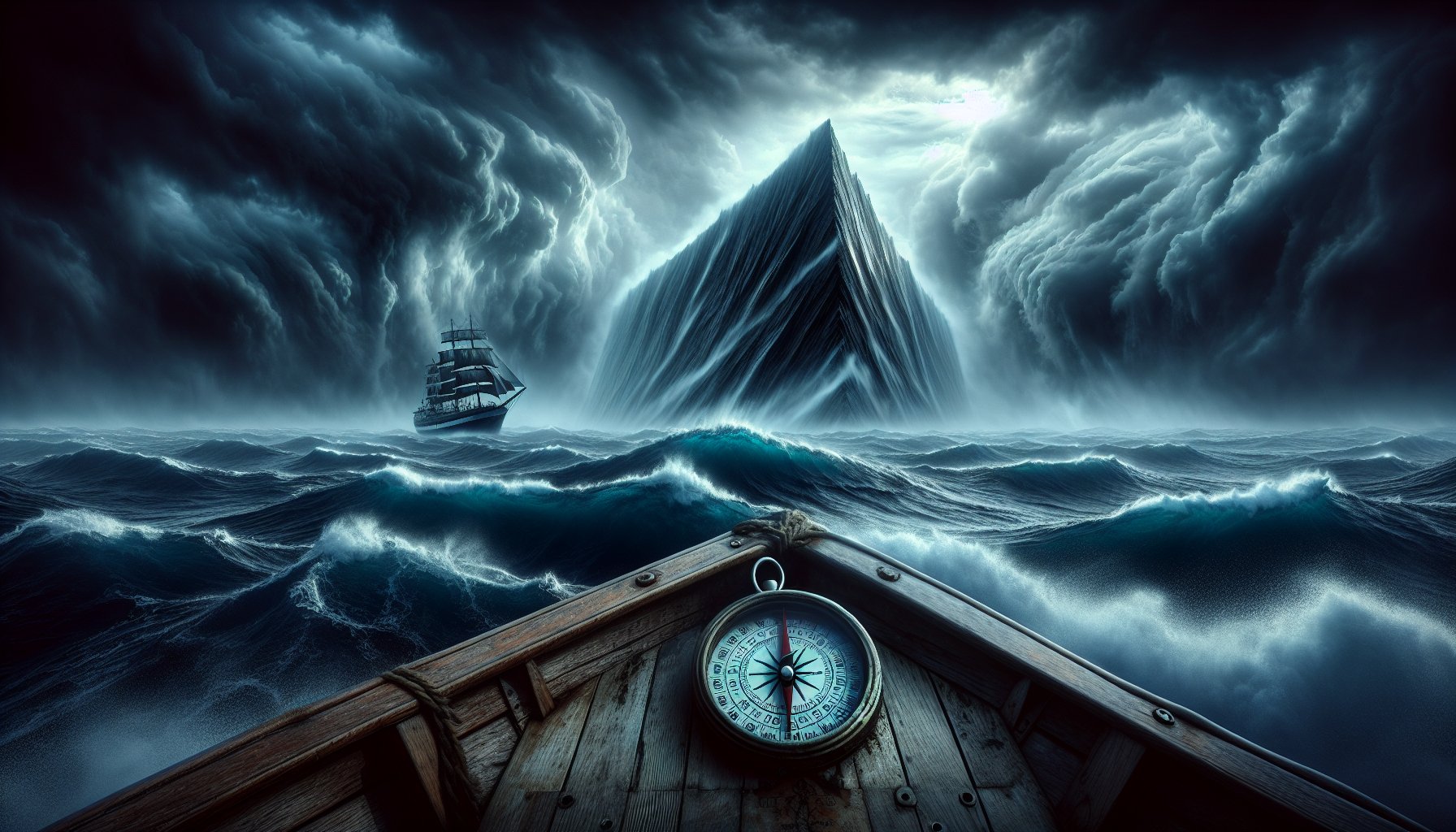
The legend of the Bermuda Triangle, or the Devil's Triangle, begins not with disappearances but with bewildering compass readings noted by one of the most famous explorers in history, Christopher Columbus. During his voyage across the Atlantic in 1492, navigating the waters of what would centuries later be dubbed the Bermuda Triangle, Columbus documented in his logs the first known instance of erratic compass readings.
- Compass Anomalies: Columbus recorded unexpected compass behavior, which was remarkable amid natural and unexplained phenomena.
- Legacy: These navigational difficulties now stand central to the Triangle’s mystery, viewed as precursors to later, more disturbing disappearances.
Notable Disappearances in the 20th Century
The case files of the Bermuda Triangle began filling rapidly in the 20th century, marked by a series of baffling events that brought the area infamy.
The Disappearance of USS Cyclops
- Date: 1918
- Details: With over 300 men aboard, the U.S. Navy ship set sail from Barbados to Baltimore.
- Outcome: Vanished without emitting any SOS signals, leaving no trace of wreckage.
Flight 19
- Date: December 5, 1945
- Event: A training squadron of five U.S. Navy bombers embarked on a routine training exercise.
- Issues Reported: The leader reported malfunctioning compasses.
- Result: The entire squadron disappeared, adding to the mystery surrounding the Triangle.
These cornerstone incidents have arguably crafted the sinister reputation of the Bermuda Triangle and fueled a multitude of speculative theories. Each account, meticulously documented yet woefully lacking in conclusive evidence, presents a narrative ripe with:
- Navigational errors
- Suddenly altered weather conditions
- Consistently troubled electromagnetic conditions
These documented incidents weave a substantial foundational narrative for both myth and scientific inquiry surrounding the notorious waters of the Triangle.
Natural Phenomena and Scientific Explanations
The Bermuda Triangle, oftentimes cloaked in the allure of the unexplained, also rests in a zone fraught with numerous natural environmental peculiarities that may just hold the key to many of its legendary vanishings. This section examines how natural phenomena, specifically the influence of the Gulf Stream and meteorological factors, along with oceanographic and geological conditions like methane hydrates and deep ocean currents, potentially play roles in these enigmatic disappearances.
The Hegemony of the Gulf Stream and Weather Dynamics
Navigating the waters of the Bermuda Triangle means contending with the Gulf Stream, a robust and warm Atlantic ocean current that starts near the tip of Florida and flows northward along the eastern coastlines of the United States. This natural conveyor belt is notorious not just for its strength but also for its whims. It can rapidly alter water temperatures and potentially exacerbate weather conditions. Storms and hurricanes, common within this region, follow paths that occasionally intersect with the Triangle, leading to drastic and sudden weather changes that can catch even the most experienced mariner off guard.
Now, toss into the mix the unpredictable weather phenomena like waterspouts—essentially tornadoes over water—which are not uncommon in these open seas. These mighty spouts can spell doom for aircraft and smaller watercraft which, if caught at the wrong time, could lead to disappearances attributed to "mysterious" forces, while merely bowing to nature's whims.
Beneath the Waves: Geological Secrets Unveiled
Further deepening the enigma is the role of undersea geology. One of the more compelling scientific explanations involves methane hydrates—crystalline structures of methane gas trapped within ice-like cages of water molecules. Studies suggest that vast reserves of methane hydrates are found on continental shelves worldwide, including the area of the Bermuda Triangle.
The theory posits that if these methane deposits were to dislodge and ascend toward the surface, they could potentially reduce the density of water significantly. Such a phenomenon is enough to sink ships by effectively 'liquefying' the water beneath them, leading to rapid and almost traceless submersions. Additionally, if the gas reaches the surface and comes into contact with aircraft engines, it could create engine failures or even lead to explosions, given the right concentrations.
Moreover, the interaction between these hydrate releases and the ocean's deeper currents—mysterious and little understood in their own right—adds another layer of complexity. These deep ocean currents, wielding immense power silently beneath the surface, help shape the marine topography, influencing everything from nutrient flows to the paths of submerged objects, and possibly even affecting the fate of downed ships and aircraft.
Final Thoughts on the Tangle of Natural Forces
While the Bermuda Triangle continues to hold its spot in pop culture as a haven for the mysterious and paranormal, these natural explanations provide a more grounded understanding of what might be behind many of the area's mysterious disappearances. By weaving together meteorological impacts with oceanographic phenomena and geological activities under the sea, one starts to see not just a pattern, but potentially, a series of explanations that bring science to the forefront of demystifying the mystique shrouding this infamous expanse of ocean.
Human Factors and Technological Failures
Navigational Errors and Human Misjudgments
Common Errors in High-Risk Maritime Routes
The Bermuda Triangle, a mysterious stretch bound by Bermuda, Miami, and San Juan, has long captivated the imagination of mariners and aviators alike. Yet, it's essential to peel back the shroud of mystique to confront a more mundane, albeit critical, culprit: human error. Navigational pitfalls, often underestimated in their simplicity, have historically accounted for numerous maritime mishaps within this notorious region. From the infamous disappearance of USS Cyclops in 1918 to the vanishing of Flight 19 in 1945, human miscalculations offer a plausible explanation that demystifies many such incidents.
Navigational errors, particularly in an area as congested and heavily trafficked as the Bermuda Triangle, can stem from a variety of human factors. These include poor training, lack of experience, fatigue, or even cognitive biases that lead to overconfidence or complacency. Often, captains or pilots may misread instruments or fail to account for the Gulf Stream's swift currents, which can drastically alter a vessel's course or speed without notice. By examining Coast Guard reports and survivor accounts, it becomes evident that what might initially appear as a mysterious disappearance could often be traced back to a preventable human oversight.
Technological Issues Impacting Vessels
Compass Variations and Electronic Fog Theories
Turning to the technological side, the Triangle's reputation is also intertwined with intriguing anomalies such as compass variations and the legendary electronic fog—a phenomenon some attribute to electromagnetic interference. Pilots and sailors have reported their compasses spinning inexplicably as they traverse the area, a factor that could disorient even the most seasoned navigator. These compass anomalies, while often linked to the region's magnetic peculiarities, highlight the necessity of understanding and preparing for such conditions.
The electronic fog theory, comparatively speculative yet popular in pop culture, suggests an atmospheric anomaly capable of engulfing a ship or plane, altering time perceptions and spatial orientation. While captivating, this theory warrants skepticism and a demand for concrete scientific evidence. Thus far, investigations suggest that while electromagnetic disruptions are possible due to the composition of the ocean floor and presence of methane hydrates, concrete connections to the enigmatic disappearances remain elusive.
By scrutinizing human error alongside technological malfunctions, such as those causing compass variations and hypothetical electronic fogs, this section offers a grounded perspective that contextualizes the Bermuda Triangle's mystique within the framework of navigational and technological failures. This approach not only enriches the narrative of the infamous Triangle but also reinforces the importance of rigorous training and preparation for those daring to navigate its waters.
Paranormal and Alternative Theories
Exploring the enigmatic lore that envelops the Bermuda Triangle, this section ventures beyond the tangible and into realms of mystery that captivate the imagination. Folklore and speculative narratives have long fueled the enigma of the Devil's Triangle, presenting paranormal and alternative theories that veer off the scientific path. Here, we dissect these captivating narratives to grasp their influence and persistence in the collective psyche.
Extraterrestrial Hypotheses and Time Warp Theories
In delving into the Bermuda Triangle's more otherworldly explanations, extraterrestrial hypotheses offer a tantalizing twist on traditional maritime lore. Proponents of this perspective argue that unexplained aerial and maritime disappearances are due to alien abductions or experimental craft from beyond our world, essentially making the triangle a star gate or interdimensional portal. Notably, the area has been whispered to share secretive characteristics with the infamous Area 51, suggesting a hotbed of hidden or experimental technology.
Supporting these claims, stories like Bruce Gernon's account of a time warp experience he dubbed "electronic fog" persist. Gernon's aircraft was reportedly engulfed by a strange cloud in 1970, leading to time dilation effects—a theory that aligns markedly with science fiction more so than empirical science. Critics argue these accounts, though compelling, lack verifiable evidence, and advising that such theories might be better suited to the plot of an X-Files episode.
Folklore and Pop Culture Influences
The cultural impact of the Bermuda Triangle is undeniable and intricately woven into the fabric of maritime folklore. Over the years, pop culture has catapulted the Triangle from a mere geographic anomaly to a staple of supernatural speculation. Films, television shows, and literature often portray the Bermuda Triangle as a locus of unparalleled mystery, an approach that at times blurs the lines between myth and reality.
This phenomenon is encapsulated by works such as Charles Berlitz’s bestseller, which capitalized on the Triangle's mystique while heavily leaning into speculative theories. These narratives foster a speculative tapestry that sprawls across various media, embedding itself in public consciousness. Thus, the line distinguishing actual maritime hazards and fanciful lore becomes shadowed by excitement and mystique that such stories generate.
Conclusion
In synthesizing the panoramic array of Bermuda Triangle theories—from the scientifically plausible to the thrillingly paranormal—it's clear that the allure isn't just in the answers, but in the questions themselves. Whether chalked up to human error, natural phenomena, or more spectral machinations, the Bermuda Triangle remains a potent emblem of maritime mystery. Each narrative, be it grounded in fact or floating in the realms of fantasy, compounds the global captivation with this enigmatic waterway. As we continue to probe the murky depths of the Triangle, perhaps the greatest discovery is the enduring human fascination with the unknown and the unexplained.
Notable Research and Scholarly Perspectives
Scientific Investigations and Expert Analyses
Amidst the swirl of mystique surrounding the Bermuda Triangle, a substantial number of investigations and academic studies have been commissioned to cut through the fog of myths. The United States Coast Guard, along with several independent researchers, have delved deep into the incidents reported within this infamous region, often concluding that the extraordinary disappearances attributed to the Triangle could frequently be explained by environmental and human factors.
Key Findings:
- Weather and Mechanical Failures: The analysis of Coast Guard reports reveals that many of the vessels and aircraft thought to have vanished under mysterious circumstances were actually victims of tragic accidents caused by poor weather, mechanical failures, or navigational errors.
- Grounding Myths: These documents serve as a crucial anchor, grounding the Bermuda Triangle's reputation in the rockbed of reality, rather than letting it drift in the murk of maritime lore.
Critical Reviews and Debunking Myths
The sensational coverage of the Bermuda Triangle often overshadows the mundane truths behind the disappearances. In this context, the meticulous work of researchers like Lawrence Kusche, author of "The Bermuda Triangle Mystery – Solved," plays an indispensable role.
Critical Insights:
- Case Studies: Kusche's investigations into incidents like the disappearance of Flight 19 or the vanishing of the USS Cyclops reveal a pattern of human error and adverse weather conditions, rather than paranormal activity or extraterrestrial involvement.
- Environmental Factors: Moreover, further scientific scrutiny into the region's supposed anomalies, like magnetic variations and deep ocean currents, brings to light natural, albeit powerful, environmental factors that can disrupt even modern equipment.
- Gulf Stream Challenges: The challenges posed by the Gulf Stream or sudden methane hydrate eruptions provide logical, scientifically grounded explanations that debunk many of the Triangle’s legendary attributes.
Through these scholarly endeavors, the Bermuda Triangle is continually demystified, with critical thinking and scientific rigor challenging the folklore and supernatural theories that have long dominated public perception. This rigorous academic approach not only clarifies the historical record but also enhances maritime safety by promoting a better understanding of the natural phenomena at play in this storied stretch of the Atlantic.
On-Going Explorations and Future Research
The Bermuda Triangle continues to captivate the imagination of scientists and the general public alike, not merely as a geographical enigma but also as a catalyst for advancing maritime and aerial technology. With recent technological advancements in underwater exploration, researchers are now better equipped than ever to delve into the depths of the Atlantic, offering promising avenues for resolving some of long-standing maritime mysteries.
Technological Advances in Underwater Exploration
In the realm of modern technology, sophisticated tools such as autonomous underwater vehicles (AUVs) and remotely operated vehicles (ROVs) are now being deployed in the depths of the Bermuda Triangle. These technologies enable precise mapping of underwater terrain and can explore areas that are too risky for human divers. Sonar technology, in particular, has seen significant improvements, allowing for detailed scans of the ocean floor where mysterious shipwrecks like the USS Cyclops and the Marine Sulphur Queen met their ill fates. The data collected from these explorations not only aids in the search for answers regarding specific disappearances but also enhances our understanding of marine topography and deep ocean currents, which are often cited in theories relating to the Triangle's inexplicable events.
Moreover, satellite imagery and advanced oceanographic tools assist researchers in monitoring the Gulf Stream and other relevant climatic conditions such as freak waves and rogue weather phenomena, which have historically contributed to navigational challenges and unanticipated incidents within the Triangle.
Continued Pop Culture Fascination and New Theories
Despite—or perhaps because of—the scientific advancements that debunk many earlier theories, the Bermuda Triangle remains a staple in popular culture. New theories continue to emerge, sparking fresh debates and discussions in various media platforms from podcasts to docuseries, illustrating the public's undying intrigue with the Triangle. This continuing fascination prompts both amateur sleuths and professional scientists to examine and re-examine the mysterious zone, pushing forward the boundaries of what is known versus what can be speculated upon.
Pop culture has a pivotal role in shaping the perception of the Bermuda Triangle, often blurring the lines between myth and fact. As newer, more bizarre theories like electronic fog and time-space warps gain traction, they influence public perception and, consequently, the direction of informal investigations and theoretical explorations. This cyclical relationship ensures that the Bermuda Triangle remains relevant, prompting ongoing scientific investigations that aim to separate fact from fiction.
As new data surfaces and technology evolves, the narrative surrounding the Bermuda Triangle is likely to adapt, incorporating modern discoveries while also revisiting and potentially debunking older theories. This dynamic interplay between established facts and speculative storytelling not only enriches the ongoing discourse but also ensures that the enigma of the Bermuda Triangle will continue to engage and mystify future generations.